

AI Summary of Peer-Reviewed Research
This page presents an AI-generated summary of a published research paper. The original authors did not write or review this article. See full disclosure ↓
Publication Signals show what we were able to verify about where this research was published.STRONGWe verified multiple publication signals for this source, including independently confirmed credentials. Publication Signals reflect the source’s verifiable credentials, not the quality of the research.
- ✔ Peer-reviewed source
- ✔ Published in indexed journal
- ✔ No retraction or integrity flags
Key findings from this study
- The study found that ozone formation regimes in the Guanzhong Basin shift from VOCs-limited in early summer to NOX-limited in late summer, with anthropogenic contributions rising from 32.8 percent in May to 55.2 percent in July.
- The authors report that secondary aerosol formation regimes follow a distinct cycle, transitioning from NOX-limited in May to VOCs-limited in June before entering transitional behavior.
- The researchers demonstrate that traffic and industrial emissions dominate anthropogenic contributions to both ozone and secondary aerosols, with synergistic control opportunities arising from VOCs mitigation in June and NOX mitigation in August.
Overview
Tropospheric ozone pollution during warm seasons has become the primary air quality challenge in the Guanzhong Basin despite prior reductions in particulate matter. Understanding how ozone formation regimes and secondary aerosol formation regimes change over time and space is essential for designing coordinated control strategies. The study addresses whether ozone and secondary aerosol formation shift between precursor-limited states within a single warm season. It examines which emission sectors drive both pollutants and when synergistic control opportunities arise. The research integrates decade-long near-surface observations from 2014 to 2024 with high-resolution WRF-Chem simulations for May through August 2022. The authors employ scenario-based EKMA curves and source-apportionment diagnostics to resolve sectoral contributions. The investigation focuses on sub-seasonal progression of formation regimes, quantifying anthropogenic versus biogenic contributions and identifying phases where precursor mitigation yields co-benefits for both ozone and secondary aerosols.
Methods and approach
The authors combined long-term near-surface observations spanning 2014 to 2024 with high-resolution WRF-Chem model simulations focused on May through August 2022. The WRF-Chem framework employed is a modified version developed by Li and colleagues, extensively applied for regional air pollutant simulations in the Guanzhong Basin. Scenario-based EKMA curves assessed ozone formation sensitivity to nitrogen oxides and volatile organic compounds. Source-apportionment diagnostics resolved contributions from individual emission sectors including traffic, industry, and biogenic sources. The modeling approach enabled quantification of anthropogenic and biogenic contributions to maximum daily averaged 8-hour ozone concentrations. Formation regime classification distinguished between NOX-limited, VOCs-limited, and transitional conditions for both ozone and secondary aerosols. The methodology directly investigated formation regimes under varying meteorological conditions and emission reduction scenarios across horizontal and vertical dimensions over time.
Results
Ozone formation regimes progressed from VOCs-limited in early summer to transitional in midsummer and NOX-limited in late summer across the study period. Anthropogenic contribution to maximum daily averaged 8-hour ozone increased from 32.8 percent in May to 55.2 percent in July. Biogenic contributions peaked at 18.7 percent in July. Secondary aerosol formation regimes followed a distinct cycle, shifting from NOX-limited in May to VOCs-limited in June, then exhibiting transitional behavior thereafter. Traffic and industrial emissions emerged as the dominant anthropogenic drivers for both ozone and secondary aerosol formation. The temporal patterns revealed specific phases offering synergistic control opportunities where anthropogenic VOCs mitigation in June and NOX mitigation in August maximize co-benefits while minimizing trade-offs. The study resolved sectoral contributions and identified windows for coordinated precursor reduction that simultaneously address both pollutants.
Implications
The sub-seasonal progression of formation regimes demonstrates that uniform year-round emission control strategies cannot optimize air quality management in the Guanzhong Basin. The distinct cycles for ozone and secondary aerosol formation regimes indicate that precursor reduction targeting one pollutant may exacerbate the other during certain periods. June emerges as a critical window when anthropogenic VOCs mitigation benefits both ozone and secondary aerosol control, while August presents opportunities for NOX reduction with synergistic effects. Traffic and industrial sectors represent priority targets for intervention given their dominance in driving both pollutants. The findings support seasonally adaptive, city-specific air quality management frameworks that account for shifting chemical sensitivities throughout warm months. Integrating dynamic formation regime diagnostics with sectoral emission inventories provides a pathway for designing coordinated control strategies. The approach offers a model for other regions facing concurrent ozone and particulate matter challenges where precursor contributions vary temporally.
Scope and limitations
This summary is based on the study abstract and available metadata. It does not include a full analysis of the complete paper, supplementary materials, or underlying datasets unless explicitly stated. Findings should be interpreted in the context of the original publication.
Disclosure
- Research title: Sub-seasonal and spatial variations in ozone formation and co-control potential for secondary aerosols in the Guanzhong basin, central China
- Authors: Ruonan Wang, Ningning Zhang, Jiarui Wu, Qian Jiang, Jiaoyang Yu, Yuxuan Lu, XUEXI TIE
- Institutions: Chinese Academy of Sciences, Institute of Earth Environment, National Science Centre
- Publication date: 2026-03-05
- DOI: https://doi.org/10.5194/acp-26-3417-2026
- OpenAlex record: View
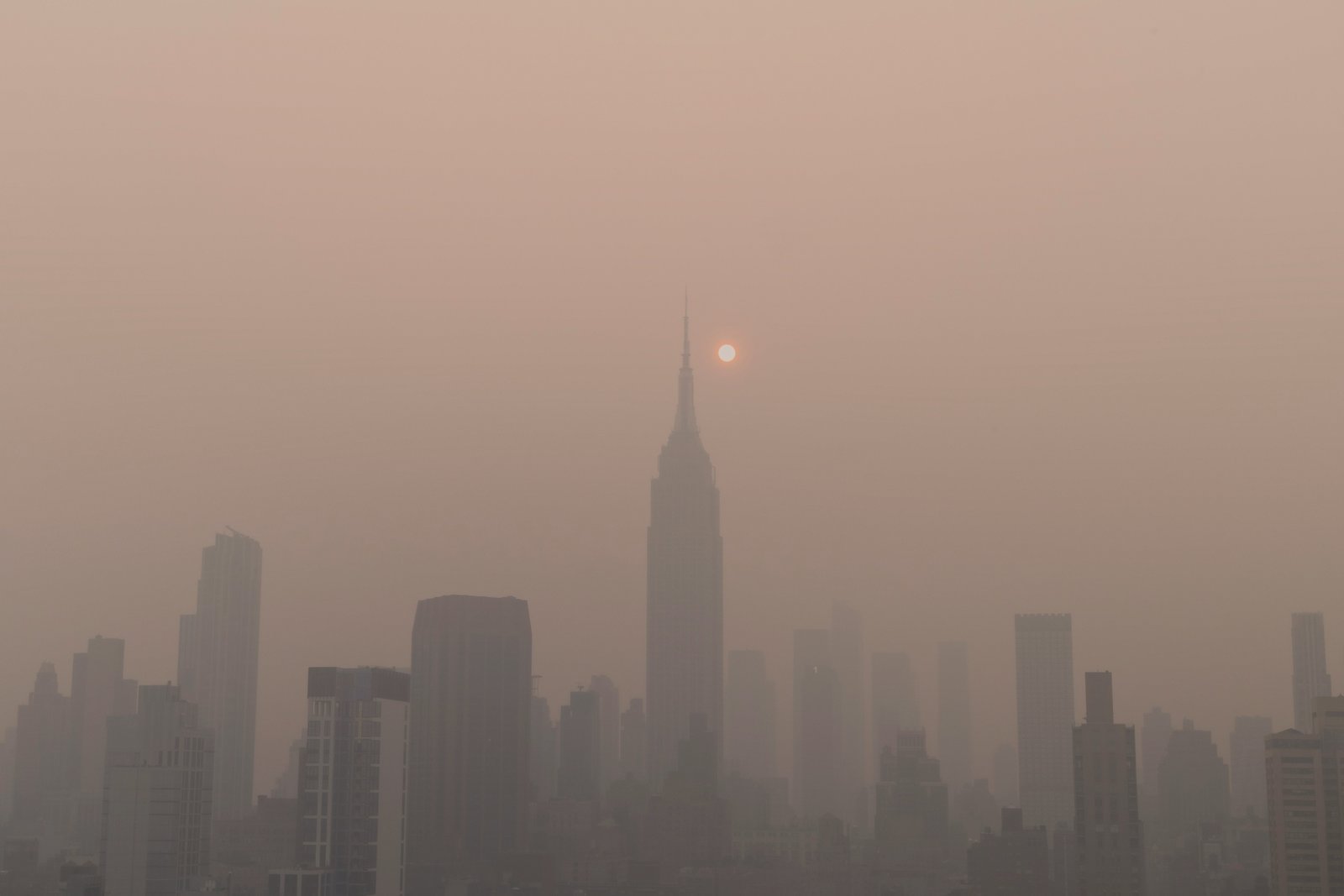
- Image credit: Photo by Ahmer Kalam on Unsplash (Source • License)
- Disclosure: This post was generated by Claude (Anthropic). The original authors did not write or review this post.
Get the weekly research newsletter
Stay current with peer-reviewed research without reading academic papers — one filtered digest, every Friday.