

What the study found
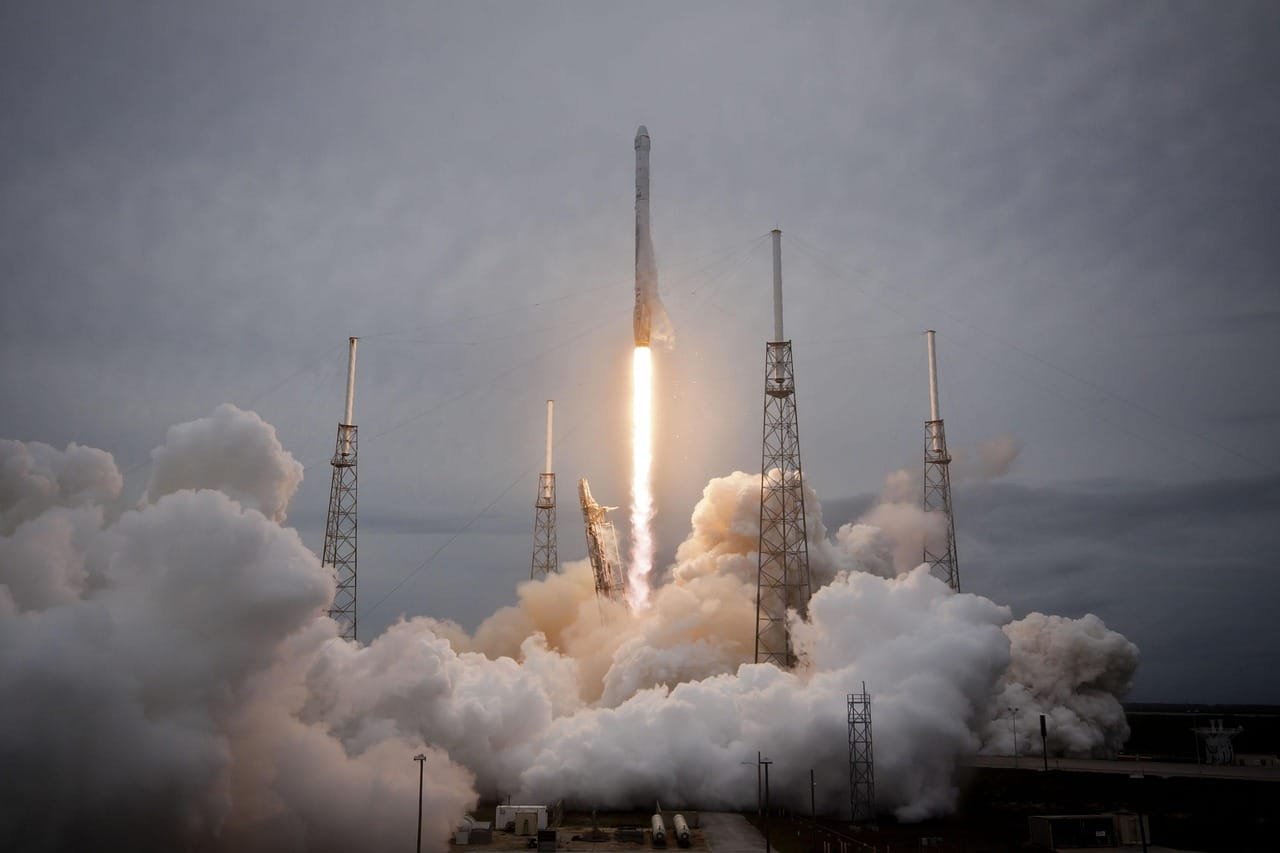
Rocket-emitted chlorine could slightly reduce stratospheric ozone, and the effect remains small under the growth scenarios tested. The study found that larger increases in rocket chlorine emissions produce larger ozone losses, but the overall impact is still limited.
Why the authors say this matters
The authors conclude that even small effects from rocket emissions could partially offset the gains achieved by the Montreal Protocol, the international agreement that reduced ozone-depleting substances. They say rocket propulsion systems and ozone recovery projections should consider this source.
What the researchers tested
The researchers used the Whole Atmosphere Community Climate Model 6 (WACCM6), a computer model of the atmosphere, nudged to meteorological reanalyses so it reflects observed weather variability. They simulated ozone responses under different launch growth scenarios, including chlorine emissions from rocket launches at 10 times and 52 times the 2019 level.
What worked and what didn't
A 10-fold increase in rocket chlorine emissions caused a near-global column ozone loss of less than 0.1 Dobson Unit, or 0.04%, while a 52-fold increase caused 0.6 DU, or 0.23%, depletion. Local upper-stratospheric ozone decreases reached 0.4% and 2%, respectively, and losses were greatest at high latitudes, with strong seasonal and meteorology-driven variability in the Arctic; the paper also reports October Antarctic depletion of 0.5 and 3 DU and April Arctic depletion that could exceed 8 DU in cold years under the larger scenario.
What to keep in mind
The abstract describes modeled scenarios rather than direct observations, and it does not provide additional limitations beyond the scenarios tested. The results are stated for the launch-growth assumptions used in the model and may not apply outside those conditions.
Key points
- Rocket-emitted chlorine was modeled to cause small losses in stratospheric ozone.
- A 10-fold emissions increase led to less than 0.1 Dobson Unit global column ozone loss.
- A 52-fold emissions increase led to 0.6 Dobson Unit global column ozone depletion.
- Upper-stratospheric ozone losses were larger than global column losses, reaching 2% in the larger scenario.
- The largest losses occurred at high latitudes, with strong Arctic seasonality and variability.
Disclosure
- Research title:
- Rocket chlorine may slightly slow ozone recovery
- Publication date:
- 2026-03-11
- OpenAlex record:
- View
- Image credit:
- Pixabay • SpaceX-Imagery · Pixabay License
Get the weekly research newsletter
Stay current with peer-reviewed research without reading academic papers — one filtered digest, every Friday.