

Key findings from this study
Key points
- The review identifies that uncertainty quantification methods for deep learning-derived ECVs must account for both aleatoric and epistemic uncertainty sources within satellite observation processing workflows.
- The authors propose that conventional statistical and deep learning uncertainty frameworks require reconciliation through modification tailored to interdisciplinary Earth observation applications.
- The study demonstrates through case examples that uncertainty quantification approach selection substantially impacts the fidelity and interpretability of climate variable estimates derived from satellite data.
Overview
This survey examines uncertainty quantification methods for essential climate variables derived from satellite observations processed through deep learning algorithms. The work addresses a critical gap in current practice: while deep learning has substantially improved ECV estimation accuracy, uncertainty characterization of these outputs remains underdeveloped. The survey synthesizes theoretical foundations of aleatoric and epistemic uncertainties within satellite observation workflows and connects conventional statistical uncertainty frameworks to deep learning perspectives.
Methods and approach
The survey conducts comprehensive literature review covering uncertainty quantification techniques applicable to deep learning models. It clarifies conceptual distinctions between aleatoric uncertainty, which arises from inherent data variability, and epistemic uncertainty, which stems from model limitations. The authors examine existing quantification methods, evaluate their strengths and limitations, and demonstrate applications through two case studies: snow cover and terrestrial water storage estimation. This approach bridges Earth observation requirements with deep learning methodologies to identify necessary modifications for interdisciplinary application.
Results
The review identifies that uncertainty quantification in deep learning-derived ECVs requires consideration of input uncertainties stemming from the dynamic and multifaceted nature of satellite observations. Existing uncertainty quantification methods for deep learning exhibit distinct advantages and constraints depending on problem context and ECV type. The authors demonstrate through snow cover and terrestrial water storage examples how different quantification approaches yield different insights. The survey reveals that direct application of deep learning uncertainty techniques to satellite-based ECV estimation often necessitates substantial methodological adaptation to satisfy domain-specific requirements from Earth observation science.
Implications
Robust uncertainty characterization of deep learning-derived ECVs enhances reliability of climate modeling efforts and enables more accurate assessment of Earth system spatiotemporal dynamics. Quantified uncertainty information supports decision-making in climate research, policy development, and operational environmental monitoring where confidence intervals on estimates are essential. Recognition of input uncertainty propagation through deep learning pipelines advances understanding of how satellite observation limitations constrain ECV product quality.
Scope and limitations
This summary is based on the study abstract and available metadata. It does not include a full analysis of the complete paper, supplementary materials, or underlying datasets unless explicitly stated. Findings should be interpreted in the context of the original publication.
Disclosure
- Research title: Uncertainty Quantification of Satellite-Based Essential Climate Variables Derived from Deep Learning
- Authors: Junyang Gou, Arnt-Børre Salberg, Mostafa Kiani Shahvandi, Mohammad J. Tourian, Ulrich Meyer, E. ; https://orcid.org/0000-0001-6178-9402 Boergens, Anders U. Waldeland, Isabella Velicogna, Fredrik A. Dahl, Adrian Jäggi, Konrad Schindler, Benedikt Soja
- Institutions: ETH Zurich, GFZ Helmholtz Centre for Geosciences, Jet Propulsion Laboratory, Norwegian Computing Center, University of Bern, University of California, Irvine, University of Stuttgart, University of Vienna
- Publication date: 2026-01-30
- DOI: https://doi.org/10.1007/s10712-025-09919-2
- OpenAlex record: View
- PDF: Download
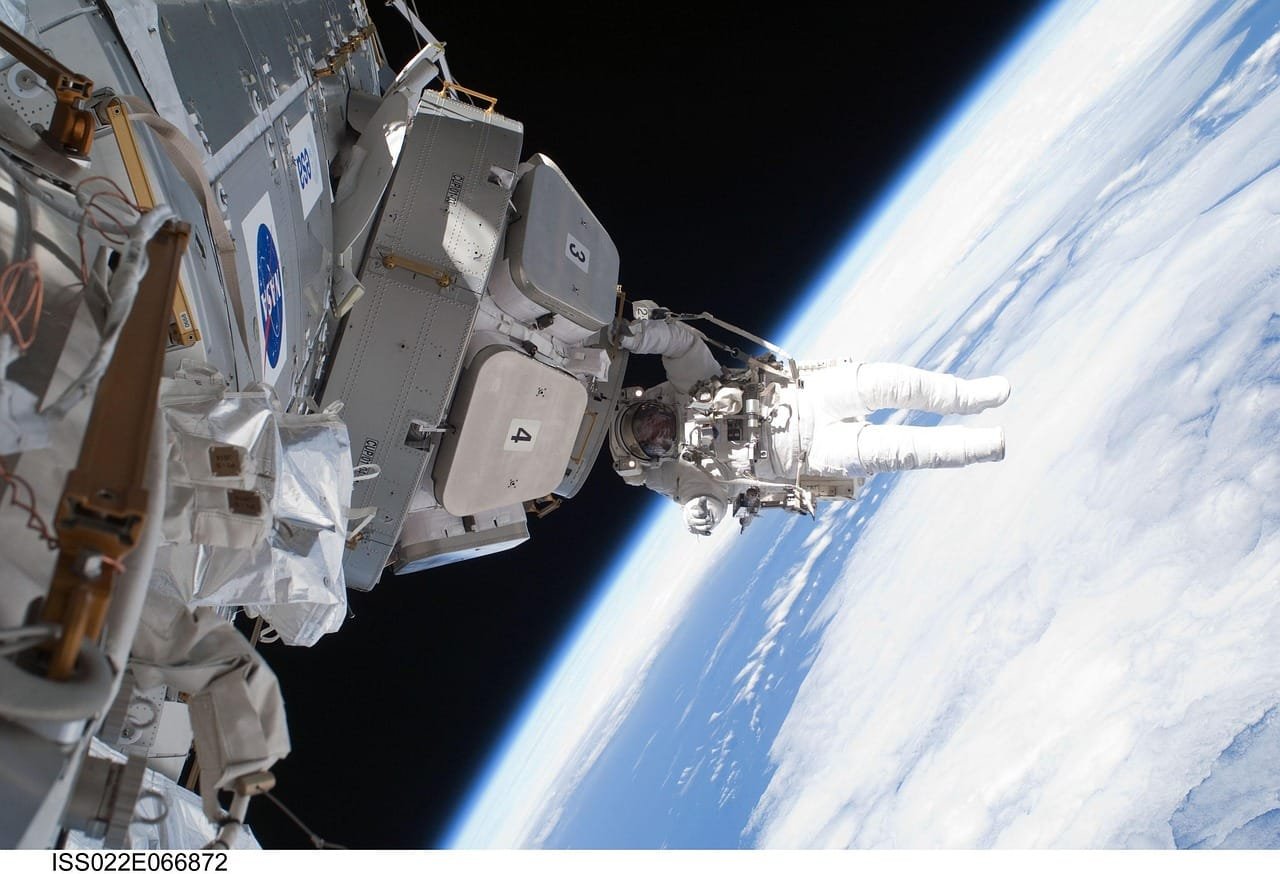
- Image credit: Photo by NASA-Imagery on Pixabay (Source • License)
- Disclosure: This post was generated by Claude (Anthropic). The original authors did not write or review this post.
Disclosure
- Research title:
- Uncertainty Quantification of Satellite-Based Essential Climate Variables Derived from Deep Learning
- Publication date:
- 2026-01-30
- OpenAlex record:
- View
- Image credit:
- Pixabay • NASA-Imagery · Pixabay License
Get the weekly research newsletter
Stay current with peer-reviewed research without reading academic papers — one filtered digest, every Friday.