

AI Summary of Peer-Reviewed Research
This page presents an AI-generated summary of a published research paper. The original authors did not write or review this article. See full disclosure ↓
Publication Signals show what we were able to verify about where this research was published.MODERATECore publication signals for this source were verified. Publication Signals reflect the source’s verifiable credentials, not the quality of the research.
- ✔ Peer-reviewed source
- ✔ No retraction or integrity flags
Key findings from this study
This research indicates that:
- Landslide activity in six high-occurrence Alpine massifs shifted toward earlier calendar dates, linked to 0.5–2°C temperature increases and changing precipitation patterns.
- Massifs with the highest landslide counts exhibited lower average air temperatures, higher annual precipitation, and steeper channel indices than lower-activity regions.
- Four distinct seasonal patterns of landslide occurrence occur across the Alpine domain, indicating complex interactions between local meteorology and slope stability.
Overview
This study analyzed 23 years of seismic records from 849 stations across the European Alps to catalog 926 seismogenic landslides and examine meteorological controls on landslide occurrence. Automated seismic data exploration identified landslides across 142 massifs defined by altitude and slope properties. The analysis quantified relationships between landslide activity and air temperature, precipitation, snow cover, and snowmelt patterns.
Methods and approach
The researchers applied automated seismic data exploration to instrumental records spanning 2000-2023. They stratified the European Alps into 142 massifs based on morphometric criteria and prioritized massifs with the highest landslide detection counts for detailed investigation. Monthly meteorological variables were extracted and cross-correlated with landslide occurrence before and after 2010 to assess temporal shifts in activity patterns.
Results
Six massifs contained more than 30 detected landslides, enabling robust temporal analysis. Massifs exhibiting the highest landslide occurrence demonstrated lower average air temperatures, elevated annual precipitation totals, and steeper channel gradients. The data revealed four distinct seasonal patterns of landslide activity within the study region.
Temporal analysis indicated a shift in landslide timing toward earlier calendar dates. This phenological shift correlates with documented regional air temperature increases of 0.5–2°C and concurrent changes in precipitation regimes. The magnitude of this shift varies across the six high-activity massifs.
Implications
Changing meteorological conditions drive observable shifts in Alpine landslide seasonality. Earlier onset of landslide activity may reflect accelerated snowmelt and modified rainfall timing rather than increased event frequency alone. Regional climate warming appears to decouple traditional seasonal patterns of slope failure from historical baselines.
These findings establish meteorological change as a primary driver of landslide hazard timing in mountainous terrain. Hazard assessment frameworks must incorporate dynamic seasonal thresholds rather than static climatological references. Massif-scale variability in response to climate forcing suggests that regional heterogeneity in slope properties and precipitation gradients modulates landslide sensitivity.
Scope and limitations
This summary is based on the study abstract and available metadata. It does not include a full analysis of the complete paper, supplementary materials, or underlying datasets unless explicitly stated. Findings should be interpreted in the context of the original publication.
Disclosure
- Research title: Twenty‐Three Years of Landslide Activity in the European Alps–Part 2: Investigating Triggers and the Impacts of Meteorological Change on Landslide Occurrences
- Authors: Charlotte Groult, Clément Hibert, Jean‐Philippe Malet, Bastien Mathieux
- Institutions: Centre National de la Recherche Scientifique, Observatoire astronomique de Strasbourg, Université de Strasbourg
- Publication date: 2026-03-30
- DOI: https://doi.org/10.1029/2024jf008209
- OpenAlex record: View
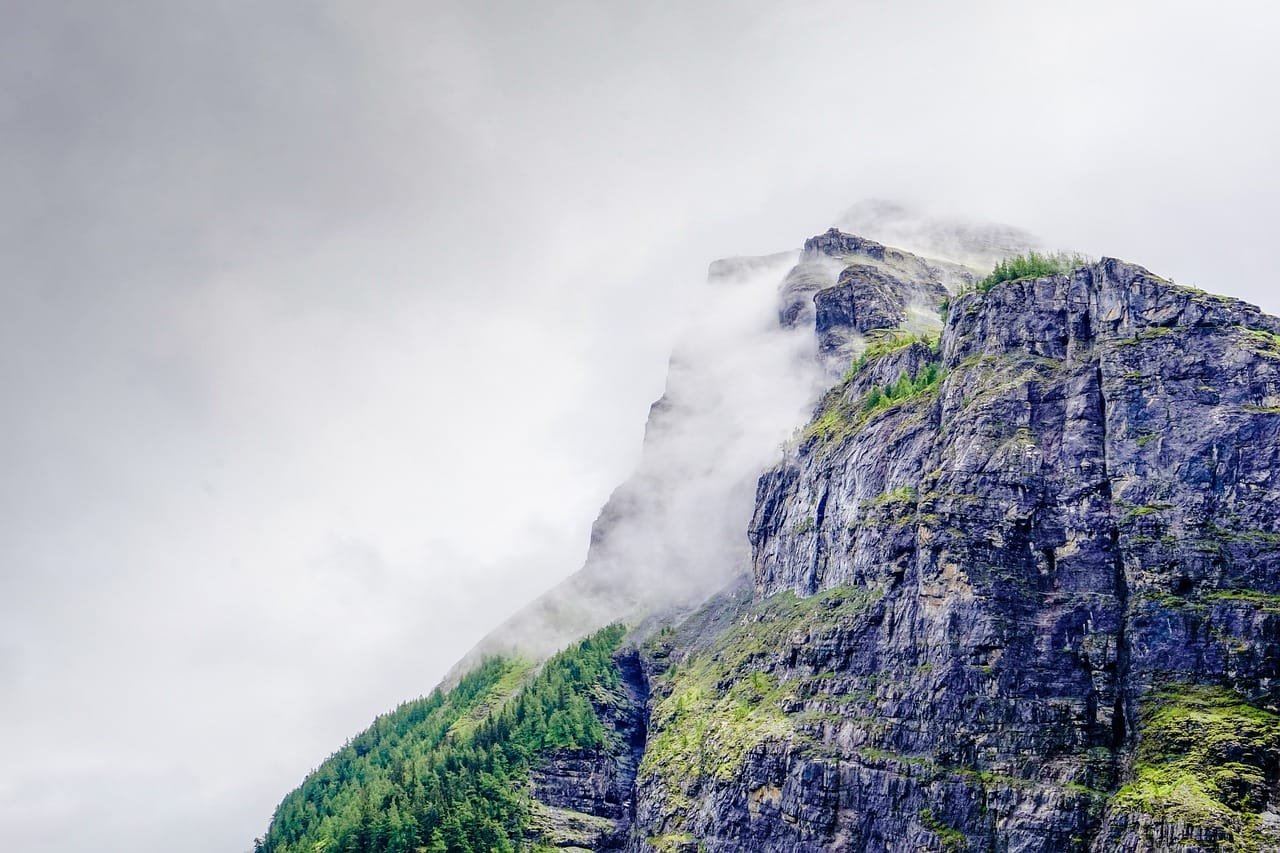
- Image credit: Photo by scoob_switzerland on Pixabay (Source • License)
- Disclosure: This post was generated by Claude (Anthropic). The original authors did not write or review this post.
Get the weekly research newsletter
Stay current with peer-reviewed research without reading academic papers — one filtered digest, every Friday.