

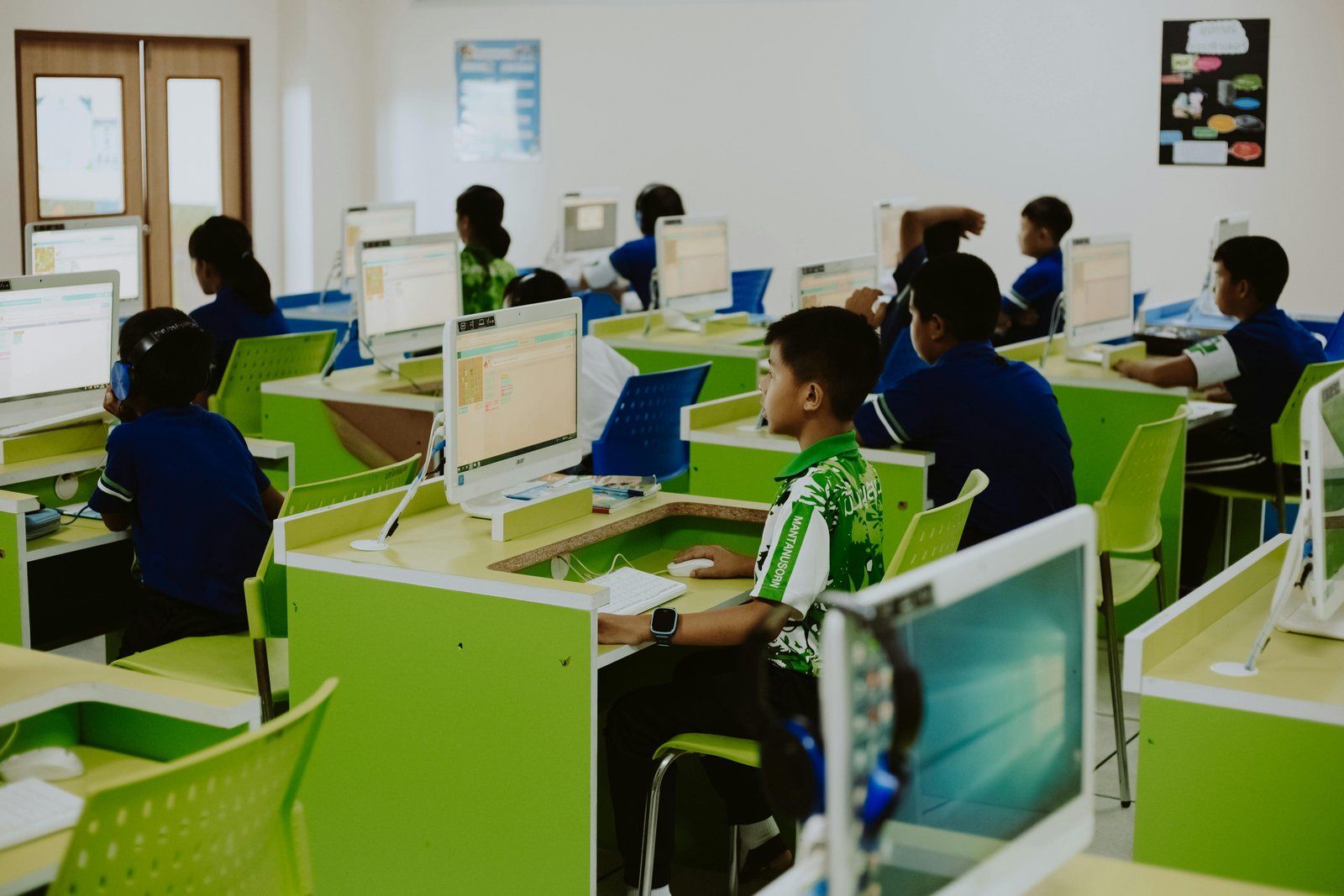
What the study found
The study found that Grade 11 students had partial familiarity with simple control constructs, but persistent weaknesses in foundational programming concepts. These weaknesses included telling a program apart from an algorithm, understanding variables as memory locations, and recognizing how a guard change affects loop termination.
Why the authors say this matters
The authors say understanding students' initial conceptions can help teachers prioritize core ideas and anticipate misconceptions before instruction begins. The findings indicate that early instruction should move students from recognizing ideas to explaining them and writing short code.
What the researchers tested
The researchers gave a pre-instruction diagnostic to Grade 11 students in one upper-secondary school. The instrument used multiple-choice and True/False items across five conceptual clusters: definition of a program, language recognition, variables and data, basic conditionals, and elementary loop semantics.
What worked and what didn't
Students did somewhat better on simple control constructs than on basic concepts. A consistent format effect favored True/False recognition items over multiple-choice discrimination, while difficulties remained in distinguishing a program from an algorithm, understanding variables as memory locations, and recognizing guard change in loop termination.
What to keep in mind
This was a pilot study with a single-site scope, so its findings are limited to one upper-secondary school. The abstract does not describe additional limitations beyond that.
Key points
- Grade 11 students showed partial familiarity with simple control constructs.
- Students had persistent weaknesses in core ideas such as programs vs. algorithms and variables as memory locations.
- Recognition-based True/False items were answered more successfully than multiple-choice items.
- The diagnostic covered five clusters: programs, language recognition, variables and data, conditionals, and loop semantics.
- The study was a pilot at one upper-secondary school.
Disclosure
- Research title:
- Grade 11 students showed gaps in basic programming concepts
- Authors:
- Sofia Kasotaki
- Institutions:
- University of Western Macedonia
- Publication date:
- 2026-02-26
- OpenAlex record:
- View
- Image credit:
- Pexels • Ron Lach · Pexels License
Get the weekly research newsletter
Stay current with peer-reviewed research without reading academic papers — one filtered digest, every Friday.