

AI Summary of Peer-Reviewed Research
This page presents an AI-generated summary of a published research paper. The original authors did not write or review this article. See full disclosure ↓
Publication Signals show what we were able to verify about where this research was published.STRONGWe verified multiple publication signals for this source, including independently confirmed credentials. Publication Signals reflect the source’s verifiable credentials, not the quality of the research.
- ✔ Peer-reviewed source
- ✔ Published in indexed journal
- ✔ No retraction or integrity flags
Overview
This study examines projected changes in rain-on-snow (RoS) events across the upper Gallatin River watershed, an alpine headwater system within the Greater Yellowstone Ecosystem, under future warming scenarios. The research addresses the hydrologic implications of precipitation phase transitions in mountain regions where warming temperatures alter the partitioning between snowfall and rainfall, with potential consequences for streamflow generation and aquatic systems.
Methods and approach
High-resolution SnowModel simulations (30 m spatial resolution) were executed for the period 2001-2013 under two scenarios: a control scenario using historical meteorological observations and a pseudo-global-warming scenario incorporating temperature and precipitation perturbations representative of mean end-of-century conditions under a high-emissions emissions scenario. Model outputs were analyzed across elevation bands to characterize changes in snow accumulation, precipitation phase, and RoS event frequency and intensity. Particular attention was directed toward processes at elevations above 2500 meters where RoS events were projected to become more frequent.
Key Findings
SnowModel projections reveal elevation-dependent responses to warming. At elevations below 2500 meters, warmer air temperatures reduced snow accumulation and the fraction of precipitation occurring as snow. Above 2500 meters, baseline colder temperatures limited winter snowfall reductions but did not prevent increased RoS occurrence. Spring months (April-June) showed substantially higher rainfall under the warming scenario. Elevations between 2500-3100 meters exhibited particularly pronounced snowmelt responses to RoS events, with watershed-averaged melt approximately doubling during RoS events under the warming scenario compared to the control.
Implications
The projected intensification of RoS events has substantive implications for downstream hydrologic systems and aquatic resources. Enhanced melt rates during RoS events can alter thermal regimes, sediment transport dynamics, and water quality parameters in receiving waterbodies. The concentration of high-intensity melt events during spring months may increase challenges for operational streamflow forecasting systems that rely on conventional snowpack-based prediction frameworks. Quantifying these changes provides critical information for adaptive water resource management and ecosystem conservation strategies in Greater Yellowstone headwaters. The elevation-dependent nature of projected changes suggests that mid-elevation zones warrant particular management attention given their outsized contribution to RoS-driven runoff generation.
Disclosure
- Research title: Snow simulations predict future changes in rain-on-snow events across the upper Gallatin River watershed, a Greater Yellowstone Ecosystem headwater system
- Authors: Sarah K. Newcomb, Theodore B. Barnhart, Aaron Heldmyer, Meryl B. Storb
- Institutions: United States Geological Survey, Trout Unlimited, Norwegian Geotechnical Institute
- Publication date: 2026-02-24
- DOI: https://doi.org/10.1016/j.ejrh.2026.103253
- OpenAlex record: View
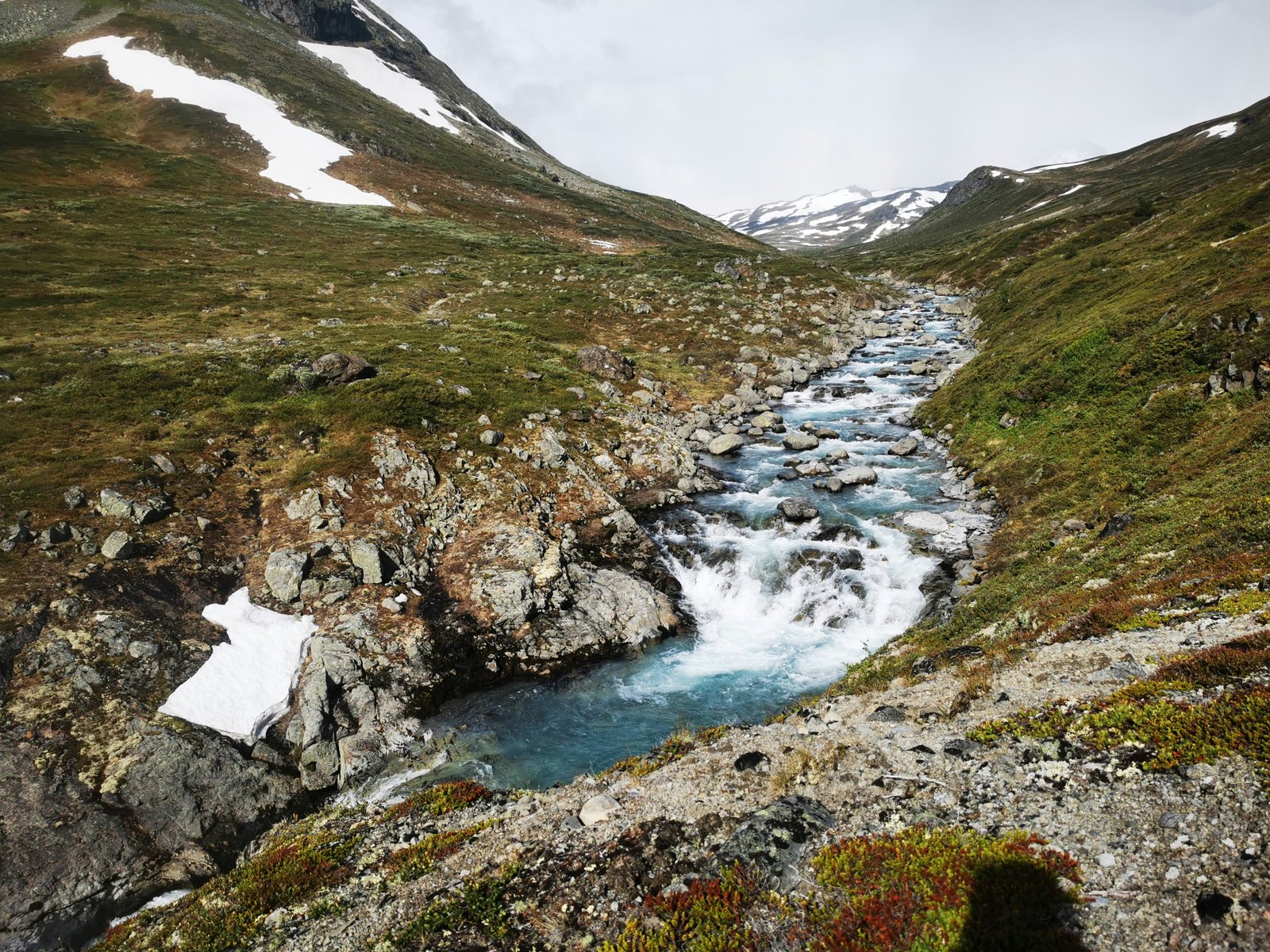
- Image credit: Photo by Mathis Garberg on Unsplash (Source • License)
- Disclosure: This post was generated by Claude (Anthropic). The original authors did not write or review this post.
Get the weekly research newsletter
Stay current with peer-reviewed research without reading academic papers — one filtered digest, every Friday.