

Rural Outmigration and Land Use Changes in the High Monte of Northwest Argentina

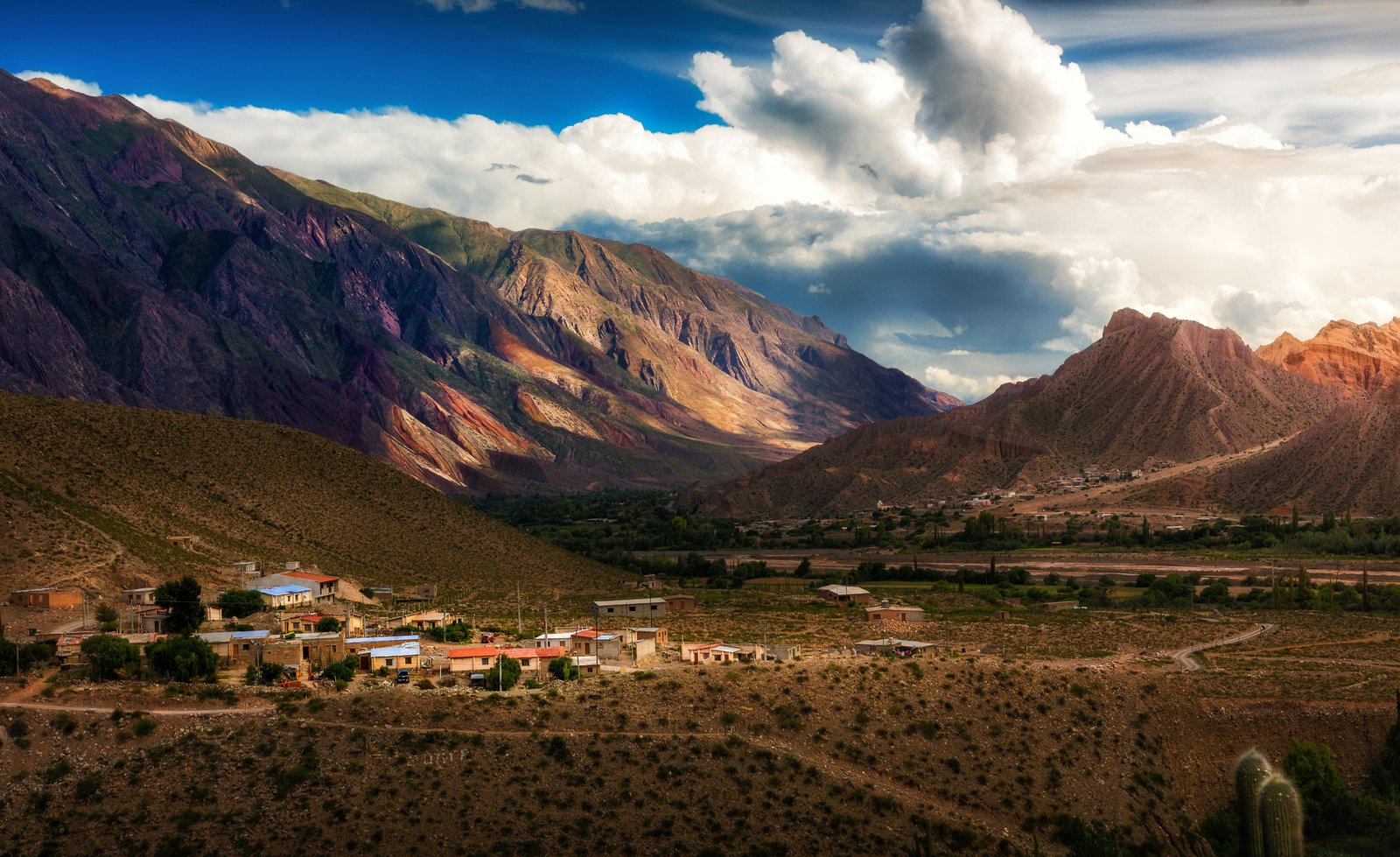
Aerial photograph of a dispersed rural settlement nestled in a mountain valley with arid, rocky terrain, scattered buildings and structures, cultivated agricultural land, dramatic mountain peaks in the background, and a clear blue sky with white clouds.
Image Credit: Photo by Agustin Devani on Pexels (SourceLicense)

AI Summary of Peer-Reviewed Research

This page presents an AI-generated summary of a published research paper. The original authors did not write or review this article. See full disclosure ↓

⚠️ This summary is for informational purposes only and does not constitute legal advice. Laws vary by jurisdiction and change over time. Consult a qualified legal professional for advice specific to your situation.

Mountain Research and Development·2026-04-07·Peer-reviewed·View original paper ↗·Follow this topic (RSS)
Publication Signals show what we were able to verify about where this research was published.MODERATECore publication signals for this source were verified. Publication Signals reflect the source’s verifiable credentials, not the quality of the research.
  • ✔ Peer-reviewed source
  • ✔ Published in indexed journal
  • ✔ No retraction or integrity flags

Key findings from this study

This research indicates that:

  • Population in the High Monte region concentrates in emerging valley cities and provincial centers while abandoning mountainous terrain unsuitable for agriculture.
  • Livestock populations declined in most departments, indicating reduced pastoral activity across the region.
  • Cultivated areas show divergent responses across departments, with deintensification in some areas and intensification in others tied to demographic concentration.

Overview

This study examines rural outmigration patterns and associated land use changes in the High Monte region of northwest Argentina. The research identifies how demographic shifts toward emerging cities correlate with agricultural intensification in suitable areas and abandonment of marginal mountainous lands. Educational, socioeconomic, and cultural factors drive youth migration, reshaping regional economic and environmental dynamics.

Methods and approach

The analysis integrates data from Argentina's National Population Census and National Agricultural Census to document migratory movements within and outside the High Monte. The authors evaluated demographic changes across regional and local scales, stratifying results by population density and cultivated area extent. Livestock head counts and crop production areas were tracked across departments to assess agricultural activity shifts.

Results

Population movements show residents predominantly remaining within northwest Argentina while concentrating in emerging cities located in valleys, departmental seats, and provincial capitals. At the local scale, mountainous areas unsuitable for agriculture experienced significant abandonment, whereas valley centers and population hubs with viable agricultural land exhibited growth. Livestock populations declined across most departments, whereas cultivated areas contracted in half the departments studied and expanded in the other half. These demographic shifts correspond to differentiated patterns of agricultural activity, with some areas undergoing deintensification while others show intensification tied to population concentration and land suitability.

Implications

Emerging cities function as regional population anchors, retaining residents at broader scales while simultaneously driving deagrarianization of marginal lands. This geographic reorganization reflects adaptation to economic opportunities in urban centers rather than expansion of agricultural production capacity. The heterogeneous response of cultivated areas across departments suggests that land use outcomes depend on local agricultural viability and infrastructure conditions rather than migration patterns alone. Understanding these coupled demographic-agricultural transitions remains essential for regional development planning and environmental management in areas experiencing widespread rural depopulation.

Scope and limitations

This summary is based on the study abstract and available metadata. It does not include a full analysis of the complete paper, supplementary materials, or underlying datasets unless explicitly stated. Findings should be interpreted in the context of the original publication.

Disclosure

  • Research title: Rural Outmigration and Land Use Changes in the High Monte of Northwest Argentina
  • Authors: Ana L. Dip Yordanoff, A. Sofía Nanni, Sofía Marinaro Fuentes
  • Institutions: Centro Científico Tecnológico – Tucumán, Consejo Nacional de Investigaciones Científicas y Técnicas, National University of Tucumán
  • Publication date: 2026-04-07
  • DOI: https://doi.org/10.1659/mrd.2025.00038
  • OpenAlex record: View
  • PDF: Download
  • Image credit: Photo by Agustin Devani on Pexels (SourceLicense)
  • Disclosure: This post was generated by Claude (Anthropic). The original authors did not write or review this post.

Get the weekly research newsletter

Stay current with peer-reviewed research without reading academic papers — one filtered digest, every Friday.

More posts