

Neural network-based approach to evaluate convective hazards frequency shift under climate change

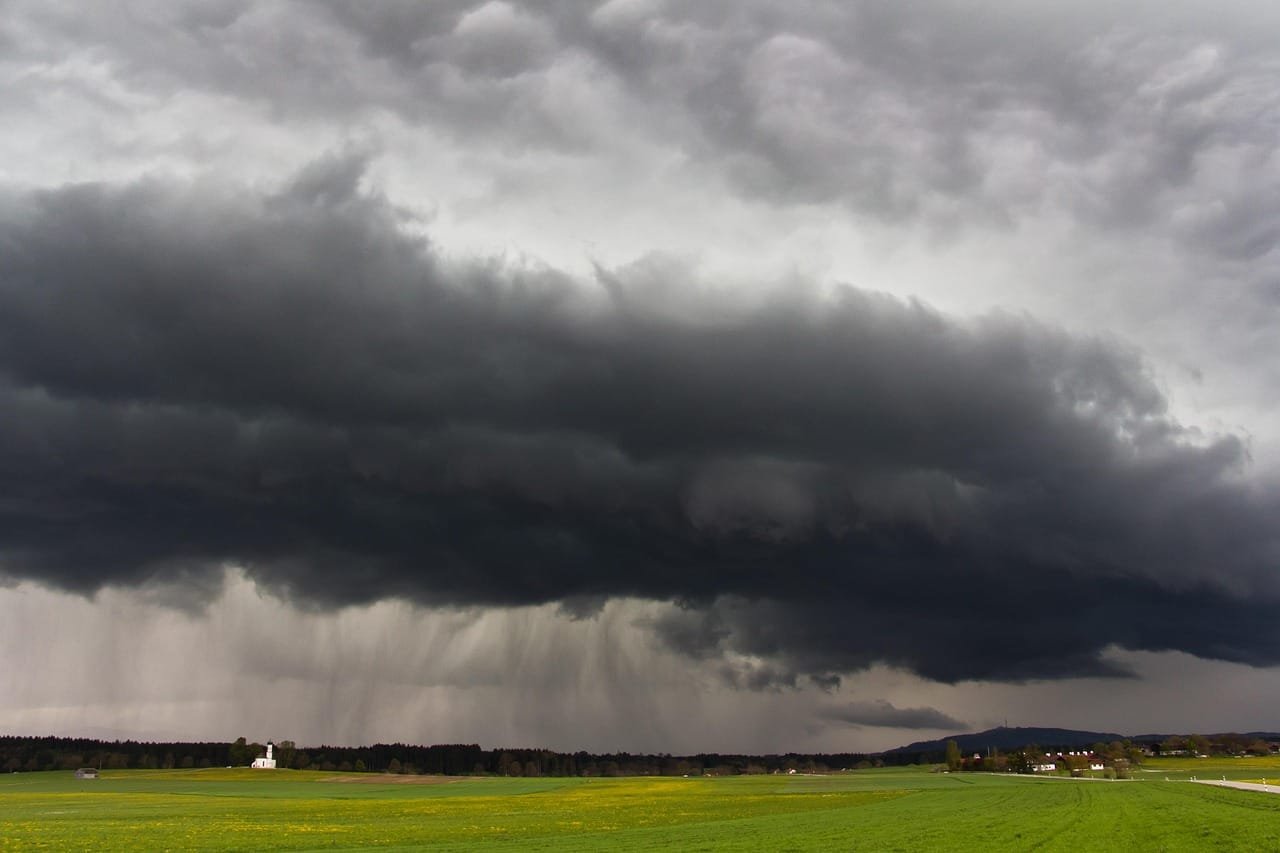
A dramatic dark storm cloud formation looms over a flat green agricultural landscape under an overcast sky.
Image Credit: Photo by DerTobiSturmjagd on Pixabay (SourceLicense)

AI Summary of Peer-Reviewed Research

This page presents an AI-generated summary of a published research paper. The original authors did not write or review this article. See full disclosure ↓

Frontiers in Climate·2026-03-30·Peer-reviewed·View original paper ↗·Follow this topic (RSS)
Publication Signals show what we were able to verify about where this research was published.STRONGWe verified multiple publication signals for this source, including independently confirmed credentials. Publication Signals reflect the source’s verifiable credentials, not the quality of the research.
  • ✔ Peer-reviewed source
  • ✔ Published in indexed journal
  • ✔ No retraction or integrity flags

Key findings from this study

This research indicates that:

  • Neural network models achieve higher prediction accuracy and reliability for convective hazards compared to standard baseline approaches when trained on climate model output.
  • Convective hazard frequency shifts under climate change exhibit marked regional variation that the model successfully captures.
  • Terrain characteristics substantially influence the spatial distribution and intensity of projected changes in extreme weather event risk.

Overview

Neural network models trained on coupled climate model output predict shifts in extreme convective event frequency under climate change. The study integrates climate forecasts with machine learning to improve prediction accuracy for intense rainfall, hail, and strong winds across regions with varying topography.

Methods and approach

A physics-informed neural network architecture leverages Coupled Model Intercomparison Project data to capture climate-specific features relevant to convective hazards. The proposed model was benchmarked against standard baseline approaches to evaluate accuracy and reliability gains.

Results

The neural network architecture demonstrated superior performance compared to common baseline methods in both accuracy and reliability metrics. The model identified regional variations in extreme event frequency shifts driven by climate change trajectories. Terrain roughness emerged as a significant factor modulating the spatial distribution of convective hazard risk, with elevated regions and complex topography showing distinct response patterns to changing atmospheric conditions.

Implications

Improved prediction of regional convective hazard frequency shifts enables more targeted adaptation planning for infrastructure and communities facing increasing extreme weather threats. The integration of physics-based climate model constraints with deep learning advances operational forecasting capabilities for mid-term planning horizons. Results suggest that site-specific topographic context requires explicit consideration in climate risk assessments for accurate localization of hazard changes.

Scope and limitations

This summary is based on the study abstract and available metadata. It does not include a full analysis of the complete paper, supplementary materials, or underlying datasets unless explicitly stated. Findings should be interpreted in the context of the original publication.

Disclosure

  • Research title: Neural network-based approach to evaluate convective hazards frequency shift under climate change
  • Authors: Mikhail Mozikov, Daria Taniushkina, Alexander Bulkin, Yubo Liu, Nazar Sotiriadi, Andrey Osiptsov, Roman Sultimov, Ilya Makarov, Yury Maximov
  • Institutions: AIRI – Artificial Intelligence Research Institute, Artificial Intelligence Research Institute, Harbin Institute of Technology, InterDigital (United States), Kuban State University, Moscow Region State University, National University of Science and Technology
  • Publication date: 2026-03-30
  • DOI: https://doi.org/10.3389/fclim.2026.1779183
  • OpenAlex record: View
  • PDF: Download
  • Image credit: Photo by DerTobiSturmjagd on Pixabay (SourceLicense)
  • Disclosure: This post was generated by Claude (Anthropic). The original authors did not write or review this post.

Get the weekly research newsletter

Stay current with peer-reviewed research without reading academic papers — one filtered digest, every Friday.

More posts