

AI Summary of Peer-Reviewed Research
This page presents an AI-generated summary of a published research paper. The original authors did not write or review this article. See full disclosure ↓
⚠️ This article summarizes published research and is intended for informational purposes only. It does not constitute medical advice or clinical guidance.
Publication Signals show what we were able to verify about where this research was published.STRONGWe verified multiple publication signals for this source, including independently confirmed credentials. Publication Signals reflect the source’s verifiable credentials, not the quality of the research.
- ✔ Peer-reviewed source
- ✔ Published in indexed journal
- ✔ No retraction or integrity flags
Key findings from this study
This research indicates that:
- lightweight liquid neural networks achieved 91.9% test accuracy for identifying concurrent periodontitis and type 2 diabetes from salivary metabolic fingerprints
- 100% recall for the high-risk co-occurring disease group demonstrates strong sensitivity for the target clinical phenotype
- deep-learning models substantially exceeded conventional classifiers by exploiting sequential structure within mass spectrometry data
- the lightweight architecture required approximately one-third the trainable parameters of other recurrent networks while achieving superior performance
Overview
This feasibility study evaluated salivary metabolic fingerprinting combined with machine learning to identify individuals with concurrent periodontitis and type 2 diabetes. Researchers analyzed 426 participants across three groups: healthy controls, periodontitis alone, and periodontitis with diabetes. The approach integrates rapid mass spectrometry analysis with demographic data to screen for a high-risk clinical phenotype.
Methods and approach
Probe electrospray ionization mass spectrometry acquired salivary metabolic profiles in approximately 0.7 minutes per sample. A lightweight liquid neural network classifier processed spectral data alongside age and sex covariates. Researchers compared performance against conventional classifiers (partial least squares discriminant analysis, random forest, support vector machine) and recurrent deep-learning architectures (bidirectional long short-term memory, multi-head attention LSTM). The dataset split into 80% training and 20% test sets.
Results
Deep-learning models substantially outperformed conventional approaches by leveraging the sequential structure of mass-to-charge ordered spectral data. The lightweight liquid neural network achieved 91.9% test accuracy with 100% recall for the periodontitis-diabetes group while requiring approximately one-third the trainable parameters of competing recurrent architectures. Conventional models generated limited performance, achieving area under the curve scores between 0.73 and 0.78.
Implications
The integration of rapid metabolic profiling with efficient neural networks presents a feasible strategy for non-invasive screening of bidirectionally linked chronic diseases. This approach may facilitate early identification of individuals at elevated clinical risk, enabling timely intervention for both periodontitis and glycemic control. The reduced computational requirements of the lightweight architecture suggest scalability for point-of-care or high-throughput clinical deployment.
Scope and limitations
This summary is based on the study abstract and available metadata. It does not include a full analysis of the complete paper, supplementary materials, or underlying datasets unless explicitly stated. Findings should be interpreted in the context of the original publication.
Disclosure
- Research title: Lightweight liquid neural networks decipher salivary metabolic fingerprinting for high-risk periodontitis screening in diabetes
- Authors: Yizhou Liu, Ya Zhao, Zhenhe Chen, Qin Liang, Yajuan Lei, Lilei Zhu, Xiaodong Li, Chao Yuan
- Institutions: Jinan Stomatological Hospital, National Clinical Research, National Clinical Research Center for Digestive Diseases, Peking University, Shimadzu (China), Shimadzu (Japan)
- Publication date: 2026-04-07
- DOI: https://doi.org/10.1038/s41746-026-02593-7
- OpenAlex record: View
- PDF: Download
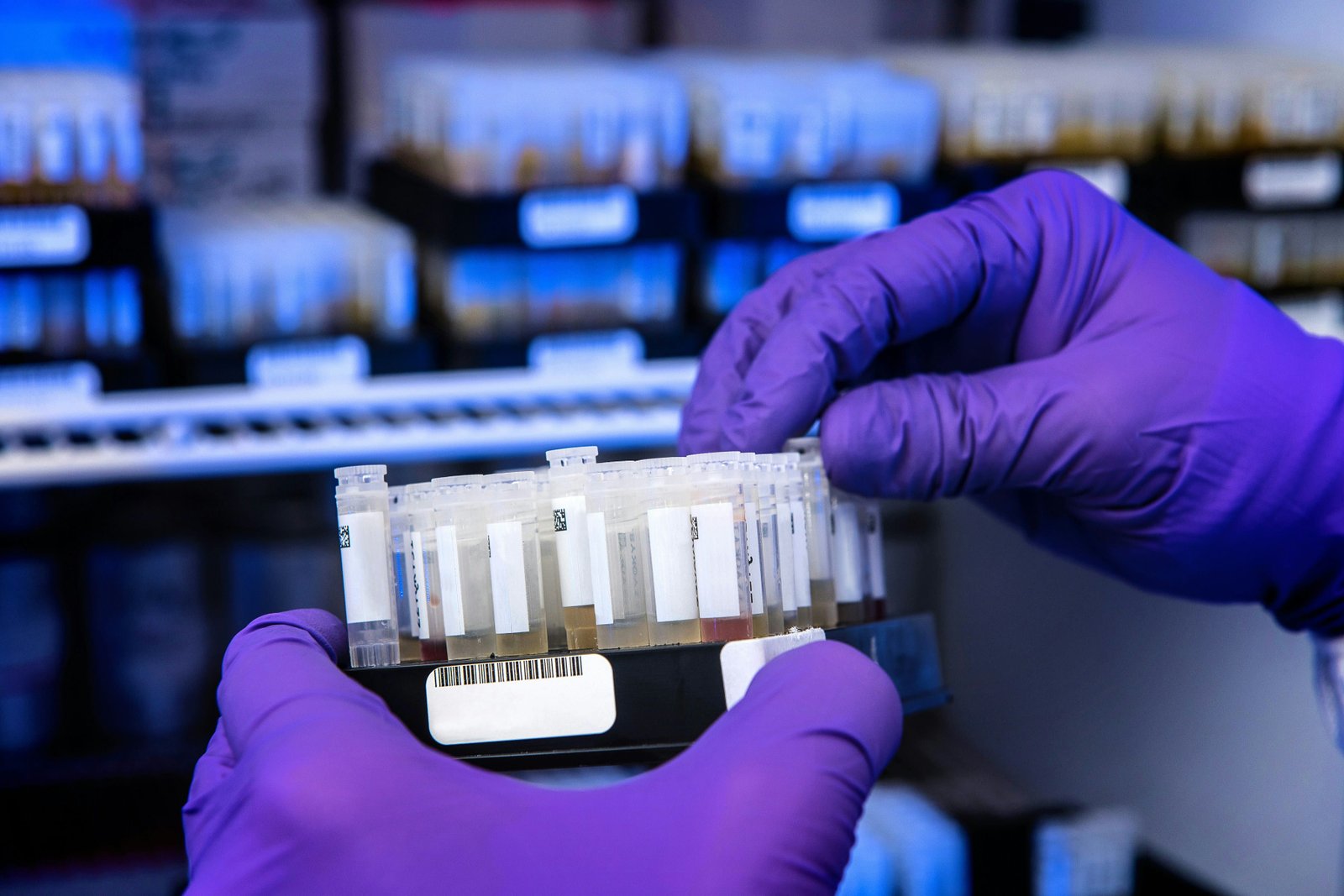
- Image credit: Photo by CDC on Unsplash (Source • License)
- Disclosure: This post was generated by Claude (Anthropic). The original authors did not write or review this post.
Get the weekly research newsletter
Stay current with peer-reviewed research without reading academic papers — one filtered digest, every Friday.