

AI Summary of Peer-Reviewed Research
This page presents an AI-generated summary of a published research paper. The original authors did not write or review this article. See full disclosure ↓
⚠️ This article summarizes published research and is intended for informational purposes only. It does not constitute medical advice or clinical guidance.
Publication Signals show what we were able to verify about where this research was published.MODERATECore publication signals for this source were verified. Publication Signals reflect the source’s verifiable credentials, not the quality of the research.
- ✔ Peer-reviewed source
- ✔ No retraction or integrity flags
Key findings from this study
This research indicates that:
- Conventional drilling resulted in significantly less crestal bone loss than bone expansion or ridge split techniques at 3, 6, and 12 months.
- Ridge split procedures generated the greatest crestal bone loss among the three techniques throughout the follow-up period.
- Crestal bone loss stabilized between 6 and 12 months in the conventional drilling group but continued to increase in the other two groups.
Overview
This prospective clinical comparative study evaluated crestal bone loss patterns around dental implants placed using three different site preparation techniques: conventional drilling, bone expansion, and ridge split procedures. Seventy-two implant sites in patients aged 25-55 years were stratified into three groups of 24 implants each. Cone-beam computed tomography assessed crestal bone levels at implant placement and at 3, 6, and 12 months of follow-up.
Methods and approach
Crestal bone loss was measured at mesial and distal sites using cone-beam computed tomography imaging. Intergroup comparisons employed one-way analysis of variance with Tukey's post hoc test. Intragroup temporal changes were analyzed using repeated-measures analysis of variance. Chi-square testing compared categorical variables. Statistical significance threshold was set at p less than 0.05.
Results
Crestal bone loss increased progressively over 12 months in all three groups. Intergroup analysis revealed statistically significant differences in mesial and distal crestal bone loss at all measurement intervals with p less than 0.001. The ridge split group exhibited the greatest bone loss, followed by bone expansion, with conventional drilling demonstrating the least bone loss across all time points. Intragroup analysis confirmed significant increases in crestal bone loss over time within each group with p less than 0.001. However, bone loss progression in the conventional drilling group plateaued between 6 and 12 months, showing no statistically significant change with p greater than 0.05. All pairwise comparisons between groups achieved statistical significance with p less than 0.001.
Implications
The choice of implant site preparation technique substantially affects early peri-implant bone remodeling patterns. Conventional drilling produces the most favorable bone response, suggesting it may optimize long-term implant stability when adequate ridge dimensions permit its use. Bone expansion and ridge split procedures, while necessary for compromised ridge anatomy, generate greater bone resorption during initial healing phases. Clinicians should consider these differential remodeling patterns when selecting site preparation techniques. Conventional drilling appears advantageous for bone preservation, yet surgical approach selection remains constrained by initial ridge morphology and dimension. These findings support tailoring technique selection to individual ridge conditions while anticipating the bone loss profile associated with each approach.
Scope and limitations
This summary is based on the study abstract and available metadata. It does not include a full analysis of the complete paper, supplementary materials, or underlying datasets unless explicitly stated. Findings should be interpreted in the context of the original publication.
Disclosure
- Research title: Evaluation and Comparison of Crestal Bone Loss Around Dental Implants Placed Using Conventional Drilling, Bone Expansion, and Ridge Split Techniques: An In Vivo Study
- Authors: Keshav Goyal, Sukant Sahoo, Aakarshan Dayal Gupta, Supriya Dahiya, Prerika Agarwal, Shivam Katyal, Rahul Verma, Sanjoy Dutta, Riya Phade, Seema Gupta
- Publication date: 2026-03-30
- DOI: https://doi.org/10.7759/cureus.106119
- OpenAlex record: View
- PDF: Download
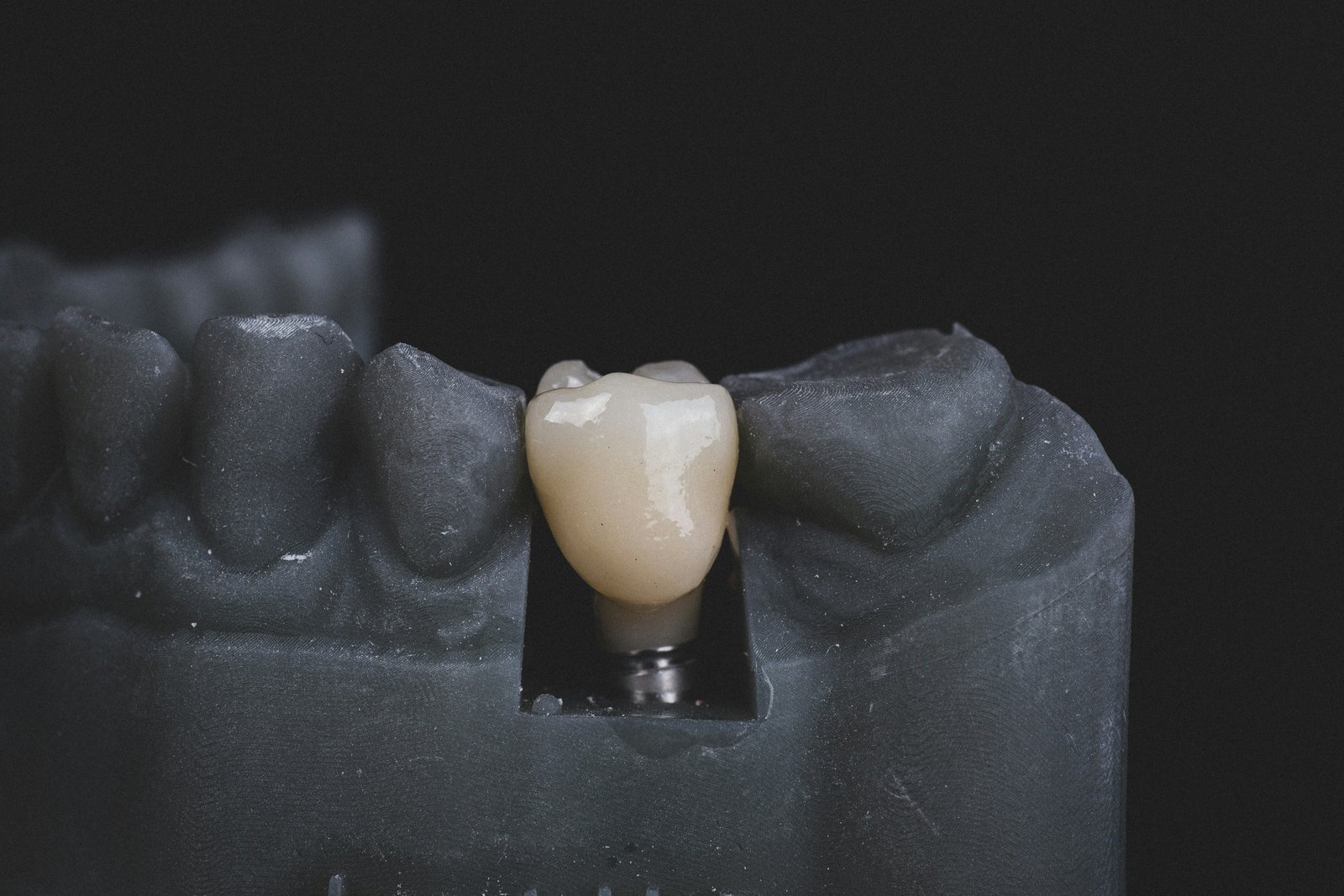
- Image credit: Photo by Bogdan condr on Unsplash (Source • License)
- Disclosure: This post was generated by Claude (Anthropic). The original authors did not write or review this post.
Get the weekly research newsletter
Stay current with peer-reviewed research without reading academic papers — one filtered digest, every Friday.