

AI Summary of Peer-Reviewed Research
This page presents an AI-generated summary of a published research paper. The original authors did not write or review this article. See full disclosure ↓
Publication Signals show what we were able to verify about where this research was published.STRONGWe verified multiple publication signals for this source, including independently confirmed credentials. Publication Signals reflect the source’s verifiable credentials, not the quality of the research.
- ✔ Peer-reviewed source
- ✔ Published in indexed journal
- ✔ No retraction or integrity flags
Key findings from this study
This research indicates that:
- Heavy rainfall intensifies in both basins under future climate scenarios, especially during the southwest monsoon and under RCP8.5, with design rainfall rising across all return periods.
- Spatial patterns differ between basins, with Pampanga showing largest increases in the lower western catchment and Pasig-Marikina-Laguna-Lake Basin exhibiting more uniform increases.
- Consecutive dry days increase and consecutive wet days decrease, indicating greater hydroclimatic variability with wetter wet seasons and drier dry periods.
Overview
This study produces high-resolution climate projections for two major river basins in Central Luzon, Philippines—the Pampanga River Basin and the Pasig-Marikina-Laguna-Lake Basin—to assess future changes in rainfall extremes and drought conditions. The Philippines faces severe climate vulnerability, with Central Luzon experiencing recurrent extreme rainfall, floods, and droughts expected to intensify under continued warming. The research employs dynamical downscaling of global climate models to 5 km resolution using the Weather Research and Forecasting model, bias-corrected with quantile mapping. Projections were generated under RCP2.6 and RCP8.5 scenarios to evaluate changes in seasonal rainfall, heavy-rainfall indices, drought indicators, and design rainfall for infrastructure planning.
Methods and approach
The study dynamically downscaled MRI-AGCM 3.2H (60 km) and 3.2S (20 km) global climate model outputs to 5 km resolution using the Weather Research and Forecasting model. Bias correction applied the quantile-mapping method to improve accuracy against observational data. Analysis focused on seasonal rainfall patterns, heavy-rainfall indices defined as daily totals exceeding 50 mm and 95th to 99th percentiles, and drought indicators including consecutive dry days (CDD) and consecutive wet days (CWD). Design rainfall estimates were derived from annual maxima distributions for various return periods. Projections covered RCP2.6 and RCP8.5 scenarios to span low and high emission pathways. Regional evidence from CORDEX-SEA and CMIP6 multi-model ensembles informed the selection of intensifying rainfall extremes across Southeast Asia as a context for basin-scale projections.
Results
Both basins show clear intensification of heavy rainfall under future climate scenarios, with the strongest increases occurring during the southwest monsoon season and under RCP8.5. Annual-maximum rainfall distributions shift consistently toward higher extreme values, yielding elevated design rainfall across all return periods analyzed. Spatial heterogeneity distinguishes the two basins: Pampanga exhibits the largest increases in its lower western catchment, whereas the Pasig-Marikina-Laguna-Lake Basin demonstrates more spatially uniform increases across the entire basin area.
Drought indicators reveal increased hydroclimatic variability characterized by more consecutive dry days and fewer consecutive wet days. This pattern suggests a polarization of the seasonal water cycle, with wetter wet seasons juxtaposed against drier dry periods. The 5 km resolution and bias-correction procedures yield physically consistent projections suitable for detailed hazard assessment and infrastructure design applications at the basin scale.
Implications
The projected intensification of heavy rainfall and elevated design rainfall values necessitate recalibration of flood hazard assessments and water infrastructure design standards in both basins. Existing drainage systems, flood control structures, and urban planning frameworks may prove inadequate under future rainfall regimes, particularly during the southwest monsoon when increases are most pronounced. The spatial variability between basins underscores the importance of basin-specific rather than regional-scale projections for accurate risk quantification and targeted adaptation measures.
Simultaneous increases in consecutive dry days and intensification of wet-season rainfall point to amplified seasonal extremes requiring integrated water resource management strategies. Agricultural planning must accommodate both flood risk during monsoon periods and drought stress during dry seasons. The physically consistent, bias-corrected projections generated at 5 km resolution provide suitable inputs for hydrological modeling, economic impact assessment, and climate-resilient infrastructure design, supporting evidence-based adaptation planning in one of the world's most climate-vulnerable regions.
Scope and limitations
This summary is based on the study abstract and available metadata. It does not include a full analysis of the complete paper, supplementary materials, or underlying datasets unless explicitly stated. Findings should be interpreted in the context of the original publication.
Disclosure
- Research title: Downscaled Climate Projections for Rainfall Extremes and Drought in Pampanga River and Pasig-Marikina-Laguna-Lake Basin
- Authors: Ralph Allen E. Acierto, Tomoki Ushiyama, Patricia Ann Jaranilla-Sanchez, Miho Ohara
- Institutions: Public Works Research Institute, The University of Tokyo, University of the Philippines Los Baños
- Publication date: 2026-03-31
- DOI: https://doi.org/10.20965/jdr.2026.p0287
- OpenAlex record: View
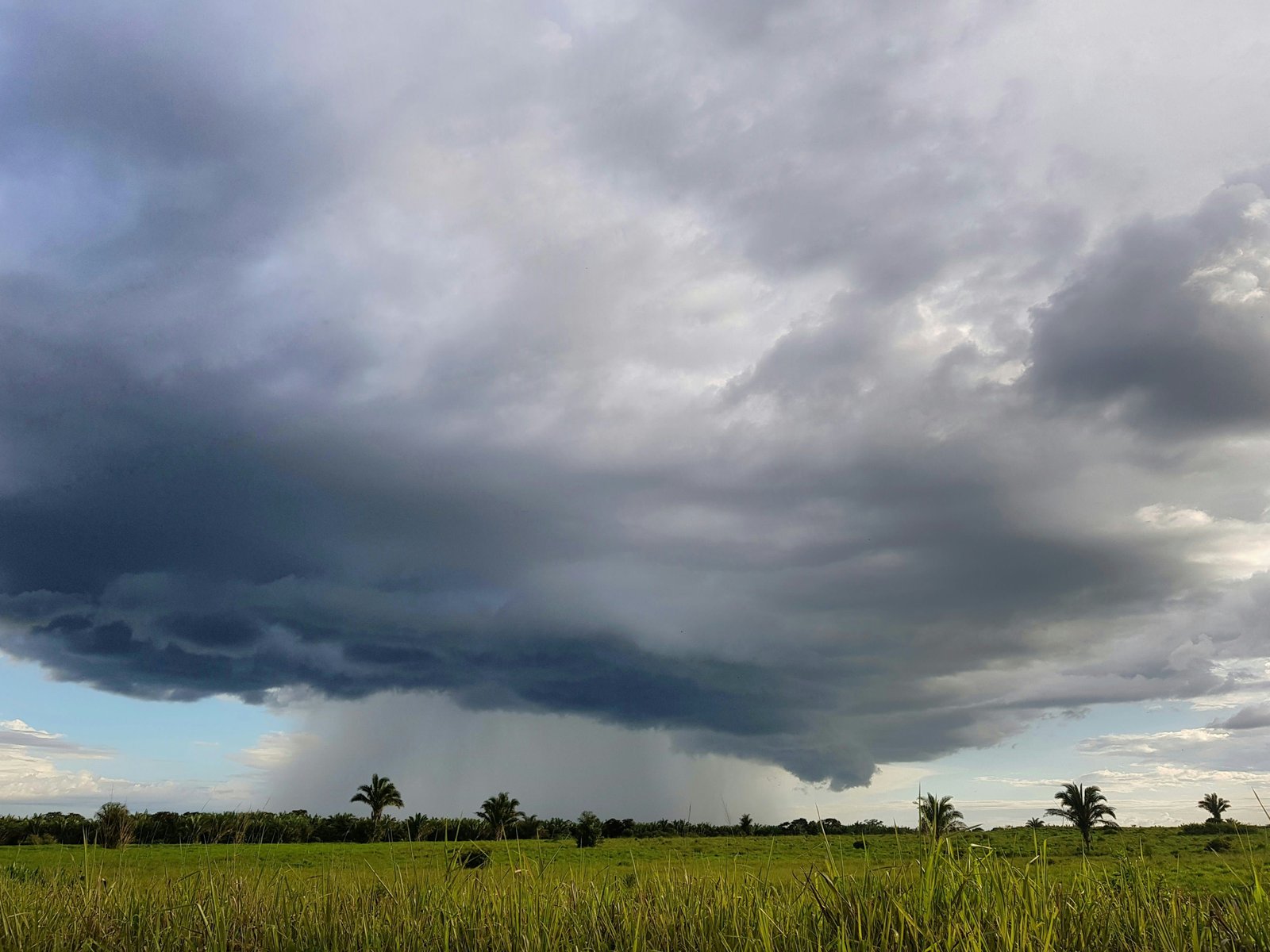
- Image credit: Photo by Rainon on Unsplash (Source • License)
- Disclosure: This post was generated by Claude (Anthropic). The original authors did not write or review this post.
Get the weekly research newsletter
Stay current with peer-reviewed research without reading academic papers — one filtered digest, every Friday.