

AI Summary of Peer-Reviewed Research
This page presents an AI-generated summary of a published research paper. The original authors did not write or review this article. See full disclosure ↓
Publication Signals show what we were able to verify about where this research was published.STRONGWe verified multiple publication signals for this source, including independently confirmed credentials. Publication Signals reflect the source’s verifiable credentials, not the quality of the research.
- ✔ Peer-reviewed source
- ✔ Published in indexed journal
- ✔ No retraction or integrity flags
Key findings from this study
This research indicates that:
- Croplands consistently cool tropical African surfaces at night relative to grasslands, independent of regional moisture conditions.
- Daytime cropland temperature effects depend critically on hydroclimatic conditions, with cooling in arid regions but warming in less arid regions.
- Turbulent heat flux changes driven by cropland-induced leaf area index differences constitute the primary biophysical mechanism underlying observed temperature variations.
- Reduced turbulent heat dissipation from croplands in wetter regions produces daytime warming through either direct leaf area effects or indirect surface albedo-mediated pathways.
Overview
Cropland expansion across tropical Africa modulates land surface temperature through biophysical mechanisms that vary diurnally and across hydroclimatic gradients. Satellite observations spanning 17 years quantify these temperature differences between croplands and adjacent grasslands, revealing distinct nighttime cooling regardless of climate conditions but opposing daytime effects contingent on aridity levels.
Methods and approach
The study employed 17 years of geostationary satellite thermal observations combined with a space-for-time substitution approach to measure diurnal land surface temperature differences between croplands and surrounding grasslands. Biophysical mechanism analyses examined turbulent heat flux changes and leaf area index variations as explanatory drivers of observed temperature patterns across moisture gradients.
Results
Croplands consistently produce nighttime surface cooling relative to grasslands throughout tropical Africa. Daytime surface temperature response reverses across the hydroclimatic gradient: arid regions experience cropland-induced cooling while less arid regions experience warming. Cropland-induced turbulent heat flux changes, primarily driven by leaf area index differences, constitute the dominant mechanistic pathway explaining temperature variations.
In less arid regions, daytime surface warming emerges through reduced turbulent heat flux dissipation from croplands. This reduction occurs either directly through decreased leaf area index or indirectly through surface albedo-mediated radiative energy redistribution. Enhanced turbulent heat fluxes drive cooling in all remaining scenarios. Nighttime cooling across all regions reflects consistent patterns in thermal radiative properties and atmospheric boundary layer dynamics.
Implications
The opposing daytime temperature responses across hydroclimatic zones indicate that cropland expansion impacts local climate heterogeneously rather than uniformly. Intensification of daytime warming in wetter regions poses climate modification risks during agricultural intensification, warranting targeted climate-agronomic modeling in areas with increasing cropland coverage. These mechanisms operate independently of large-scale climate circulation patterns, suggesting localized biophysical feedbacks merit incorporation into regional climate assessments.
The dominant role of turbulent heat flux modifications indicates that cropland management practices altering leaf area development could modulate local thermal regimes. Agricultural expansion planning requires consideration of existing moisture conditions to predict directional temperature changes and potential secondary effects on convective processes and precipitation patterns.
Scope and limitations
This summary is based on the study abstract and available metadata. It does not include a full analysis of the complete paper, supplementary materials, or underlying datasets unless explicitly stated. Findings should be interpreted in the context of the original publication.
Disclosure
- Research title: Cropland biophysical impacts on land surface temperature show diurnal differences across tropical Africa
- Authors: Hao Luo, Johannes Quaas
- Institutions: German Centre for Integrative Biodiversity Research, Leipzig University
- Publication date: 2026-04-02
- DOI: https://doi.org/10.1038/s43247-026-03445-8
- OpenAlex record: View
- PDF: Download
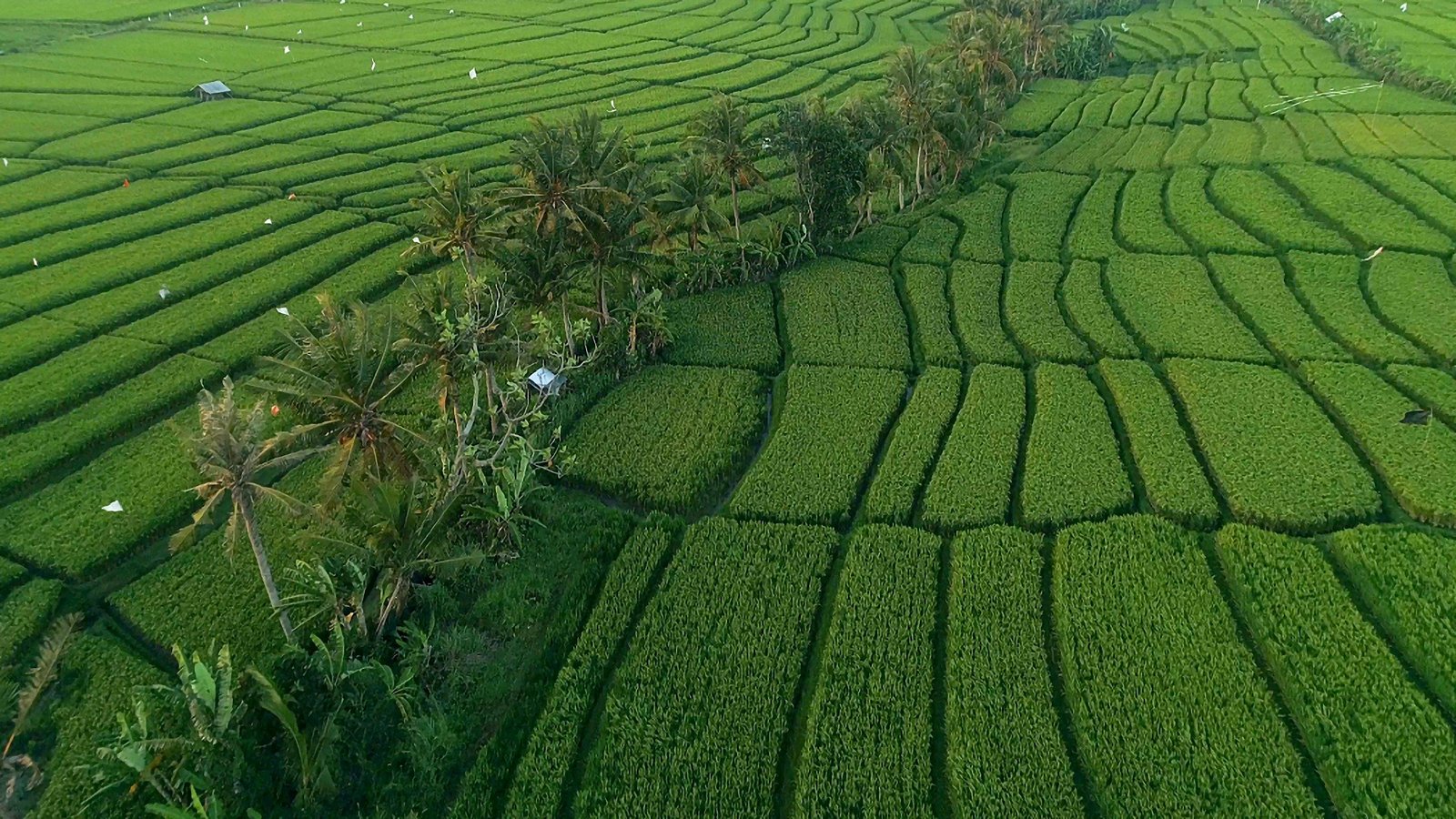
- Image credit: Photo by thanhhoa tran on Pexels (Source • License)
- Disclosure: This post was generated by Claude (Anthropic). The original authors did not write or review this post.
Get the weekly research newsletter
Stay current with peer-reviewed research without reading academic papers — one filtered digest, every Friday.