

AI Summary of Peer-Reviewed Research
This page presents an AI-generated summary of a published research paper. The original authors did not write or review this article. See full disclosure ↓
⚠️ This article summarizes published research and is intended for informational purposes only. It does not constitute medical advice or clinical guidance.
Publication Signals show what we were able to verify about where this research was published.STRONGWe verified multiple publication signals for this source, including independently confirmed credentials. Publication Signals reflect the source’s verifiable credentials, not the quality of the research.
- ✔ Peer-reviewed source
- ✔ Published in indexed journal
- ✔ No retraction or integrity flags
Overview
This cross-sectional multicenter study examined the relationships among received support, psychological capital, and distressing experiences in nurses who experienced adverse events. The research addresses a gap in the literature regarding second victim phenomena among nursing professionals, specifically investigating how psychological capital mediates the protective effect of received support on adverse psychological and emotional outcomes.
Methods and approach
A multicenter cross-sectional design was implemented across six medical institutions in Xuzhou, China. Data were collected from 422 clinical nurses with documented adverse event exposure within the preceding 12 months. Instruments included the Social-demographic Questionnaire, the Nurse Psychological Capital Scale, and the Second Victim Experience and Support Scale. Statistical analysis employed correlation and mediation analyses using SPSS version 22.0 to evaluate direct and indirect pathways between variables.
Key Findings
Statistically significant correlations were identified between received support and distressing experiences (r = 0.359, p < 0.01), between received support and psychological capital (r = -0.326, p < 0.01), and between psychological capital and distressing experiences (r = -0.434, p < 0.01). Mediation analysis confirmed that psychological capital partially mediated the relationship between received support and distressing experiences, with a mediating effect size of 0.152, representing 32.27% of the total effect. These findings indicate that both direct supportive mechanisms and psychological capital accumulation contribute to reducing distressing experiences among second victim nurses.
Implications
The results establish psychological capital as a significant mediating mechanism through which organizational support mitigates negative psychological outcomes in nurses experiencing adverse events. Institutional support interventions that increase psychological capital represent a substantive pathway for reducing distress beyond direct support alone. Healthcare administrators should integrate support systems that account for individual characteristics and specific adverse event contexts to optimize protective outcomes.
Scope and limitations
This summary is based on the study abstract and available metadata. It does not include a full analysis of the complete paper, supplementary materials, or underlying datasets unless explicitly stated. Findings should be interpreted in the context of the original publication.
Disclosure
- Research title: The impact of received support on distressing experiences among nurses as second victims: the mediating role of psychological capital
- Authors: Wei Zong, Jing Qiu, Lin Chen, Meng Zhang, Xiaobin Wang, Xiangguang Yin, Jing Wei
- Institutions: Affiliated Hospital of Xuzhou Medical College, Education Training And Research, Xuzhou Medical College
- Publication date: 2026-03-07
- DOI: https://doi.org/10.1186/s12912-026-04515-0
- OpenAlex record: View
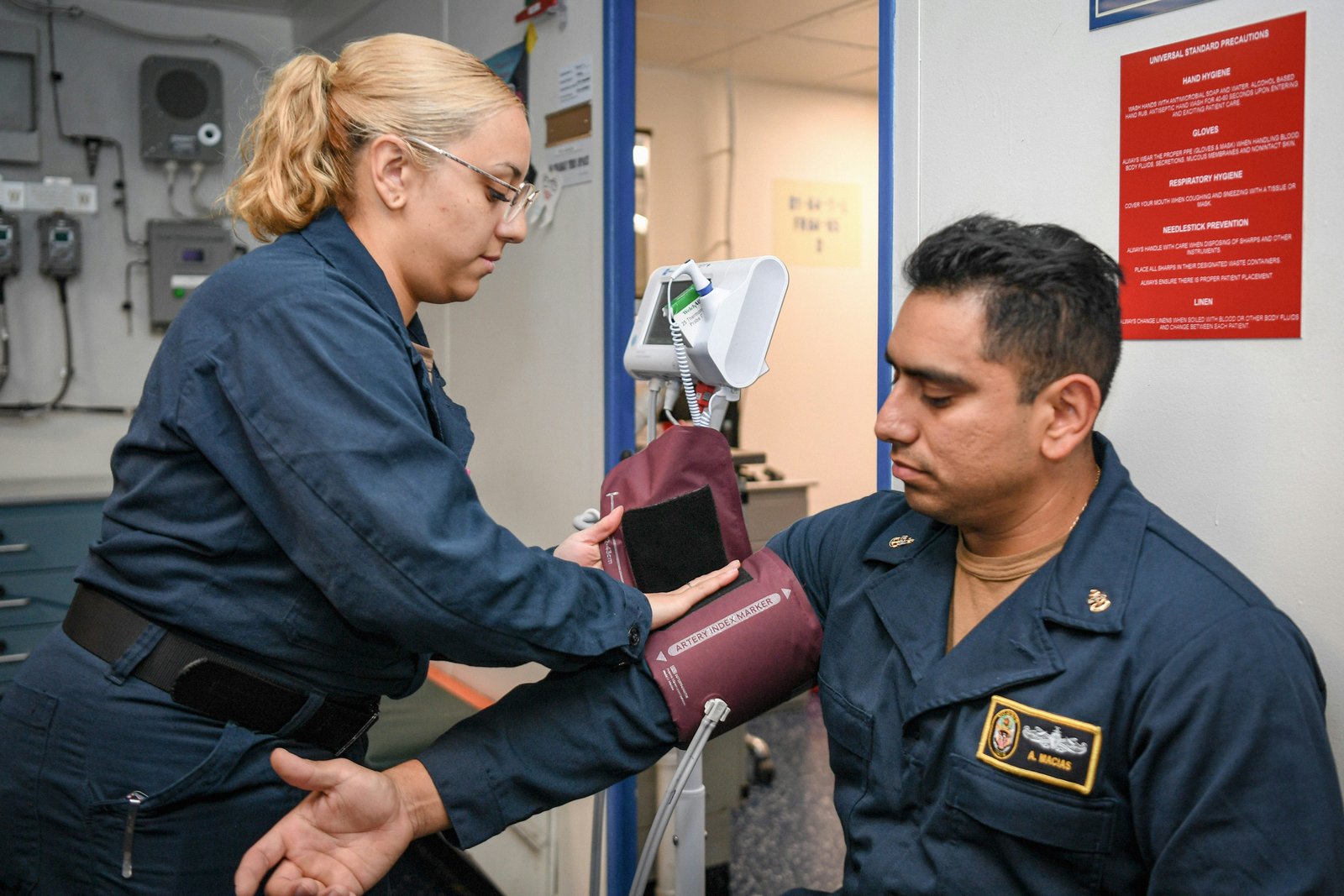
- Image credit: Photo by Navy Medicine on Unsplash (Source • License)
- Disclosure: This post was generated by Claude (Anthropic). The original authors did not write or review this post.
Get the weekly research newsletter
Stay current with peer-reviewed research without reading academic papers — one filtered digest, every Friday.