

AI Summary of Peer-Reviewed Research
This page presents an AI-generated summary of a published research paper. The original authors did not write or review this article. See full disclosure ↓
⚠️ This article summarizes published research and is intended for informational purposes only. It does not constitute medical advice or clinical guidance.
Publication Signals show what we were able to verify about where this research was published.MODERATECore publication signals for this source were verified. Publication Signals reflect the source’s verifiable credentials, not the quality of the research.
- ✔ Peer-reviewed source
- ✔ No retraction or integrity flags
Key findings from this study
This research indicates that:
- Hopelessness mediates the relationship between psychological resilience and posttraumatic embitterment symptoms in earthquake survivors.
- Nearly half of earthquake survivors in the affected region exhibited posttraumatic embitterment disorder symptoms.
- Psychological resilience and hopelessness together account for 43.7% of the variance in embitterment symptoms following disaster exposure.
Overview
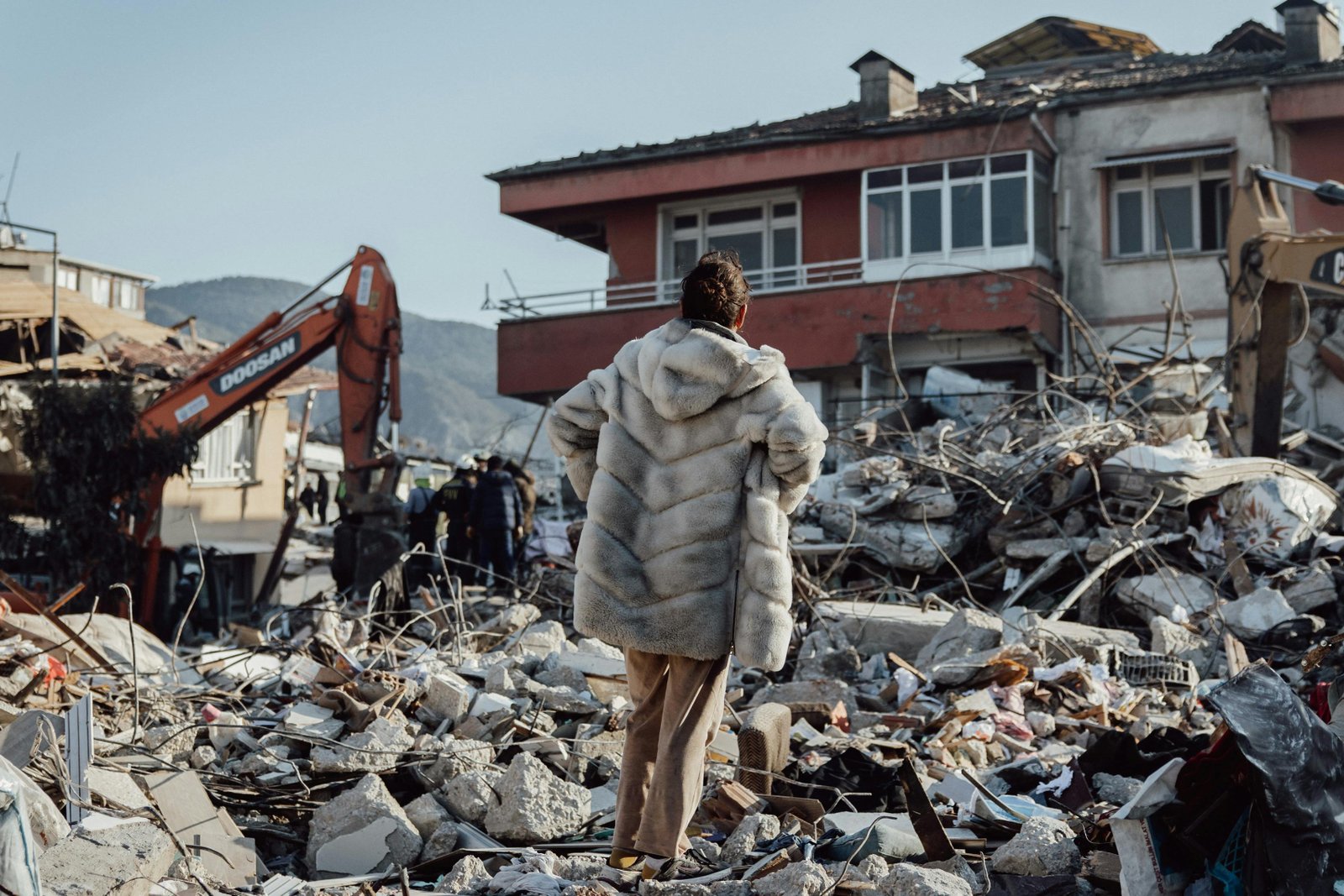
This cross-sectional study investigated posttraumatic embitterment disorder (PTED) symptoms among survivors of the February 6, 2023 earthquakes in Turkey. The research examined whether hopelessness mediates the relationship between psychological resilience and embitterment symptoms in this population. The study was conducted in Malatya, one of the severely affected regions, between July 2023 and January 2024. The earthquakes, with magnitudes of 7.6 and 7.7, impacted approximately 13 million people across 11 provinces in Turkey and neighboring Syrian regions. Survivors experienced not only natural disaster trauma but also consequences of human errors that exacerbated conditions. The research addresses a gap in disaster mental health literature by examining PTED, which has not been previously studied in earthquake survivor populations despite extensive research on posttraumatic stress disorder in similar contexts.
Methods and approach
The study employed an online cross-sectional survey design with participants completing four instruments: the PTED Scale, the Psychological Resilience Scale, the Beck Hopelessness Scale, and a sociodemographic form. Data collection occurred over six months in Malatya, one of the earthquake-affected provinces. The researchers used structural equation modeling to analyze the relationships among psychological resilience, hopelessness, and embitterment symptoms. The analysis tested four hypotheses concerning direct and mediated effects among these variables. The final sample comprised 801 participants with a mean age of 37.82 years.
Results
Nearly half of the participants (48.6%, n=389) exhibited PTED symptoms following the earthquakes. The structural equation modeling revealed that hopelessness mediated the relationship between psychological resilience and embitterment symptoms. Psychological resilience and hopelessness together explained 43.7% of the variance in embitterment (R²=0.437). All four hypotheses were confirmed: psychological resilience had significant direct effects on both embitterment and hopelessness, hopelessness had a significant direct effect on embitterment, and hopelessness mediated the relationship between resilience and embitterment.
The findings demonstrate that PTED represents a distinct psychological outcome in earthquake survivors beyond traditionally studied conditions like posttraumatic stress disorder, depression, and anxiety disorders. The mediating role of hopelessness suggests that the pathway from low psychological resilience to embitterment operates partially through feelings of hopelessness about future circumstances. The high prevalence of PTED symptoms in this population appears related to both the natural disaster trauma and the compounding effects of human errors that intensified survivors' perceptions of injustice and unfair treatment.
Implications
The identification of PTED as a significant psychological outcome in earthquake survivors necessitates reconsideration of post-disaster mental health assessment and intervention frameworks. Health authorities should incorporate PTED screening into standard post-disaster psychological evaluation protocols alongside assessments for posttraumatic stress disorder and depression. The mediating role of hopelessness indicates that interventions targeting hope restoration may effectively reduce embitterment symptoms in disaster-affected populations. Mental health services in disaster regions should prioritize hope-based therapeutic approaches as part of comprehensive treatment strategies.
The findings inform disaster preparedness and response policies by highlighting the need for preventive measures targeting populations vulnerable to embitterment. The substantial variance explained by resilience and hopelessness suggests these factors can serve as screening indicators for identifying individuals at elevated risk for PTED following natural disasters. Post-disaster mental health services should address not only immediate trauma responses but also longer-term feelings of injustice and embitterment, particularly when human errors compound natural disaster impacts. The research provides an evidence base for structuring mental health resource allocation and intervention priorities in earthquake-affected regions where survivors face prolonged uncertainty about housing, safety, and restoration of normal life conditions.
Scope and limitations
This summary is based on the study abstract and available metadata. It does not include a full analysis of the complete paper, supplementary materials, or underlying datasets unless explicitly stated. Findings should be interpreted in the context of the original publication.
Disclosure
- Research title: Evaluation of Earthquake Survivors of the February 6 Turkey Earthquakes: The Mediating Role of Hopelessness in the Relationship Between Psychological Resilience and Posttraumatic Embitterment Symptoms
- Authors: Mustafa Akan, Suheyla Unal, Feyza İnceoğlu
- Institutions: Bursa Technical University, Malatya Turgut Özal Üniversitesi, Sağlık Bilimleri Üniversitesi, Turgut Özal University
- Publication date: 2026-04-07
- DOI: https://doi.org/10.30773/pi.2025.0383
- OpenAlex record: View
- Image credit: Photo by Faruk Tokluoğlu on Pexels (Source • License)
- Disclosure: This post was generated by Claude (Anthropic). The original authors did not write or review this post.
Get the weekly research newsletter
Stay current with peer-reviewed research without reading academic papers — one filtered digest, every Friday.