

Sublimation: Towards an Ethics of Justice in the Service of Republican Rebuilding in Madagascar

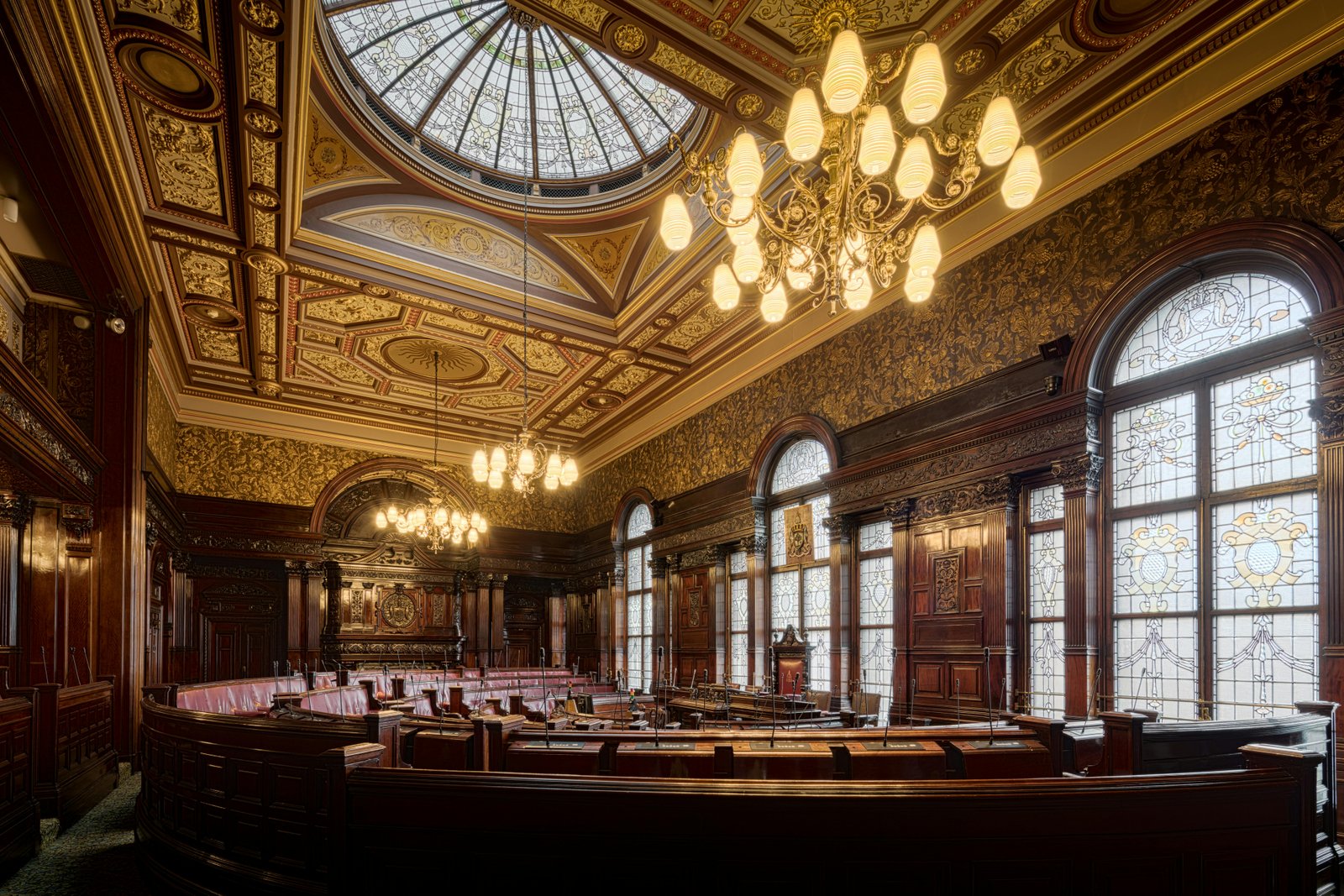
Interior of a grand legislative chamber with ornate wood paneling, decorative ceiling with skylight, crystal chandeliers, and tiered seating arranged in a semicircular configuration, featuring formal institutional architecture.
Image Credit: Photo by Michael D Beckwith on Pexels (SourceLicense)

AI Summary of Peer-Reviewed Research

This page presents an AI-generated summary of a published research paper. The original authors did not write or review this article. See full disclosure ↓

International Journal of Humanities and Social Science·2026-04-15·Peer-reviewed·View original paper ↗·Follow this topic (RSS)
Publication Signals show what we were able to verify about where this research was published.MODERATECore publication signals for this source were verified. Publication Signals reflect the source’s verifiable credentials, not the quality of the research.
  • ✔ Peer-reviewed source
  • ✔ No retraction or integrity flags

Key findings from this study

This research indicates that:

  • Executive dominance, judicial submission, and legislative partisanship characterize Madagascar's institutional dysfunction despite constitutional separation of powers.
  • Political virtue understood as self-denial is absent from governance practice and indispensable for restoring institutional trust.
  • Decentralization through local parliaments, political party reform, and civic education represent necessary interventions for republican reconstruction.

Overview

This study examines the political crisis in Madagascar six decades after independence, attributing institutional dysfunction to the absence of political virtue as conceptualized by Montesquieu. The analysis focuses on constitutional structures and power distribution among government branches. The research proposes that republican reconstruction requires ethical elevation of governance alongside territorial reorganization. The theoretical framework centers on the concept of sublimation—the transformation of power through self-denial and ethical restraint.

Methods and approach

The study employs doctrinal and documentary analysis of constitutional texts and institutional reports. The methodological approach evaluates power dynamics among Madagascar's executive, legislative, and judicial branches. The analysis draws on Montesquieu's political philosophy, particularly the concept of political virtue as self-denial. Constitutional provisions regarding separation of powers are examined against observed institutional practices.

Results

The analysis reveals systematic executive dominance over other branches of government in Madagascar. The judiciary functions in a submissive capacity rather than exercising independent authority. The legislature operates with partisan bias, undermining its constitutional role. These institutional dysfunctions generate widespread popular distrust of governmental structures. The erosion of confidence manifests in vigilantism as citizens circumvent formal justice systems. Political virtue, defined as self-denial in the exercise of power, is absent from institutional practice. This absence directly hinders both justice delivery and democratic functioning.

The study identifies inseparability between justice and virtue for sustaining republican governance. Concrete reform pathways are proposed: restructuring political parties, implementing decentralization through local parliamentary institutions to enable participatory democracy, and expanding civic education programs. The research frames sublimation of power as a practical necessity rather than idealistic aspiration. Without ethical transformation of governance, Madagascar faces continued social instability and institutional collapse. The findings position ethical reconstruction as foundational to any viable social contract.

Implications

The research establishes that constitutional separation of powers proves insufficient without corresponding political virtue among institutional actors. Madagascar's experience demonstrates that formal democratic structures can coexist with authoritarian practice when ethical restraint is absent. The findings suggest that executive overreach, judicial submission, and legislative partisanship form mutually reinforcing patterns of dysfunction. Vigilantism emerges as a predictable response to institutional failure, signaling breakdown in the social contract.

The proposed reforms address both structural and ethical dimensions of governance. Decentralization through local parliaments could redistribute power away from executive concentration. Political party reform may reduce partisan capture of legislative functions. Civic education investments aim to cultivate political virtue across society. The study implies that republican sustainability depends on simultaneous transformation of institutions and political culture. Without ethical sublimation of power, Madagascar risks ongoing cycles of crisis and social fragmentation. The framework may apply to other post-independence African states experiencing similar governance challenges.

Scope and limitations

This summary is based on the study abstract and available metadata. It does not include a full analysis of the complete paper, supplementary materials, or underlying datasets unless explicitly stated. Findings should be interpreted in the context of the original publication.

Disclosure

  • Research title: Sublimation: Towards an Ethics of Justice in the Service of Republican Rebuilding in Madagascar
  • Authors: Sydrique MIARAKA
  • Publication date: 2026-04-15
  • DOI: https://doi.org/10.30845/ijhss.v16p6
  • OpenAlex record: View
  • Image credit: Photo by Michael D Beckwith on Pexels (SourceLicense)
  • Disclosure: This post was generated by Claude (Anthropic). The original authors did not write or review this post.

Get the weekly research newsletter

Stay current with peer-reviewed research without reading academic papers — one filtered digest, every Friday.

More posts