

AI Summary of Peer-Reviewed Research
This page presents an AI-generated summary of a published research paper. The original authors did not write or review this article. See full disclosure ↓
Publication Signals show what we were able to verify about where this research was published.STRONGWe verified multiple publication signals for this source, including independently confirmed credentials. Publication Signals reflect the source’s verifiable credentials, not the quality of the research.
- ✔ Peer-reviewed source
- ✔ Published in indexed journal
- ✔ No retraction or integrity flags
Overview
This study evaluates static headspace sampling combined with cryogenic modulation enantioselective comprehensive two-dimensional gas chromatography-time-of-flight mass spectrometry for the analysis of volatile and chiral compounds in Citrus essential oils. The research addresses the analytical advantages of headspace sampling, including elimination of non-volatile contaminants and elimination of organic solvent usage, while investigating strategies to compensate for reduced analyte detectability inherent to this approach.
Methods and approach
Static headspace sampling was employed prior to cryogenic modulation comprehensive two-dimensional gas chromatography-time-of-flight mass spectrometry with enantioselective capabilities. A chiral-apolar column combination was selected to enable simultaneous general analyte profiling and enantiomeric ratio determination. Two Citrus essential oils, bergamot and sweet orange, served as test matrices. Comparative analysis was conducted between static headspace sampling and direct injection of sample solutions to assess the effectiveness of each approach. Cryogenic modulation was specifically investigated for its capacity to enhance detectability when using headspace sampling methodology.
Key Findings
Static headspace sampling with direct injection identified 239 compounds in bergamot essential oil and 174 compounds in sweet orange essential oil, respectively, compared to 84 and 58 compounds when using direct injection alone. The application of cryogenic modulation substantially mitigated the reduced analyte detectability characteristic of headspace sampling. Enantiomeric ratios of chiral components were successfully determined using both sampling methodologies, with comparable chiral profiles obtained despite minor variations in enantiomeric distributions between techniques. The combined approach yielded both targeted chiral data and untargeted chemical profiling information within single analyses.
Implications
The integration of static headspace sampling with cryogenic modulation comprehensive two-dimensional gas chromatography represents a viable analytical strategy for food volatilome characterization. The methodological combination preserves the intrinsic advantages of headspace sampling, specifically the analysis of volatiles reflective of human olfactory perception and the elimination of sample preparation involving organic solvents, while technological implementation of cryogenic modulation compensates for detectability limitations. The untargeted chemical profiling capability, coupled with enantiomeric determination, provides multidimensional data suitable for authenticity verification and geographical origin determination of food products.
The approach demonstrates broader applicability beyond the Citrus essential oils examined. Extension to diverse food matrices appears feasible, with potential utility for detecting transformation products and establishing compositional baselines for quality assurance purposes. The single-analysis acquisition of both enantiomeric and comprehensive untargeted profiling data represents an analytical efficiency advantage for food authentication protocols. Further investigation into sample matrix effects and quantitative performance characteristics would be necessary to establish operational boundaries for routine food analytical applications.
Scope and limitations
This summary is based on the study abstract and available metadata. It does not include a full analysis of the complete paper, supplementary materials, or underlying datasets unless explicitly stated. Findings should be interpreted in the context of the original publication.
Disclosure
- Research title: Static headspace enantioselective comprehensive two-dimensional gas chromatography–time-of-flight mass spectrometry in food analysis: a proof-of-principle study
- Authors: Micaela Galletta, Mariosimone Zoccali, Ivana Bonaccorsi, Peter Q. Tranchida, Luigi Mondello
- Institutions: University of Messina
- Publication date: 2026-03-03
- DOI: https://doi.org/10.1016/j.aca.2026.345335
- OpenAlex record: View
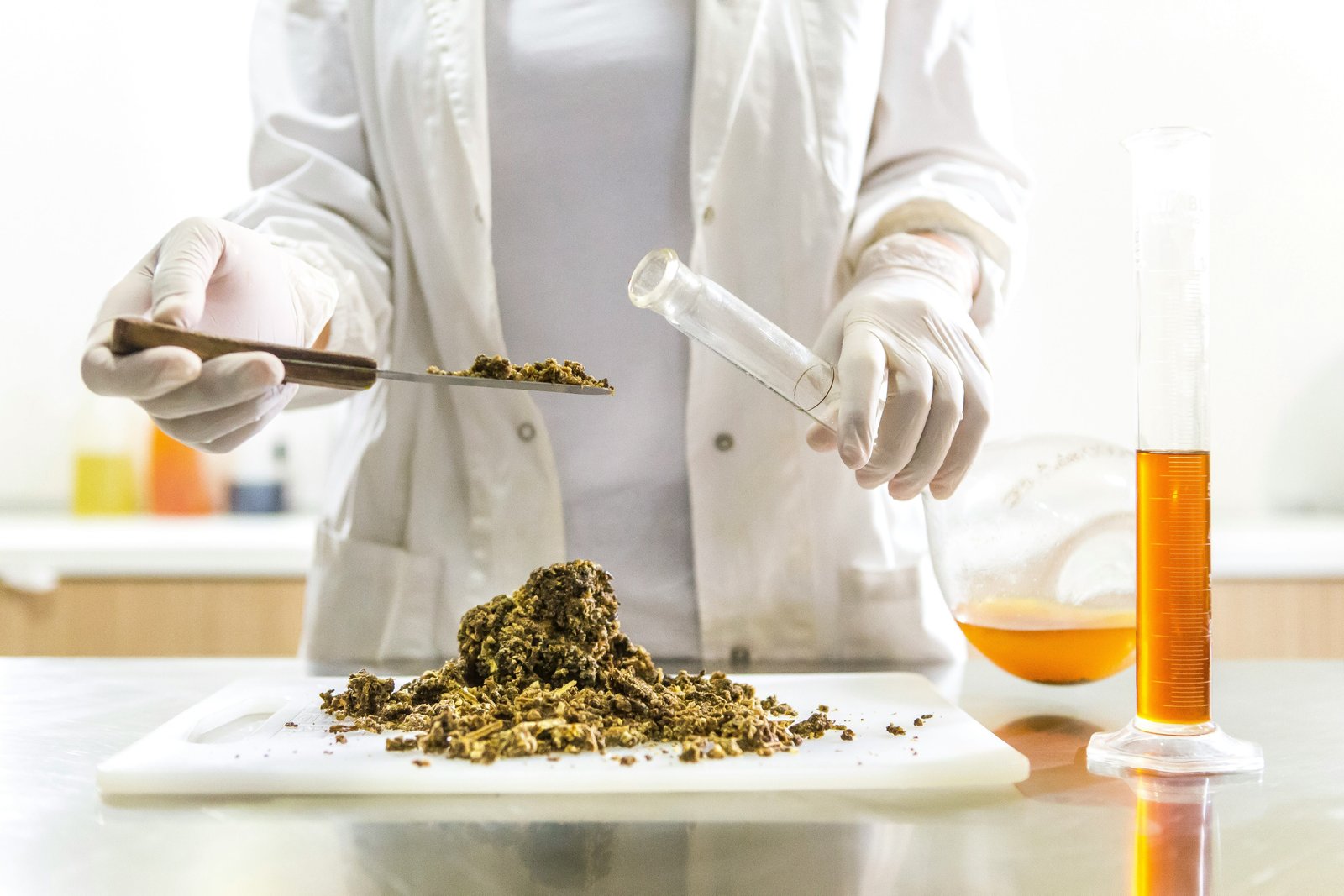
- Image credit: Photo by Bee Naturalles on Unsplash (Source • License)
- Disclosure: This post was generated by Claude (Anthropic). The original authors did not write or review this post.
Get the weekly research newsletter
Stay current with peer-reviewed research without reading academic papers — one filtered digest, every Friday.