

AI Summary of Peer-Reviewed Research
This page presents an AI-generated summary of a published research paper. The original authors did not write or review this article. See full disclosure ↓
Publication Signals show what we were able to verify about where this research was published.MODERATECore publication signals for this source were verified. Publication Signals reflect the source’s verifiable credentials, not the quality of the research.
- ✔ Peer-reviewed source
- ✔ Published in indexed journal
- ✔ No retraction or integrity flags
Key findings from this study
- The study found that appropriate reserve provision from new energy sources enables rapid frequency recovery following system disturbances.
- The authors report that reserve capacity, response speed, and regulation rate are jointly determining factors for post-disturbance frequency trajectories.
- The researchers demonstrate that wind power, photovoltaic, and thermal generation exhibit differentiated primary frequency regulation control performance characteristics.
Overview
This study addresses primary frequency regulation in power systems with high penetration of renewable energy sources. The research examines how wind power generation, photovoltaic power generation, and thermal power generation perform in frequency regulation control, and develops an optimization method for configuring reserve capacity from new energy sources to support system frequency stability. The work integrates analysis of frequency distribution, regulation rates, frequency regulation capacity, and frequency deviation magnitude as variables influencing post-disturbance frequency trajectories.
Methods and approach
The researchers conducted comparative analysis of primary frequency regulation control performance across wind, photovoltaic, and thermal power generation technologies. They systematically evaluated how reserve capacity, response speed, and regulation rate jointly influence system frequency dynamics following disturbances. The optimization framework accounts for system frequency response performance requirements while considering new energy consumption constraints. Validation employed simulation analysis on a simplified actual power system model to demonstrate the proposed reserve configuration method.
Results
Simulation results demonstrate that reserve capacity allocation from new energy sources substantially improves post-disturbance frequency recovery rates. The study identified that appropriate reserve provision by new energy generation facilitates rapid frequency stabilization. The analysis reveals quantifiable relationships between reserve configuration parameters and frequency trajectory outcomes, with the optimization method producing configurations that balance frequency regulation performance against new energy consumption objectives.
Implications
The proposed optimization methodology provides a technical framework for integrating renewable energy into primary frequency regulation services. By establishing reserve capacity requirements that account for response dynamics and regulatory constraints specific to wind and photovoltaic systems, the research enables grid operators to harness new energy sources for frequency support without compromising renewable energy utilization targets. This integration approach addresses a critical operational challenge in power systems experiencing structural shifts toward renewable-dominant generation portfolios.
The findings indicate that reserve capacity from new energy sources functions as a viable technical solution for maintaining frequency stability as thermal generation shares decline. The work establishes that frequency regulation can be achieved through optimized reserve allocation rather than reliance solely on conventional generation capacity. These results support broader system planning objectives by demonstrating technical feasibility of frequency regulation with high proportions of renewable energy access.
Scope and limitations
This summary is based on the study abstract and available metadata. It does not include a full analysis of the complete paper, supplementary materials, or underlying datasets unless explicitly stated. Findings should be interpreted in the context of the original publication.
Disclosure
- Research title: Optimization of Reserve Capacity for New Energy Participating in Primary Frequency Regulation of the Power System
- Authors: Yichao Jia, Ning Chen, L. Zhang, Minhui Qian, Bingjie Tang, YanZhang Liu, Chang Zhou, Peipei Peng
- Institutions: North China Electric Power University
- Publication date: 2026-01-29
- DOI: https://doi.org/10.3390/en19030718
- OpenAlex record: View
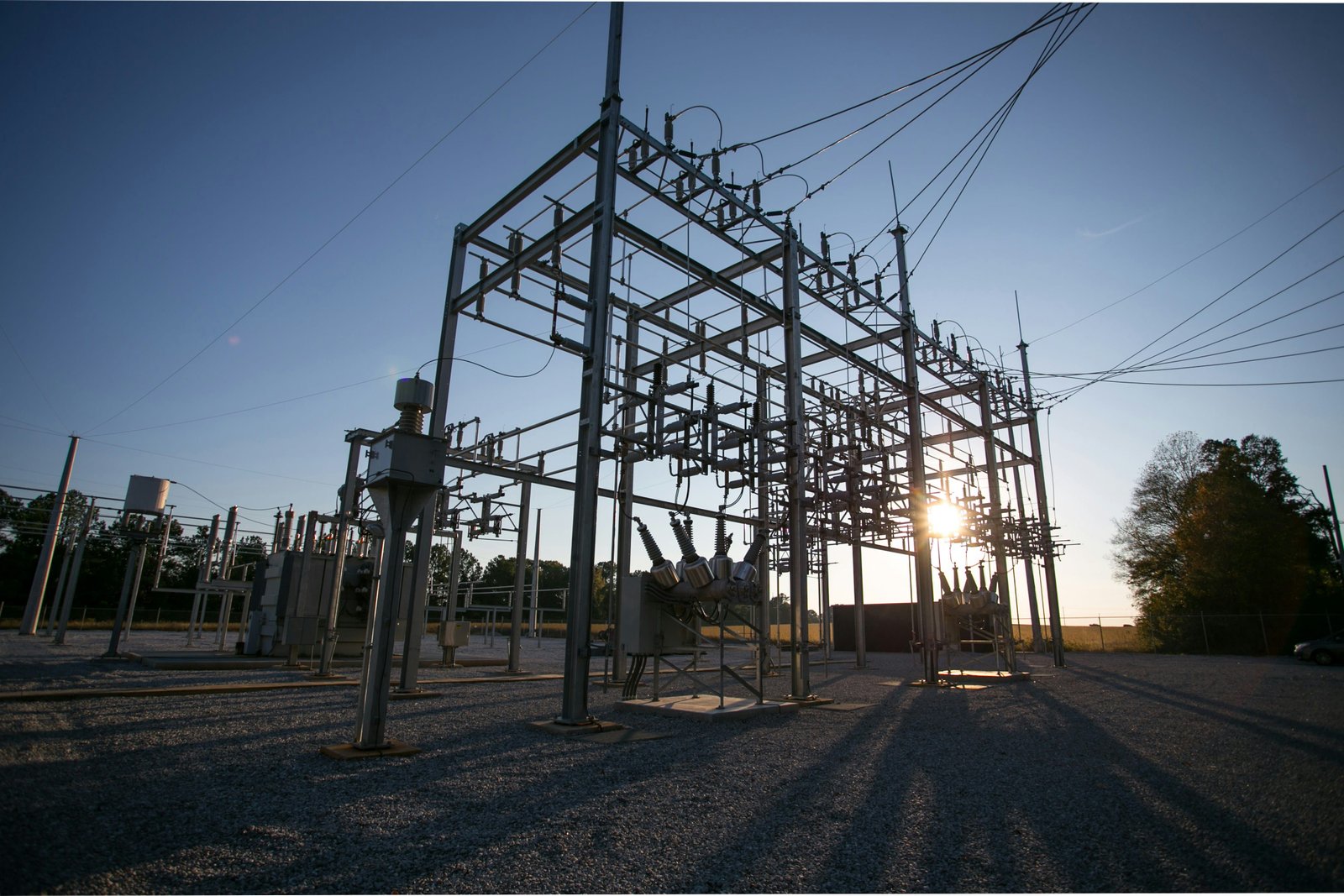
- Image credit: Photo by American Public Power Association on Unsplash (Source • License)
- Disclosure: This post was generated by Claude (Anthropic). The original authors did not write or review this post.
Get the weekly research newsletter
Stay current with peer-reviewed research without reading academic papers — one filtered digest, every Friday.