

AI Summary of Peer-Reviewed Research
This page presents an AI-generated summary of a published research paper. The original authors did not write or review this article. See full disclosure ↓
Publication Signals show what we were able to verify about where this research was published.STRONGWe verified multiple publication signals for this source, including independently confirmed credentials. Publication Signals reflect the source’s verifiable credentials, not the quality of the research.
- ✔ Peer-reviewed source
- ✔ Published in indexed journal
- ✔ No retraction or integrity flags
Key findings from this study
This research indicates that:
- Configuring ground-source heat pumps to cover 50% of winter peak heating load minimizes soil thermal imbalance while reducing life-cycle costs and carbon emissions in the studied building.
- Soil thermal imbalance decreased from 34.47% to 7.1% under the optimal composite energy system configuration.
- Annual carbon emissions of 32.58 kgCO2/(m2·a) represent a 33% reduction compared with conventional municipal heating systems.
Overview
This study analyzes soil thermal imbalance in ground-source heat pump systems deployed in cold-region residential buildings. The research evaluates a composite energy system combining ground-source heat pumps, peak-shaving chillers, and peak-shaving boilers. A two-star green-certified residential building in Qingdao served as the case study site.
Methods and approach
Load simulation, techno-economic analysis, and carbon emission assessment were performed across three operational scenarios. The ground-source heat pump was configured to cover 45%, 50%, and 52.6% of winter peak heating load. Results compared each scenario against conventional municipal heating schemes using 10-year life-cycle cost evaluation.
Results
The scenario in which the ground-source heat pump addressed 50% of peak heating load demonstrated optimal overall performance. This configuration reduced soil thermal imbalance rate from 34.47% to 7.1% while achieving the lowest 10-year life-cycle cost. Annual carbon emissions reached 32.58 kgCO2/(m2·a), representing 33% reduction relative to municipal heating systems.
Seasonal and diurnal optimized operation strategies emerged from the optimal configuration. These strategies provide operational guidance for the composite energy system. The results establish design parameters and operational protocols applicable to low-carbon energy systems in comparable climatic and building contexts.
Implications
The optimization approach addresses the inherent mismatch between heating and cooling loads characteristic of cold-region residential buildings. Composite energy systems with calibrated ground-source heat pump contributions can substantially mitigate soil thermal imbalance while reducing lifecycle costs and carbon intensity. This framework extends beyond the case study site to inform system design in green-certified buildings within cold climatic zones.
The findings support adoption of ground-source heat pumps as primary heating components rather than sole heat sources in cold regions. Seasonal and diurnal operation strategies enhance system efficiency by accommodating dynamic building loads. The integration of multiple heat sources with optimized control strategies represents a practical pathway toward decarbonizing residential heating infrastructure.
Scope and limitations
This summary is based on the study abstract and available metadata. It does not include a full analysis of the complete paper, supplementary materials, or underlying datasets unless explicitly stated. Findings should be interpreted in the context of the original publication.
Disclosure
- Research title: Optimization Analysis of Green Residential Building Energy Systems Based on Economic and Low-Carbon Benefits
- Authors: Yubing Liu, Yibing Xue, Tian Mu, Yingge Zhang
- Institutions: Shandong Jianzhu University, Shanghai Research Institute of Building Sciences (China)
- Publication date: 2026-04-05
- DOI: https://doi.org/10.3390/buildings16071443
- OpenAlex record: View
- PDF: Download
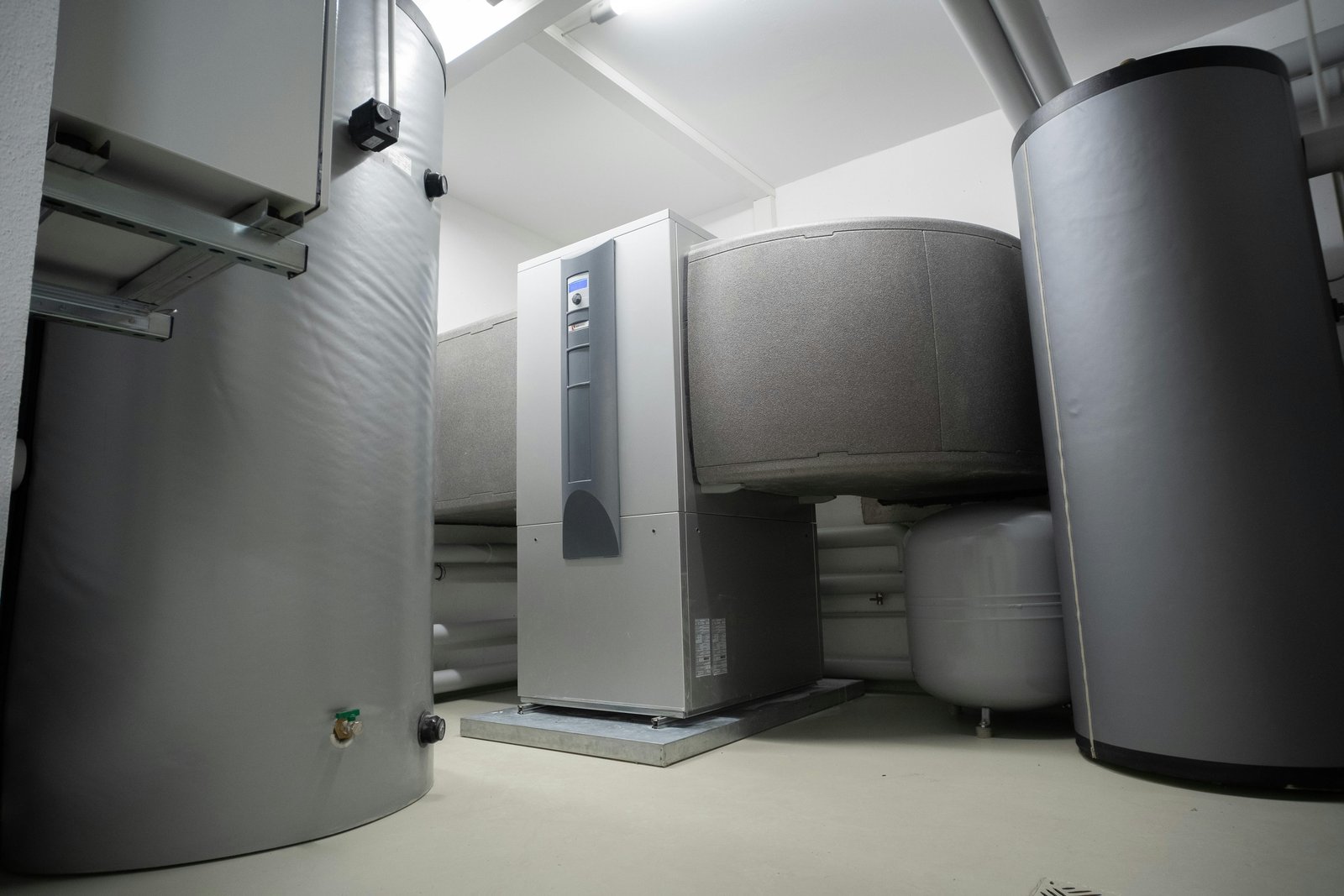
- Image credit: Photo by alpha innotec on Pexels (Source • License)
- Disclosure: This post was generated by Claude (Anthropic). The original authors did not write or review this post.
Get the weekly research newsletter
Stay current with peer-reviewed research without reading academic papers — one filtered digest, every Friday.