

What the study found
Projected climate change is associated with a mixed future for Ethiopian agriculture: cereals and pulses may experience reduced drought stress in the median climate scenario, while cash crops remain the most stressed and most sensitive to changes in aridity.
Why the authors say this matters
The study suggests that climate change could further strain rainfed agriculture, which the authors describe as central to Ethiopia’s economy and livelihoods. The findings indicate that staple food crops may benefit from increased humidity in some areas, but high-value perennial sectors may need targeted adaptation such as supplementary irrigation.
What the researchers tested
The researchers used a HYDRUS-1D ensemble modeling framework to assess crop water requirement (CWR), defined here as the gap between potential and actual crop transpiration. They analyzed 36 crops grouped into five categories and compared a historical baseline from 2006–2020 with three climate projections for 2021–2070: dry, median, and wet scenarios.
What worked and what didn't
In the median climate scenario, cereals and pulses showed reduced drought stress, especially in the central highlands. Cash crops had the highest baseline stress, with a historical mean CWR of about 585 mm, and under dry projections they showed a small-to-medium climate stress by Cohen’s d (d = 0.169).
What to keep in mind
The abstract does not describe all model details or validation steps. It also notes that traditional significance can be masked by climatic noise, so the authors used Cohen’s d to separate the climate signal from inter-annual variability. The available summary does not provide crop-by-crop results beyond the grouped categories.
Key points
- Cereals and pulses may see reduced drought stress in the median climate scenario, especially in the central highlands.
- Cash crops had the highest baseline crop water requirement, at about 585 mm on average.
- Under dry projections, cash crops showed a small-to-medium climate stress (Cohen’s d = 0.169).
- The southeastern and northern lowlands were identified as persistent vulnerability hotspots.
- The study used HYDRUS-1D ensemble modeling and compared 2006–2020 with 2021–2070 climate scenarios.
Disclosure
- Research title:
- Projected climate change alters crop water stress in Ethiopia
- Publication date:
- 2026-03-07
- OpenAlex record:
- View
- Image credit:
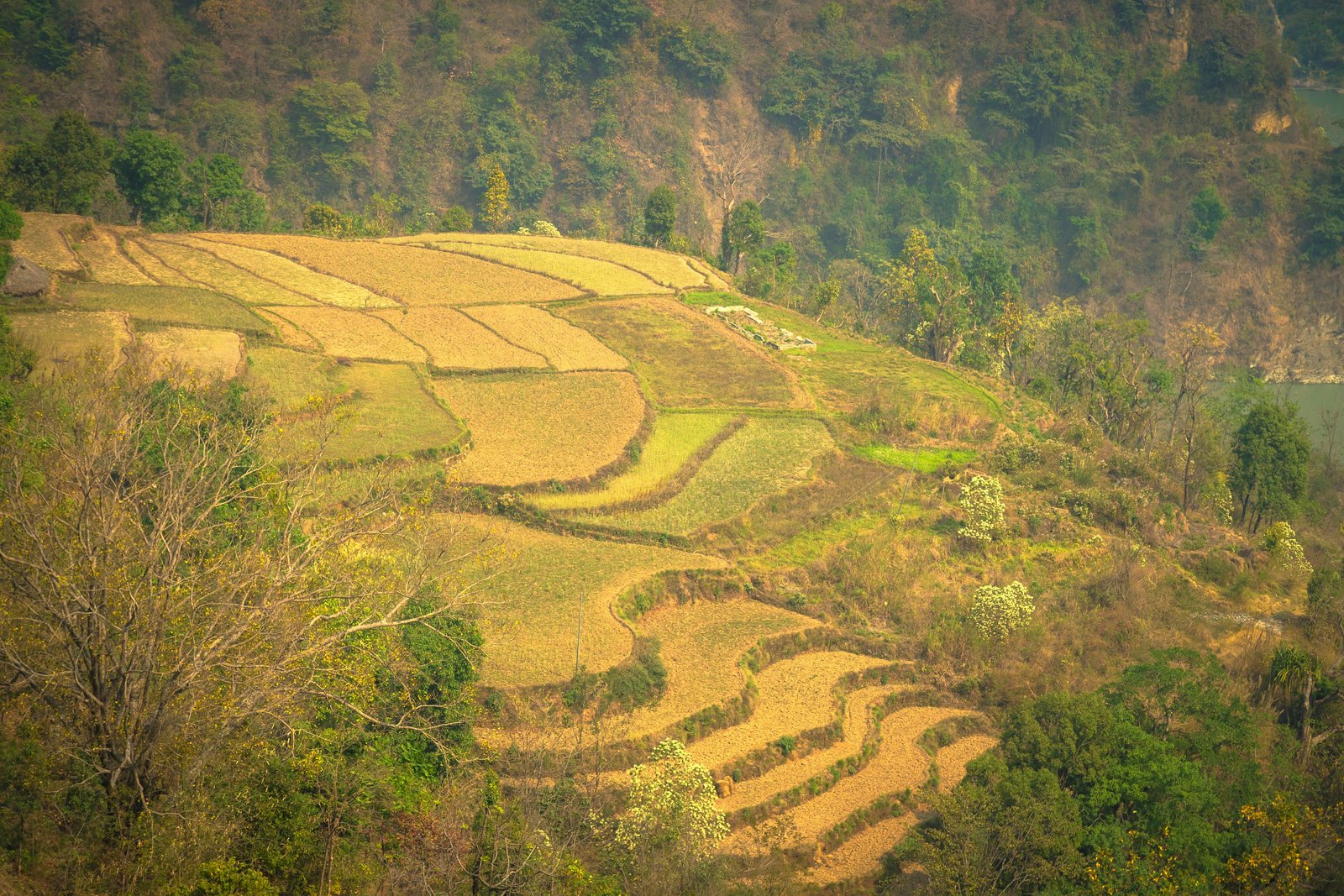
- Photo by ashok acharya on Unsplash · Unsplash License
Get the weekly research newsletter
Stay current with peer-reviewed research without reading academic papers — one filtered digest, every Friday.