

What the study found
Next-to-leading power contributions in the threshold variable can be significant for inclusive slepton pair production. The authors also report that existing calculations underestimate the scale error for large slepton masses.
Why the authors say this matters
The study suggests that accounting for these next-to-leading power effects is important when assessing theoretical predictions for slepton pair production. The findings indicate this is relevant for large slepton masses and for calculations aimed at future hadron-collider studies.
What the researchers tested
The researchers evaluated the next-to-leading power contribution in the threshold variable to leading logarithmic accuracy for inclusive slepton pair production at hadron colliders. They also included results for a potential future FCC-hh machine at 85 TeV.
What worked and what didn't
The study found that the next-to-leading power contributions can be significant compared with next-to-leading logarithmic terms at leading power. It also found that existing calculations underestimate the scale error for large slepton masses.
What to keep in mind
The abstract does not describe detailed limitations beyond the scope of the calculation. The results are presented for inclusive slepton pair production, and the FCC-hh results are given for a potential future machine at 85 TeV.
Key points
- Next-to-leading power terms in the threshold variable can be significant for inclusive slepton pair production.
- Existing calculations are reported to underestimate scale error for large slepton masses.
- The analysis evaluates next-to-leading power contributions to leading logarithmic accuracy.
- Results are also given for a potential future FCC-hh machine at 85 TeV.
Disclosure
- Research title:
- Next-to-leading power terms can be significant in slepton pair production
- Image credit:
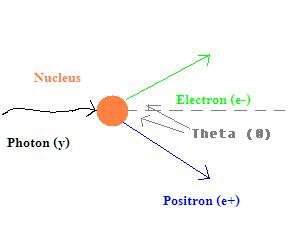
- Dagr8N8 at English Wikipedia, Wikimedia Commons, CC BY-SA 3.0
Get the weekly research newsletter
Stay current with peer-reviewed research without reading academic papers — one filtered digest, every Friday.