

AI Summary of Peer-Reviewed Research
This page presents an AI-generated summary of a published research paper. The original authors did not write or review this article. See full disclosure ↓
Publication Signals show what we were able to verify about where this research was published.STRONGWe verified multiple publication signals for this source, including independently confirmed credentials. Publication Signals reflect the source’s verifiable credentials, not the quality of the research.
- ✔ Peer-reviewed source
- ✔ Published in indexed journal
- ✔ No retraction or integrity flags
Overview
Compressed air energy storage systems require precise mathematical-physical models to characterize their operational behavior in support of active power regulation services within modern electric grids. Existing CAES models employed in grid integration and auxiliary service participation frameworks demonstrate limitations stemming from complex control implementation architectures and reduced functional capability. This research addresses these constraints through systematic model development and operational characteristic analysis methodologies tailored to CAES participation in frequency response and peak regulation services.
Methods and approach
The study proposes a dual closed-loop control architecture integrating a PQ outer loop with a current inner loop, applied across both machine-side rectifier and grid-side inverter components. This control topology is implemented throughout grid connection phases and service participation modes for frequency regulation and peak regulation auxiliary services. The modeling framework employs a 690 V / 50 Hz, 500 kW CAES system as the analytical case study, with complete model implementation and simulation executed in MATLAB/Simulink. The approach addresses three-stage grid connection protocols and active power regulation requirements through unified control methodology rather than segmented intermediate processes.
Key Findings
Simulation results demonstrate that the proposed dual closed-loop control strategy satisfies frequency regulation requirements specified by power system operational standards. The model successfully responds to grid connection sequencing and active power regulation demands across the analyzed CAES system parameters. Performance metrics indicate compliance with secure operation constraints and power quality specifications necessary for integration into modern power systems.
Implications
The developed CAES model and control methodology establish a foundation for systematic analysis of compressed air energy storage systems participating in multiple active power regulation services. The unified control framework reduces complexity in grid integration while enhancing functional capability relative to existing approaches, thereby improving implementation feasibility for operational deployment. Enhanced characterization of CAES operational parameters supports more accurate grid simulation and planning studies. The research facilitates more reliable frequency stabilization and peak regulation support within power systems transitioning toward higher renewable energy penetration, where auxiliary service participation becomes increasingly critical for grid stability maintenance and economic operation.
Scope and limitations
This summary is based on the study abstract and available metadata. It does not include a full analysis of the complete paper, supplementary materials, or underlying datasets unless explicitly stated. Findings should be interpreted in the context of the original publication.
Disclosure
- Research title: Model establishment and characteristic analyses methods for compressed air energy storage participating in multiple active power regulation services
- Authors: R. G. Zhang, Hui Li, Jianxing Liu, R. G. Zhang
- Institutions: Harbin Electric Corporation (China), Harbin University of Science and Technology
- Publication date: 2026-03-16
- DOI: https://doi.org/10.1016/j.egyr.2026.109208
- OpenAlex record: View
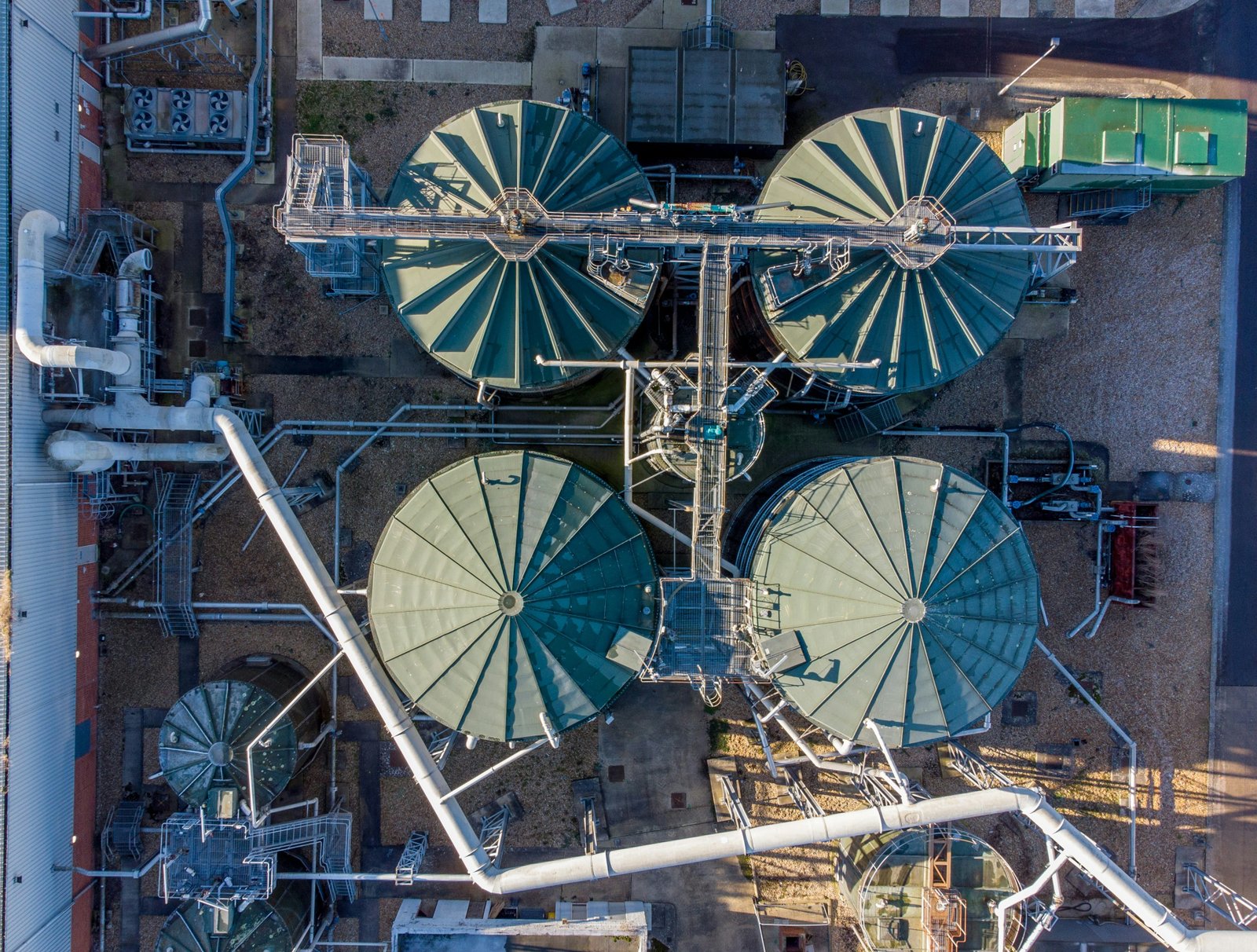
- Image credit: Photo by Bob Brewer on Unsplash (Source • License)
- Disclosure: This post was generated by Claude (Anthropic). The original authors did not write or review this post.
Get the weekly research newsletter
Stay current with peer-reviewed research without reading academic papers — one filtered digest, every Friday.