

AI Summary of Peer-Reviewed Research
This page presents an AI-generated summary of a published research paper. The original authors did not write or review this article. See full disclosure ↓
Publication Signals show what we were able to verify about where this research was published.STRONGWe verified multiple publication signals for this source, including independently confirmed credentials. Publication Signals reflect the source’s verifiable credentials, not the quality of the research.
- ✔ Peer-reviewed source
- ✔ Published in indexed journal
- ✔ No retraction or integrity flags
Key findings from this study
- The study found that AAC and clay infills contributed equally to lateral strength (approximately 60% increase) but differed substantially in ductility, with AAC significantly outperforming brittle clay infill.
- The researchers demonstrate that multi-strut macromodels captured hysteresis behavior more accurately than single-strut models in distinguishing between brittle and ductile infill response.
- The authors report that strut width, post-cracking degradation rate, shear-to-axial stiffness ratio, and peak stress strain were critical parameters governing macromodel accuracy.
Overview
This study experimentally evaluated the cyclic lateral behavior of reinforced concrete frames infilled with autoclaved aerated concrete (AAC) blocks and traditional clay masonry. Three 2/3-scale frames underwent cyclic loading to assess strength and ductility contributions from each infill type. Concurrent numerical macromodeling using multi-strut and single-strut approaches characterized the nonlinear response of infilled frames under seismic conditions.
Methods and approach
Three reinforced concrete frames at 2/3 scale were subjected to cyclic lateral loading protocols. Clay brick and AAC block infill panels were tested separately to isolate material-specific responses. Trilinear and quadlinear backbone curves were derived from experimental data to represent clay and AAC behavior respectively. Numerical analysis employed multi-strut macromodels in SeismoStruct and single-strut models in SAP2000. Concentrated and distributed plasticity formulations modeled RC element nonlinearity. A constitutive steel model tracked hysteretic behavior of reinforcement during cyclic motion.
Results
Both infill types increased lateral frame strength by approximately 60%. AAC infill demonstrated substantially greater ductility than clay infill despite comparable strength gains. The multi-strut macromodel captured hysteresis response with superior accuracy relative to the single-strut configuration. Strut width, post-cracking degradation rate, shear-to-axial stiffness ratio, and infill strain at peak stress emerged as critical parameters. These parameters enabled the multi-strut model to differentiate between brittle clay and ductile AAC behavioral modes.
Implications
Multi-strut macromodeling approaches provide enhanced fidelity for predicting infilled frame response under cyclic loading. The parameter set governing macromodel accuracy facilitates material-specific constitutive representation within finite element frameworks. Seismic design of infilled frames benefits from explicit discrimination between infill material ductility profiles, enabling performance-based assessment.
AAC infill offers an environmentally sustainable alternative to clay masonry without sacrificing lateral strength. The superior ductility of AAC mitigates brittle failure modes associated with traditional masonry infill. Advanced reinforcing steel combined with ductile infill materials supports enhanced seismic resilience in frame structures.
Numerical simulation validated against experimental results establishes confidence in macromodel predictions for design applications. Parameter sensitivity in multi-strut models necessitates careful calibration for each infill material. Practitioners require material-specific guidance to select appropriate macromodel parameters and achieve reliable nonlinear response predictions.
Scope and limitations
This summary is based on the study abstract and available metadata. It does not include a full analysis of the complete paper, supplementary materials, or underlying datasets unless explicitly stated. Findings should be interpreted in the context of the original publication.
Disclosure
- Research title: Macromodeling and experimental investigation of RC frames infilled with clay bricks and autoclaved aerated concrete blocks under cyclic loading
- Authors: Ahmed M. El-Kholy, Huda Sayed, Ibrahim M. Metwally, Ayman A. Shaheen
- Institutions: Fayoum University, Housing and Building National Research Center, Misr University for Science and Technology
- Publication date: 2026-02-10
- DOI: https://doi.org/10.1007/s10518-025-02358-9
- OpenAlex record: View
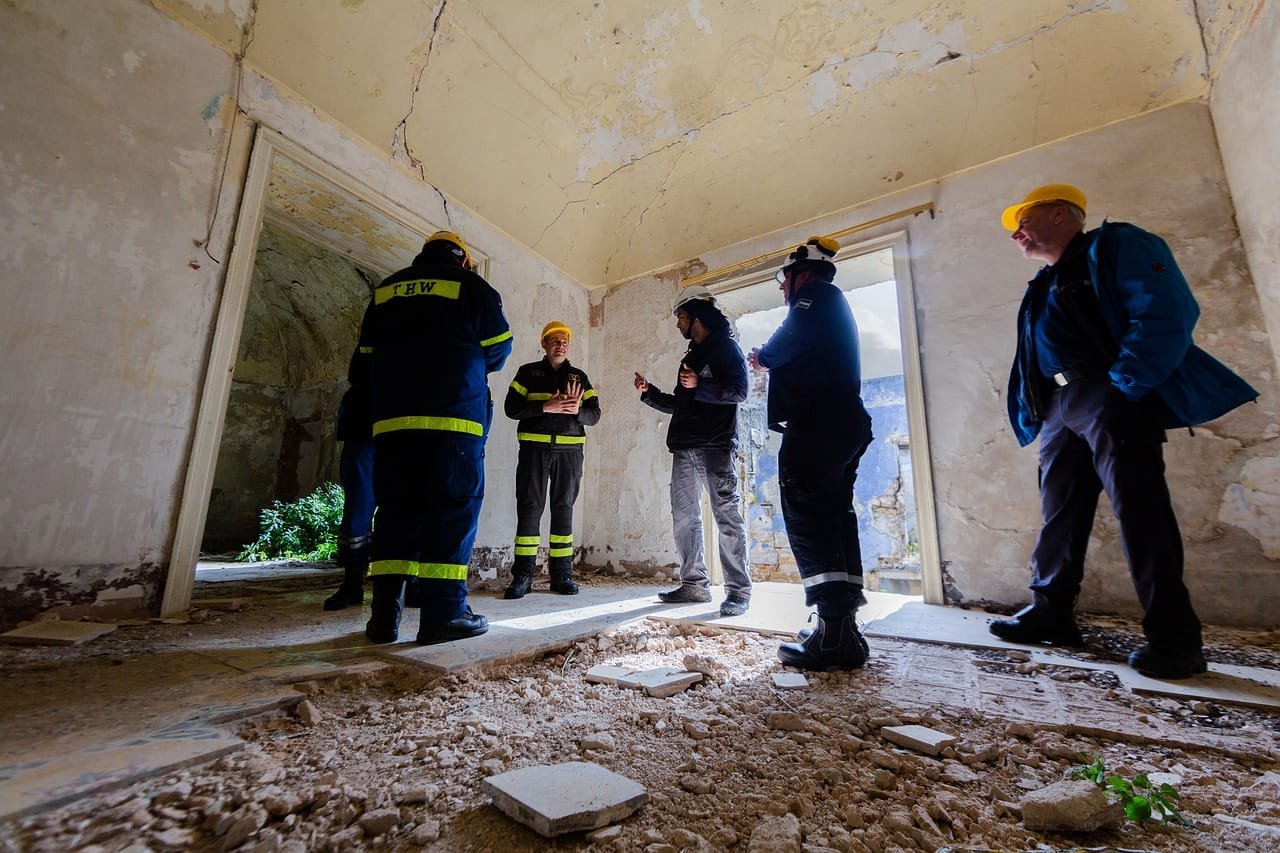
- Image credit: Photo by This_is_Engineering on Pixabay (Source • License)
- Disclosure: This post was generated by Claude (Anthropic). The original authors did not write or review this post.
Get the weekly research newsletter
Stay current with peer-reviewed research without reading academic papers — one filtered digest, every Friday.