

AI Summary of Peer-Reviewed Research
This page presents an AI-generated summary of a published research paper. The original authors did not write or review this article. See full disclosure ↓
Publication Signals show what we were able to verify about where this research was published.MODERATECore publication signals for this source were verified. Publication Signals reflect the source’s verifiable credentials, not the quality of the research.
- ✔ Published in indexed journal
- ✔ No retraction or integrity flags
Key findings from this study
- The study found that aromatic Ooty tea accumulated the highest flavonoid content (42.9 ± 0.9 mg rutin/g), while its non-aromatic form retained superior total phenolic accumulation.
- The researchers demonstrate that aromatic Darjeeling masala tea exhibited the strongest antioxidant activity by FRAP assay, with notable differences in enzyme inhibition profiles between tea types.
- The authors report that molecular docking validated strong binding interactions between rutin and quercetin with key metabolic enzymes, correlating with in vitro antioxidant and antidiabetic measurements.
Overview
This study characterizes the phytochemical composition and biological activity of Indian black tea varieties (Darjeeling and Ooty) in both traditional and spice-enriched formulations. HPTLC profiling identified major bioactive compounds, while in vitro assays measured antioxidant, antidiabetic, and anti-inflammatory properties. Molecular docking simulations predicted enzyme-ligand interactions for lead compounds.
Methods and approach
HPTLC analysis separated and identified phenolic compounds in tea extracts. DPPH and FRAP assays quantified antioxidant capacity. Enzyme inhibition assays evaluated alpha-amylase and alpha-glucosidase inhibition. Caco-2 and RAW 264.7 cell cultures assessed safety and inflammatory response via nitric oxide measurement. Molecular docking and MM-GBSA calculations modeled binding interactions between bioactive compounds and metabolic enzymes.
Results
HPTLC revealed rutin, catechin, gallic acid, quercetin, and ferulic acid as major bioactives across all tea samples. Aromatic Ooty tea achieved the highest flavonoid content at 42.9 ± 0.9 mg rutin/g, while non-aromatic Darjeeling tea showed superior total phenolic content at 2835.1 ± 39.5 mg GAE/100 g. Aromatic Darjeeling masala tea exhibited the strongest antioxidant activity by FRAP assay.
Antidiabetic potential differed by tea type: aromatic Ooty tea demonstrated superior alpha-amylase inhibition, whereas non-aromatic Darjeeling tea showed stronger alpha-glucosidase inhibition. In vitro cell culture studies confirmed safety and demonstrated significant nitric oxide reduction in lipopolysaccharide-stimulated RAW 264.7 macrophages, indicating anti-inflammatory effects. Molecular docking analysis predicted strong binding affinity between rutin and quercetin with target metabolic enzymes, consistent with the observed biological activity.
Implications
The differential phytochemical profiles between aromatic and non-aromatic tea formulations suggest that spice enrichment selectively concentrates specific bioactive classes. Aromatic variants, particularly spice-enriched Ooty and Darjeeling teas, display enhanced antioxidant capacity relevant to oxidative stress management in metabolic disorders. The concordance between in silico predictions and in vitro bioactivity supports molecular docking as a screening tool for functional beverage development.
These findings position Indian tea blends as accessible sources of polyphenolic compounds with demonstrated antioxidant and antidiabetic potential. The safety profile established in cellular assays supports further investigation in higher-order biological systems. Integration of phytochemical profiling with mechanistic validation provides a framework for evidence-based formulation of functional beverages targeting oxidative stress-related pathologies.
Scope and limitations
This summary is based on the study abstract and available metadata. It does not include a full analysis of the complete paper, supplementary materials, or underlying datasets unless explicitly stated. Findings should be interpreted in the context of the original publication.
Disclosure
- Research title: High performance thin-layer chromatographic (HPTLC) profiling and bioactivity assessment of aroma-enhanced Indian tea blends: In vitro and in silico insights
- Authors: Kritika Kuksal, Aman Sharma, Abhilasha Sharma, Amisha Rani, Sumandeep Kaur, Deepak Mehta, Arti Nile, Shivraj Hariram Nile
- Institutions: Amity University, Maharaja Ranjit Singh Punjab Technical University, National Agri-Food Biotechnology Institute
- Publication date: 2026-03-08
- DOI: https://doi.org/10.1016/j.afres.2026.101861
- OpenAlex record: View
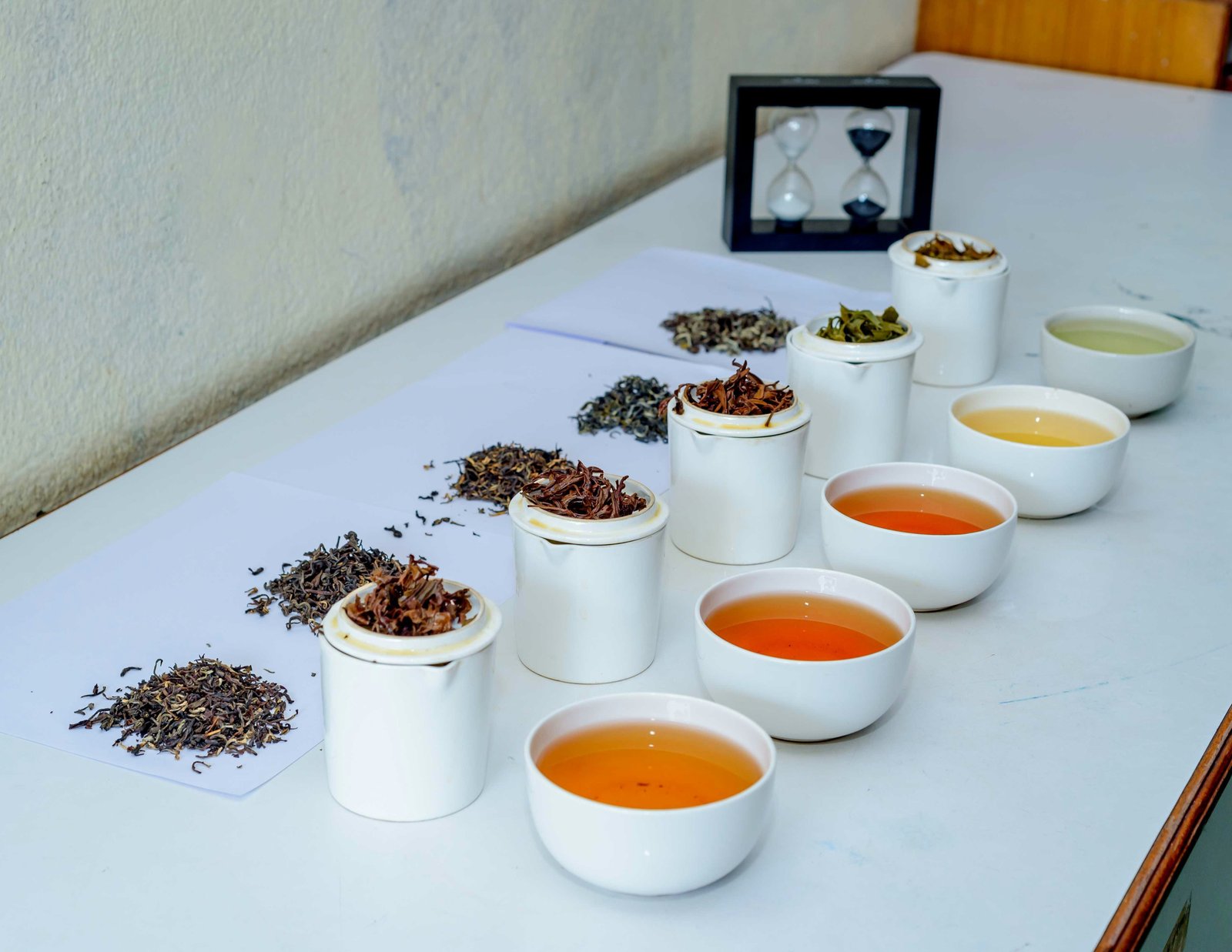
- Image credit: Photo by Nepal Tea Collective on Unsplash (Source • License)
- Disclosure: This post was generated by Claude (Anthropic). The original authors did not write or review this post.
Get the weekly research newsletter
Stay current with peer-reviewed research without reading academic papers — one filtered digest, every Friday.