

AI Summary of Peer-Reviewed Research
This page presents an AI-generated summary of a published research paper. The original authors did not write or review this article. See full disclosure ↓
Publication Signals show what we were able to verify about where this research was published.STRONGWe verified multiple publication signals for this source, including independently confirmed credentials. Publication Signals reflect the source’s verifiable credentials, not the quality of the research.
- ✔ Peer-reviewed source
- ✔ Published in indexed journal
- ✔ No retraction or integrity flags
Key findings from this study
- The study found that antibacterial concentrations required to inhibit intermolecular DNA decatenation were consistently lower than those needed to suppress intramolecular relaxation or supercoiling by gyrase.
- The researchers demonstrate that differences in drug potency among the three catalytic gyrase functions cannot be attributed solely to reaction kinetics or DNA substrate identity.
- The authors report that topological state of DNA and its specific interactions with gyrase modulate the inhibitory potency of interfacial antibacterials against distinct catalytic activities.
Overview
Mycobacterial gyrase is the sole type II topoisomerase target in species including Mycobacterium tuberculosis and Mycobacteroides abscessus. This study examined how three fluoroquinolones and spiropyrimidinetriones inhibit three distinct catalytic gyrase functions: decatenation of interlinked DNA, negative supercoiling of relaxed DNA, and relaxation of accumulated positive supercoils. Drug potency varies substantially among these functions, suggesting that enzyme-DNA interactions and DNA topological state modulate antibacterial efficacy beyond mechanisms of DNA cleavage induction.
Methods and approach
The researchers tested moxifloxacin, ciprofloxacin, and zoliflodacin against three separate gyrase-mediated catalytic activities in mycobacterial systems. They compared inhibitory concentrations required to suppress intermolecular DNA decatenation against intramolecular relaxation or supercoiling functions. The study evaluated whether differences in drug potency correlated with reaction kinetics, DNA substrate properties, or enzyme-DNA interactions modulated by DNA topology.
Results
Lower antibacterial concentrations inhibited intermolecular DNA decatenation than inhibited intramolecular relaxation or supercoiling activities across all drugs tested. Individual reaction rates and DNA substrate composition alone did not explain these potency differences. The data indicate that interfacial antibacterials exert differential inhibitory effects depending on the topological state of DNA and its specific interactions with gyrase during catalysis.
Implications
Gyrase inhibition mechanisms extend beyond gyrase-mediated DNA cleavage, which dominates current literature on fluoroquinolone action. The variable potency observed across distinct catalytic functions suggests that antibacterial efficacy in replicating mycobacterial cells depends critically on which gyrase activities are depleted under drug pressure. Understanding topology-dependent inhibition mechanisms may inform design of novel agents targeting gyrase or optimization of existing antibacterials against species reliant on gyrase as their sole type II topoisomerase.
The differential inhibition of decatenation versus supercoiling activities reveals that antibacterial efficacy cannot be predicted from single-function assays. Cells experiencing replication stress from gyrase inhibition face simultaneous loss of multiple essential activities. This mechanistic complexity suggests that therapeutic outcomes reflect cumulative depletion of gyrase functions rather than dominance of any single inhibitory pathway.
The role of DNA topology in modulating drug-gyrase interactions establishes a physical basis for understanding why certain antibacterials succeed or fail in specific mycobacterial species. Targeting the enzyme-DNA interface rather than exclusively the cleavage mechanism may offer alternative therapeutic strategies for organisms where gyrase inhibition alone proves insufficient for clinical efficacy.
Scope and limitations
This summary is based on the study abstract and available metadata. It does not include a full analysis of the complete paper, supplementary materials, or underlying datasets unless explicitly stated. Findings should be interpreted in the context of the original publication.
Disclosure
- Research title: Enzyme–DNA Interactions Affect the Catalytic Inhibition of Mycobacterial Gyrases by Antibacterial Drugs
- Authors: Jillian F. Armenia, Neil Osheroff
- Institutions: Vanderbilt University
- Publication date: 2026-01-27
- DOI: https://doi.org/10.1021/acsinfecdis.5c01018
- OpenAlex record: View
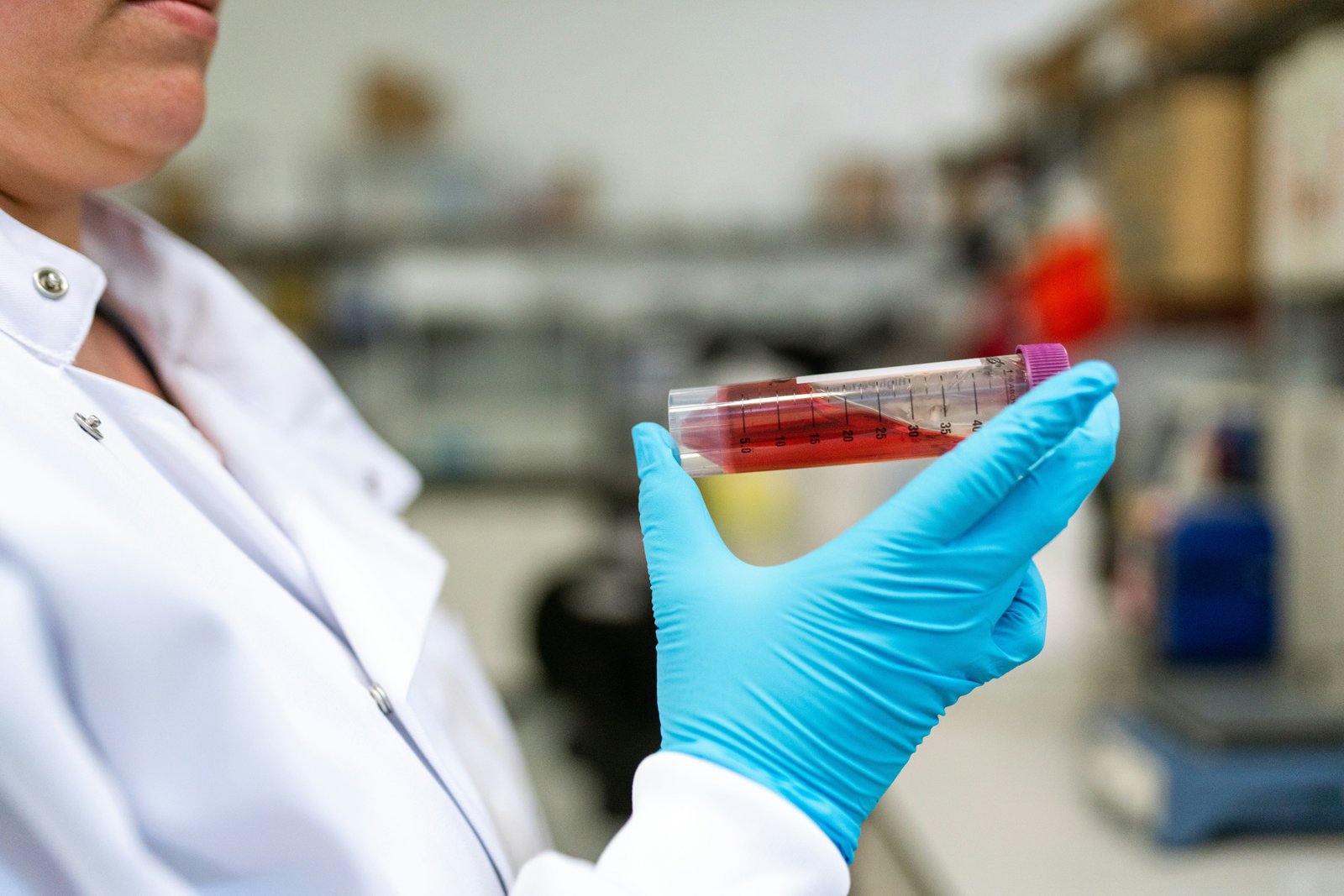
- Image credit: Photo by ThisisEngineering on Unsplash (Source • License)
- Disclosure: This post was generated by Claude (Anthropic). The original authors did not write or review this post.
Get the weekly research newsletter
Stay current with peer-reviewed research without reading academic papers — one filtered digest, every Friday.