

AI Summary of Peer-Reviewed Research
This page presents an AI-generated summary of a published research paper. The original authors did not write or review this article. See full disclosure ↓
Publication Signals show what we were able to verify about where this research was published.STRONGWe verified multiple publication signals for this source, including independently confirmed credentials. Publication Signals reflect the source’s verifiable credentials, not the quality of the research.
- ✔ Peer-reviewed source
- ✔ Published in indexed journal
- ✔ No retraction or integrity flags
Key findings from this study
- The study found that drip fertigation increased winter wheat grain yield by 15.4–20.8% and shifted the optimal planting density upward from 377–378 to 456–487 seeds m−2.
- The researchers demonstrate that drip fertigation sustained near-maximum yields across a substantially broader range of planting densities compared with conventional management, indicating enhanced yield stability.
- The authors report that post-anthesis nitrogen uptake increased by 47.7–49.5% under drip fertigation, with post-anthesis dry matter production showing strong correlation with yield (r² ≥ 0.819).
Overview
Drip fertigation (DF) combined with optimized planting density increases winter wheat grain yield and stabilizes productivity across varying stand densities. The interaction between irrigation-fertilization method and planting density operates through coordinated improvements in source-sink balance and nitrogen uptake efficiency.
Methods and approach
Researchers compared conventional management (CM) and drip fertigation (DF) across planting densities ranging from 100 to 800 seeds m−2 over two growing seasons. Measurements encompassed grain yield, yield components, population traits, dry matter accumulation, source-sink indices, canopy nitrogen status, nitrogen uptake, and nitrogen-use efficiencies.
Results
Drip fertigation increased grain yield by 15.4–20.8% relative to conventional management across both seasons. Grain yield exhibited quadratic response to planting density under both regimes; however, DF shifted optimal planting density upward to 456–487 seeds m−2 compared with 377–378 seeds m−2 under CM. Drip fertigation sustained near-maximum yields over a broader planting density range, indicating improved stability across density variations.
Drip fertigation enhanced population productivity by increasing productive stem percentage and grains per ear, thereby raising grain number per m−2. Post-anthesis dry matter production increased by 15.5–17.6% under DF and showed strong association with yield (r² ≥ 0.819). Source-sink analysis revealed that DF treatments demonstrated simultaneously high grain number and high post-anthesis dry matter accumulation across a wider range of planting densities.
Drip fertigation markedly increased post-anthesis nitrogen uptake by 47.7–49.5% and elevated nitrogen nutrition index at anthesis. Total nitrogen uptake at maturity and grain nitrogen accumulation increased correspondingly. Fertilizer-nitrogen recovery efficiency and agronomic efficiency improved by 33.9–42.3% and 26.7–30.9%, respectively, under DF relative to CM.
Implications
The upward shift in optimal planting density under drip fertigation reflects enhanced capacity to support higher stand populations without yield penalty. This finding suggests that water and nutrient delivery optimization expands the range of agronomically viable planting densities, reducing the precision required for stand establishment and providing operational flexibility in production systems.
Post-anthesis nitrogen acquisition and mobilization emerged as critical mechanisms underlying DF effectiveness. The substantial increase in post-anthesis nitrogen uptake indicates that DF systems enhance nitrogen availability during grain filling, a developmentally critical period. Integration of drip fertigation with density management offers a pathway to decouple yield from narrow density windows, potentially reducing yield volatility in rainfed or variable-input environments.
The study demonstrates that source-sink coordination improved measurably under DF conditions. Enhanced post-anthesis dry matter production coupled with greater grain number represents coordinated improvement in both source strength and sink capacity. These results support adoption of DF systems in winter wheat production where water and nitrogen inputs can be managed precisely.
Scope and limitations
This summary is based on the study abstract and available metadata. It does not include a full analysis of the complete paper, supplementary materials, or underlying datasets unless explicitly stated. Findings should be interpreted in the context of the original publication.
Disclosure
- Research title: Drip Fertigation Enhances Nitrogen Uptake and Improves Winter Wheat Yield and Stability Across Planting Densities
- Authors: Xiaoyan Zhou, Mei Qian, Faming Wang, Fengjian Liang, Dapeng Gao, Shangzong Feng, Yonghui Wang, Fucheng Zhang, Xiaojun Hu
- Institutions: China Rural Technology Development Center, Cixian People's Hospital, Linyi University
- Publication date: 2026-04-02
- DOI: https://doi.org/10.3390/plants15071090
- OpenAlex record: View
- PDF: Download
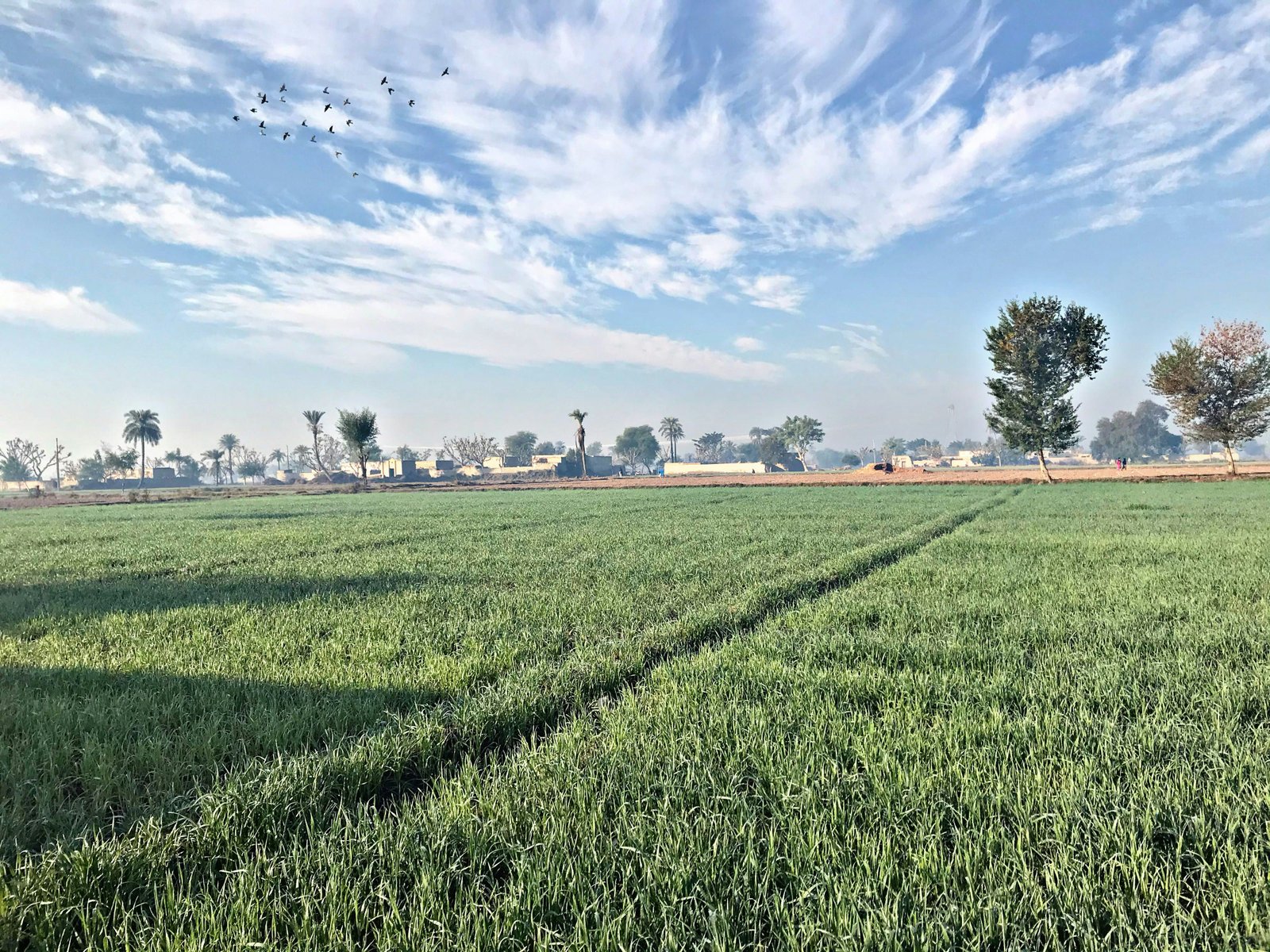
- Image credit: Photo by Muhammad Amjad on Unsplash (Source • License)
- Disclosure: This post was generated by Claude (Anthropic). The original authors did not write or review this post.
Get the weekly research newsletter
Stay current with peer-reviewed research without reading academic papers — one filtered digest, every Friday.