

AI Summary of Peer-Reviewed Research
This page presents an AI-generated summary of a published research paper. The original authors did not write or review this article. See full disclosure ↓
Publication Signals show what we were able to verify about where this research was published.MODERATECore publication signals for this source were verified. Publication Signals reflect the source’s verifiable credentials, not the quality of the research.
- ✔ Peer-reviewed source
- ✔ No retraction or integrity flags
Key findings from this study
- The study found that Finnish lexical resources encode distinctive conceptualizations of light and temporality reflecting adaptation to extreme seasonal daylight variation.
- The authors report that multiple scaffolding mechanisms—lexical, conceptual, social, and technological—work together to maintain coherent daily rhythms despite natural light extremes.
- The researchers demonstrate that Finnish semantic molecules for day, night, and light differ in meaningful ways from equivalent expressions in languages from other geographic regions.
Overview
This study examines Finnish lexical and semantic resources for concepts of light, day, and night in the context of extreme seasonal variation in daylight hours at Nordic latitudes. The research unpacks Finnish-specific ways of conceptualizing temporal and luminous phenomena through semantic explication and cultural scripts. The authors investigate whether Finnish semantic structures in this domain diverge meaningfully from counterparts in other languages and identify how linguistic, conceptual, social, and technological scaffolding sustains daily rhythms despite radical shifts in natural light cycles.
Methods and approach
The study employed Natural Semantic Metalanguage semantic explications and cultural scripts as analytical frameworks. The researchers conducted close examination of lexical polysemy patterns and phraseology using Finnish lexical databases and text corpora. Collaborative dialogue between native speakers of Finnish and English facilitated cross-linguistic comparison and interpretation of semantic nuances.
Results
The analysis reveals that Finnish lexical resources encode particular ways of conceptualizing light and temporal experience shaped by Nordic seasonal conditions. Patterns of polysemy and phraseological usage demonstrate how Finnish speakers navigate the disjunction between natural light rhythms and human activity schedules. The study identifies multiple scaffolding mechanisms—lexical categories, conceptual frames, social practices, and technological interventions—that enable maintenance of coherent daily routines despite extreme seasonal light variation.
Finnish semantic molecules associated with day, night, and light exhibit distinctive configurations compared to equivalent terms in other language communities. These configurations reflect cognitive and cultural adaptations to environmental extremes. The research demonstrates that maintaining structured daily life in high northern latitudes requires coordination across linguistic, institutional, and technological domains rather than reliance on natural light cues alone.
Implications
Understanding how language encodes responses to extreme environmental conditions provides insight into semantic universals and language-specific variation. The Finnish case illustrates how lexical systems and conceptual frameworks evolve to address practical and psychological challenges posed by climatic extremes. This research contributes to cross-linguistic semantics and suggests that systematic examination of culturally salient lexical domains reveals how communities integrate environmental constraints with social organization.
The study's findings have relevance for research on chronobiology, human adaptation, and the relationship between language and non-linguistic reality. Recognition of diverse scaffolding mechanisms suggests that linguistic analysis alone cannot fully explain how humans maintain temporal coherence. The work highlights the interdependence of language, culture, technology, and biology in sustaining human rhythmic patterns.
Scope and limitations
This summary is based on the study abstract and available metadata. It does not include a full analysis of the complete paper, supplementary materials, or underlying datasets unless explicitly stated. Findings should be interpreted in the context of the original publication.
Disclosure
- Research title: “Day” and “night” in the high north
- Authors: Cliff Goddard, Ulla Vanhatalo
- Institutions: Griffith University, University of Helsinki
- Publication date: 2026-03-31
- DOI: https://doi.org/10.1075/ijolc.00075.god
- OpenAlex record: View
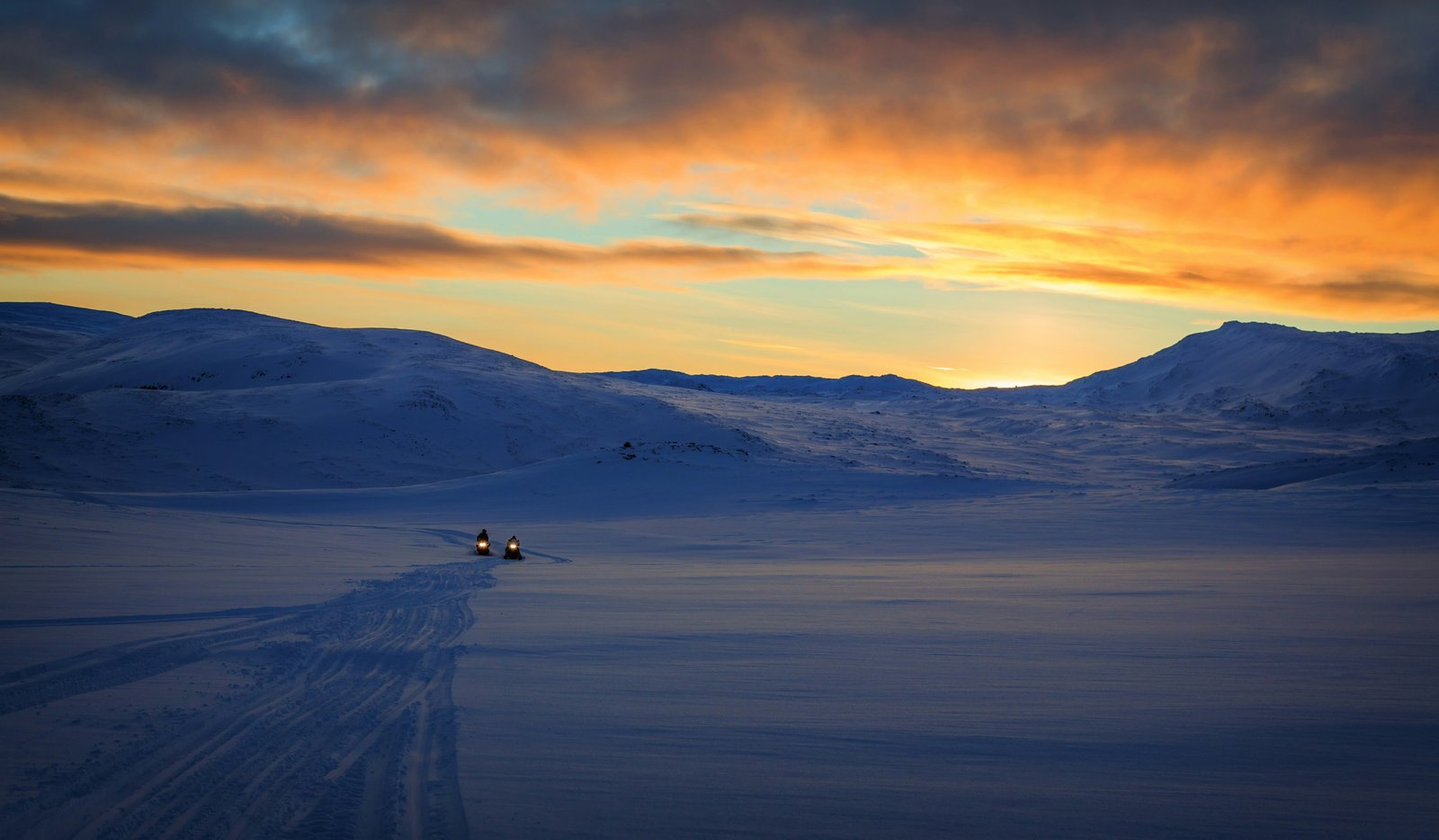
- Image credit: Photo by Vidar Nordli-Mathisen on Unsplash (Source • License)
- Disclosure: This post was generated by Claude (Anthropic). The original authors did not write or review this post.
Get the weekly research newsletter
Stay current with peer-reviewed research without reading academic papers — one filtered digest, every Friday.


