

What the study found
Repairing the lateral meniscus posterior root (LMPR, the attachment of the back part of the outer meniscus) together with lateral extra-articular tenodesis reduced internal rotation and pivot shift loading in a cadaveric study of anterior cruciate ligament (ACL) reconstructed knees.
Why the authors say this matters
The authors conclude that both LMPR repair and anterolateral corner reconstruction are necessary to restore stability in knees with ACL, Kaplan fiber, and LMPR injuries.
What the researchers tested
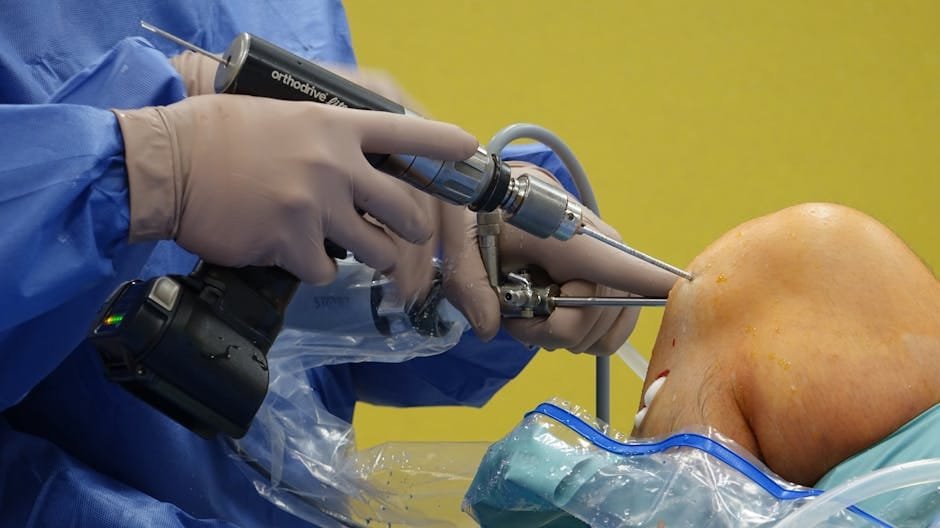
The study examined cadaveric ACL-reconstructed knees. It tested the effects of LMPR repair and lateral extra-articular tenodesis, which is a procedure that reinforces the outer side of the knee, on knee stability measures.
What worked and what didn't
The combined approach significantly decreased internal rotation and pivot shift loading. The abstract does not describe separate effects for LMPR repair alone or lateral extra-articular tenodesis alone.
What to keep in mind
This is a cadaveric study, so the abstract does not provide information about outcomes in living patients. The abstract also does not describe sample size, detailed methods, or limitations beyond the study setting.
Key points
- The study found reduced internal rotation and pivot shift loading with combined LMPR repair and lateral extra-articular tenodesis.
- The authors say both LMPR repair and anterolateral corner reconstruction are needed to restore stability in ACL, Kaplan fiber, and LMPR injuries.
- The work was done in cadaveric ACL-reconstructed knees.
- The abstract does not report separate results for each procedure alone.
Disclosure
- Research title:
- Combined repairs reduced knee rotation and pivot shift loading
- Image credit:
- Photo by Viktors Duks on Pexels
Get the weekly research newsletter
Stay current with peer-reviewed research without reading academic papers — one filtered digest, every Friday.