Category: Structural engineering

Injected tie-rods improved out-of-plane masonry wall capacity
Study validates full-length tie-rod retrofitting for reducing out-of-plane seismic vulnerability in unreinforced masonry walls, providing design tools with ~7% accuracy.

Wire mesh confinement increased brick pillar strength
Experimental study comparing confined and unconfined brick masonry pillars under axial loading, demonstrating wire mesh confinement prevents brittle failure and increases load capacity.

Cracks do not always mean stone vault failure
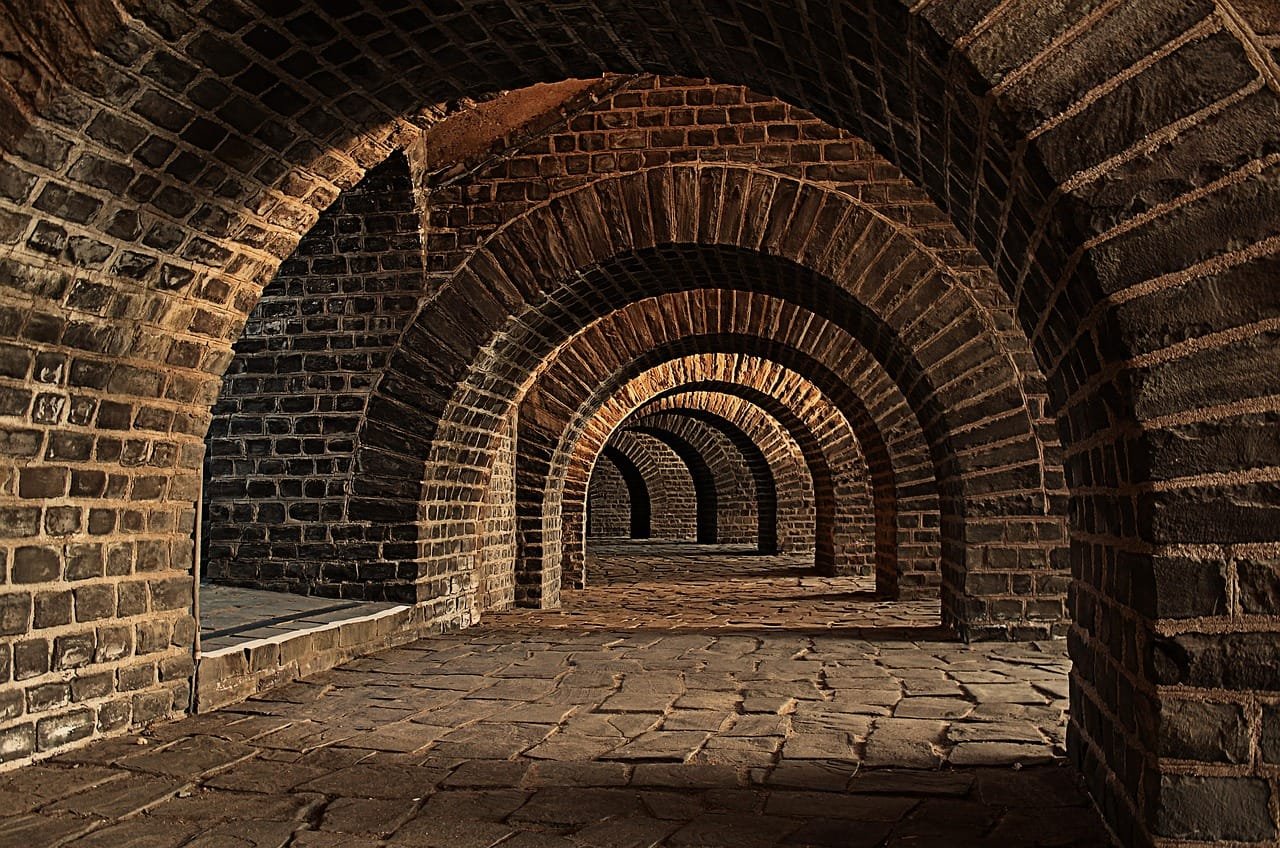
Methodology for evaluating load-bearing capacity of cracked cylindrical stone vaults through experimental interaction dependencies between bending moments and axial forces.

Locally connected tensegrity structure shows multistable, tunable performance
Locally-elastically-connected clustered tensegrity structure achieving multistability and tunable load-bearing performance via coupled cable mechanisms with variable stiffness design and 650%.

Validated single-strut model captures infilled RC frame seismic behavior
Advanced single-strut modeling framework for masonry-infilled RC frames with lightweight infills. Validates material-specific nonlinear hinges for seismic performance assessment with 10% accuracy.
AAC infill improved ductility more than clay infill
Experimental and numerical investigation of RC frames infilled with clay masonry versus autoclaved aerated concrete under cyclic loading, with macromodeling validation.
Thrust line methods for masonry arches and compressive strength
Historical development and recent advances in thrust line method for masonry arches, incorporating compressive strength in limit analysis formulations.

Rubber-stiffened steel plates showed delamination as the main failure mode
Study on rubber-stiffened steel plates and rapid-hardening concrete for sustainable bridge expansion joints, examining static performance, failure mechanisms, and design parameters for jointless.