

Overview
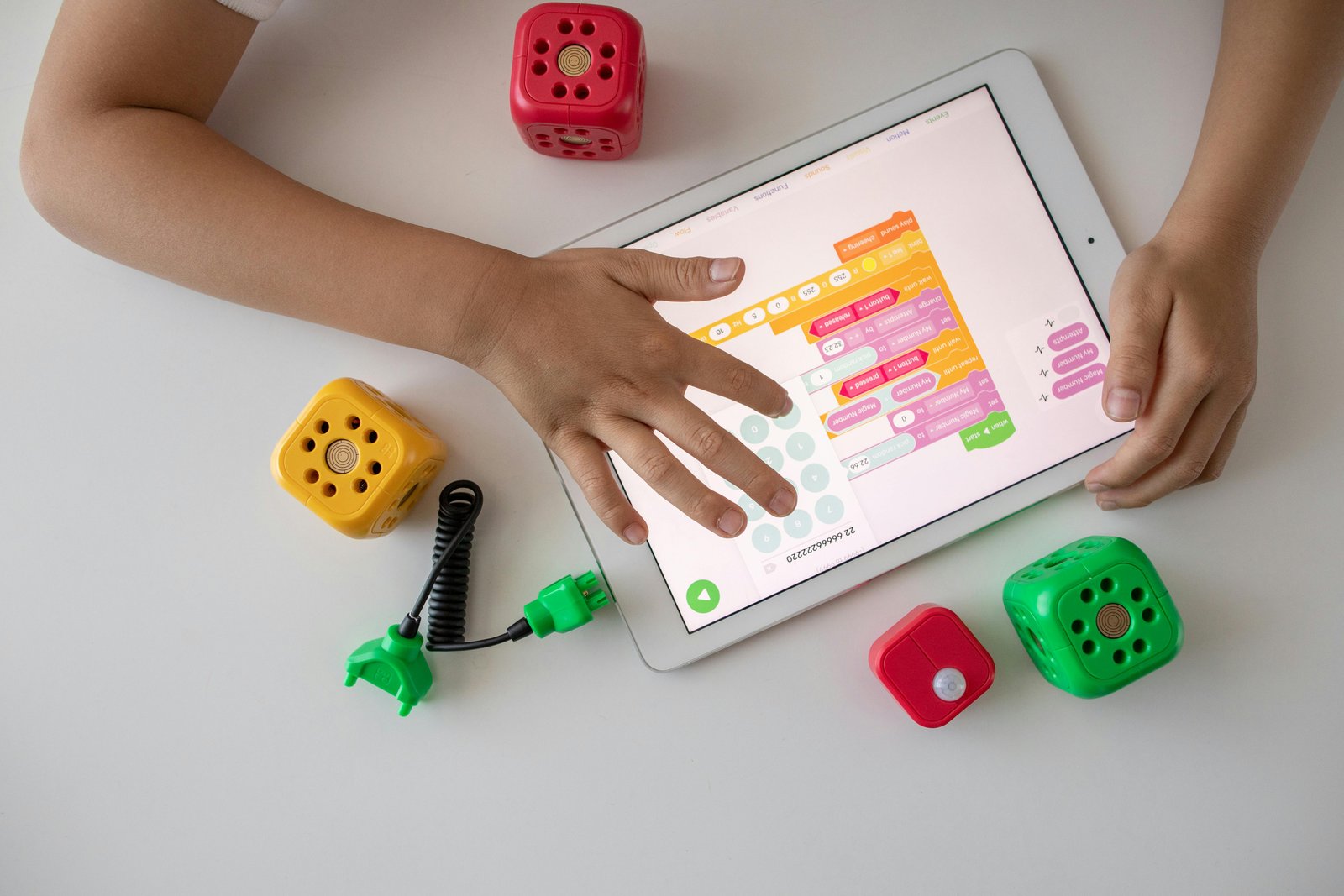
This research introduces AI-augmented Tangible Programming, an extension of Tangible-MakeCode that integrates an AI assistant into tangible programming environments. Tangible programming systems enable learners to perceive computation as concrete and manipulable through physical objects, but conventional implementations constrain learners to predefined block vocabularies. The work addresses this limitation by combining tangible block manipulation with AI-driven conversational scaffolding to support learners in extending projects beyond predetermined boundaries and articulating novel computational ideas.
Methods and approach
The research implements an AI assistant within the Tangible-MakeCode framework that operates through two primary mechanisms: selectable prompts and conversational interaction channels. The AI generates executable example code deployable on micro:bit hardware and produces printable templates for fabricating new tangible blocks that instantiate learner-designed functionality. Data collection involves a pilot study with middle-school participants in informal learning contexts. Analysis employs sequence analysis of AI-interaction logs to characterize interaction patterns and qualitative analysis of learner-generated artifacts combined with semi-structured interviews to examine cognitive and creative processes.
Key Findings
Results are forthcoming from the pilot study phase. The research design anticipates findings regarding how AI-supported interaction influences learner approaches to behavioral refinement, feature expansion, and alignment between program logic and design intentions. Analysis will characterize patterns in how learners engage with AI-generated suggestions, which scaffolding mechanisms prove most effective for different learner trajectories, and how tangible manipulation combined with conversational AI support shapes creative problem-solving in computational design contexts.
Implications
This work contributes to understanding how artificial intelligence can extend the pedagogical scope of tangible programming systems by reducing constraints on block vocabularies and enabling learner-directed extensibility. Integration of conversational AI with tangible interfaces creates potential for more open-ended creative expression within constrained computational environments, with implications for designing learning systems that balance structure with exploratory freedom. The research establishes methodological approaches for analyzing AI-mediated learning through interaction logs and artifact analysis, relevant to broader investigations of AI-augmented educational technologies.
Disclosure
Key points
- Research title: AI-Augmented Tangible Programming: Extending Tangible-MakeCode for Creative Learning
- Authors: Jin Yu
- Publication date: 2026-03-07
- DOI: https://doi.org/10.1145/3731459.3779040
- OpenAlex record: View
- Image credit: Photo by Robo Wunderkind on Pexels (Source • License)
- Disclosure: This post was generated by Claude (Anthropic). The original authors did not write or review this post.
Disclosure
- Research title:
- AI-Augmented Tangible Programming: Extending Tangible-MakeCode for Creative Learning
- Publication date:
- 2026-03-07
- OpenAlex record:
- View
- Image credit:
- Pexels • Robo Wunderkind · Pexels License
Get the weekly research newsletter
Stay current with peer-reviewed research without reading academic papers — one filtered digest, every Friday.