

AI Summary of Peer-Reviewed Research
This page presents an AI-generated summary of a published research paper. The original authors did not write or review this article. See full disclosure ↓
Publication Signals show what we were able to verify about where this research was published.STRONGWe verified multiple publication signals for this source, including independently confirmed credentials. Publication Signals reflect the source’s verifiable credentials, not the quality of the research.
- ✔ Peer-reviewed source
- ✔ Published in indexed journal
- ✔ No retraction or integrity flags
Key findings from this study
- The review identifies that yield increases following MSWC application at doses exceeding 30-40 t ha⁻¹ were highest in arable systems (+63.3%), intermediate in horticultural systems (+37.3%), and lower in orchard systems (+23%) relative to control treatments.
- The authors report that only 18% of the 114 reviewed studies exceeded five years in duration, indicating that current evidence predominantly reflects short-term agronomic responses with limited information on long-term soil and crop dynamics.
- The review identifies that MSWC application produced particularly pronounced benefits in degraded and saline-sodic soils, reducing electrical conductivity by up to 39% and increasing soil organic matter by up to 45% in these compromised soil conditions.
- The authors propose that challenges regarding variable compost composition, requirement for high application rates, and potential contamination from heavy metals and microplastics necessitate future research prioritizing long-term field studies to optimize application strategies and assess environmental safety.
Overview
This systematic review examined 114 peer-reviewed quantitative studies published between 1985 and 2025 to assess the agronomic effects of municipal solid waste compost (MSWC) on crop productivity and soil fertility across diverse agricultural systems. The analysis employed Latent Dirichlet Allocation topic modeling to synthesize findings regarding MSWC impacts on crop yields in arable, horticultural, and orchard production systems, as well as effects on soil physical, chemical, and biological properties. The review characterizes current evidence while identifying critical gaps in long-term field research and compost characterization that limit conclusions about sustainability and environmental safety.
Methods and approach
The review selected 114 peer-reviewed quantitative studies from the Web of Science database spanning four decades (1985-2025). Study selection and analysis employed Latent Dirichlet Allocation, a topic modeling approach, to systematically organize findings across multiple agricultural contexts. The review examined MSWC effects on crop productivity metrics across three agricultural production systems: arable systems, horticultural systems, and orchard systems. Additionally, it assessed impacts on soil properties across physical (e.g., structure, water-holding capacity), chemical (e.g., nutrients, pH, salinity), and biological (e.g., microbial activity) dimensions. The analysis specifically considered application rates, soil conditions, and experimental durations to characterize patterns in reported outcomes.
Results
MSWC application at doses exceeding 30-40 t ha⁻¹ demonstrated consistent positive effects on crop productivity across all assessed systems. Yield increases varied by agricultural type: arable systems showed the highest average yield increase of +63.3% relative to controls, followed by horticultural systems at +37.3%, and orchard systems at +23%. Soil organic matter responses differed markedly between experimental contexts, increasing by +2.5% under field conditions but by +248% in pot experiments. MSWC demonstrated pronounced benefits in degraded and saline-sodic soils, reducing electrical conductivity by up to 39% and increasing soil organic matter by up to 45% in these degraded contexts. However, substantial temporal limitations constrained the evidence base: only 18% of reviewed studies extended beyond five years duration. Most studies also lacked comprehensive characterization of compost composition, limiting inference regarding long-term soil and crop dynamics.
Implications
The evidence demonstrates MSWC's potential to address dual challenges of waste management and soil organic matter depletion while aligning with circular economy frameworks as a substitute for conventional mineral fertilizers. Application at moderate-to-high rates produces measurable agronomic benefits, particularly in degraded soil conditions where MSWC may provide both fertility enhancement and saline-sodic soil remediation. The pronounced benefits in compromised soil systems suggest context-dependent efficacy, with potential advantages for restoration of marginal agricultural lands. However, the predominance of short-term studies and heterogeneous experimental designs limits evidence on the sustainability and temporal dynamics of MSWC benefits under field conditions representative of actual agricultural practice.
Scope and limitations
This summary is based on the study abstract and available metadata. It does not include a full analysis of the complete paper, supplementary materials, or underlying datasets unless explicitly stated. Findings should be interpreted in the context of the original publication.
Disclosure
- Research title: A Systematic Review of Scientific Research on Municipal Solid Waste Compost: Impacts on Crop Productivity and Soil Fertility
- Authors: Francesco Serafini, Ottorino-Luca Pantani, Margherita Santoni, Valentina Bertucci, Gaio Cesare Pacini
- Institutions: National Research Council, University of Florence
- Publication date: 2026-03-10
- DOI: https://doi.org/10.1007/s42729-026-03161-4
- OpenAlex record: View
- PDF: Download
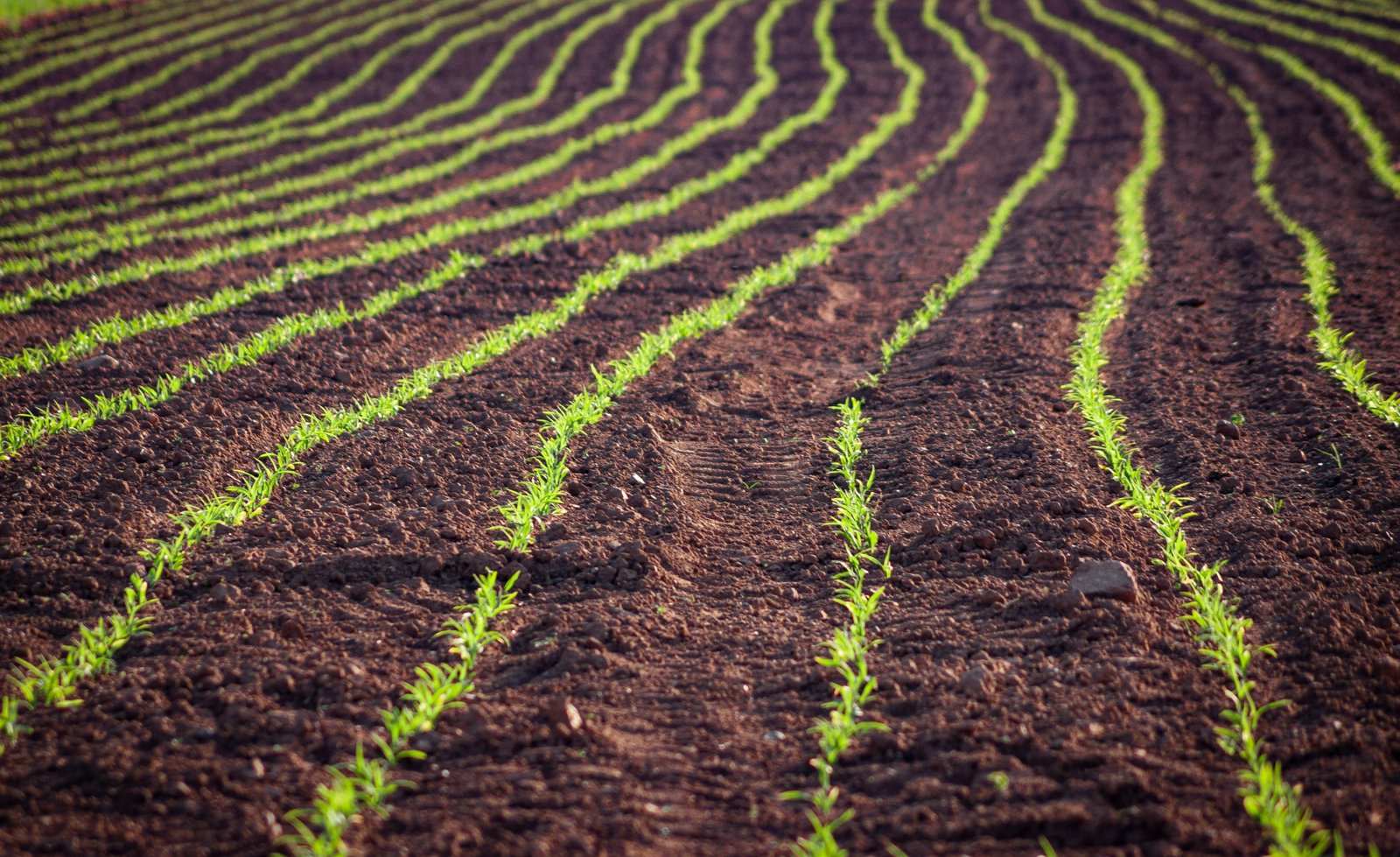
- Image credit: Photo by Craig Cooper on Unsplash (Source • License)
- Disclosure: This post was generated by Claude (Anthropic). The original authors did not write or review this post.
Get the weekly research newsletter
Stay current with peer-reviewed research without reading academic papers — one filtered digest, every Friday.