

Measuring the multi-functionality of typical mountainous villages in Chongqing based on location big data

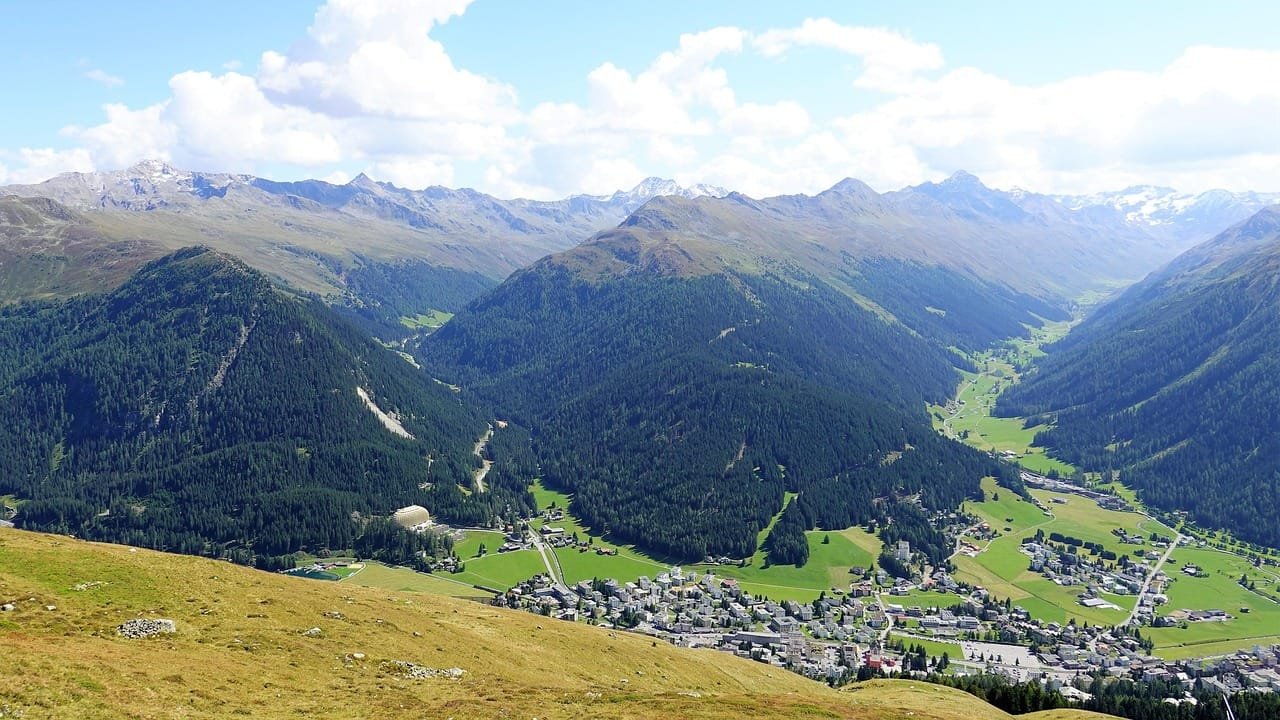
Aerial landscape photograph of a verdant mountainous valley featuring scattered residential buildings, dense green forests, terraced agricultural fields, and multiple mountain peaks under partly cloudy skies.
Image Credit: Photo by Tuor on Pixabay (SourceLicense)

AI Summary of Peer-Reviewed Research

This page presents an AI-generated summary of a published research paper. The original authors did not write or review this article. See full disclosure ↓

⚠️ This summary is for informational purposes only and does not constitute legal advice. Laws vary by jurisdiction and change over time. Consult a qualified legal professional for advice specific to your situation.

Frontiers in Environmental Science·2026-02-24·Peer-reviewed·View original paper ↗·Follow this topic (RSS)
Publication Signals show what we were able to verify about where this research was published.STRONGWe verified multiple publication signals for this source, including independently confirmed credentials. Publication Signals reflect the source’s verifiable credentials, not the quality of the research.
  • ✔ Peer-reviewed source
  • ✔ Published in indexed journal
  • ✔ No retraction or integrity flags

Key findings from this study

  • The study found that villages with similar geographic and regional characteristics exhibit functionally distinct profiles depending on whether measurement occurs during working days, weekends, or holidays.
  • The authors identified four village functional types: agriculture-tourism combinations, part-time competition structures, modern park configurations, and urban lifestyle patterns.
  • The researchers demonstrate that mobile phone signaling data enables systematic assessment of rural multi-functionality at the village scale, capturing residential, employment, and consumption dimensions.

Overview

This study evaluates rural multi-functionality in mountainous Chongqing villages using mobile phone signaling data. The research constructs functional indices measuring residential, employment, and consumption activities across village scales. The work addresses gaps in existing rural development research by incorporating individual resident behavior patterns into spatial analysis.

Methods and approach

Mobile phone location data informed construction of three functional index systems capturing residential, employment, and consumption dimensions. The authors applied this framework to typical villages in Chongqing's mountainous terrain. Analysis differentiated activity patterns across working days, weekends, and holidays to assess functional variation.

Results

Rural spaces with comparable location conditions and regional characteristics display distinct dominant functions depending on temporal context. Villages classified into four types: agriculture-tourism combinations, part-time competition, modern park facilities, and urban lifestyle patterns. Functional profiles shifted measurably between weekday and weekend periods, revealing temporal dynamics in rural space organization.

The temporal variation in village functionality reflects differential actor engagement across time periods. Weekend and holiday activity distributions diverged from working-day patterns, indicating seasonal or cyclical shifts in primary space usage. This differentiation emerged within villages sharing similar geographic and infrastructure characteristics.

Implications

Big data methodologies from mobile phone signaling offer novel approaches for evaluating rural spatial organization at granular scales. The findings enable evidence-based classification systems for tailored rural revitalization strategies across diverse village contexts. Temporal functional analysis supports more nuanced policy design addressing specific developmental needs by village type.

Understanding actor behavior patterns through digital traces provides administrative tools for rural-urban integration planning. Village classification according to dominant function allows targeted interventions aligned with existing economic and social structures. This approach moves beyond aggregate regional assessments to identify contextual variation requiring differentiated rural development approaches.

Scope and limitations

This summary is based on the study abstract and available metadata. It does not include a full analysis of the complete paper, supplementary materials, or underlying datasets unless explicitly stated. Findings should be interpreted in the context of the original publication.

Disclosure

  • Research title: Measuring the multi-functionality of typical mountainous villages in Chongqing based on location big data
  • Authors: Cao Wei, Tian Jinglian, Liu Xiaoyu, Liu Yan, He Huiyu
  • Institutions: Chongqing Institute of Geology and Mineral Resources, City University of Seattle, Hangzhou City University, Ministry of Natural Resources
  • Publication date: 2026-02-24
  • DOI: https://doi.org/10.3389/fenvs.2026.1704474
  • OpenAlex record: View
  • PDF: Download
  • Image credit: Photo by Tuor on Pixabay (SourceLicense)
  • Disclosure: This post was generated by Claude (Anthropic). The original authors did not write or review this post.

Get the weekly research newsletter

Stay current with peer-reviewed research without reading academic papers — one filtered digest, every Friday.

More posts