

What the study found
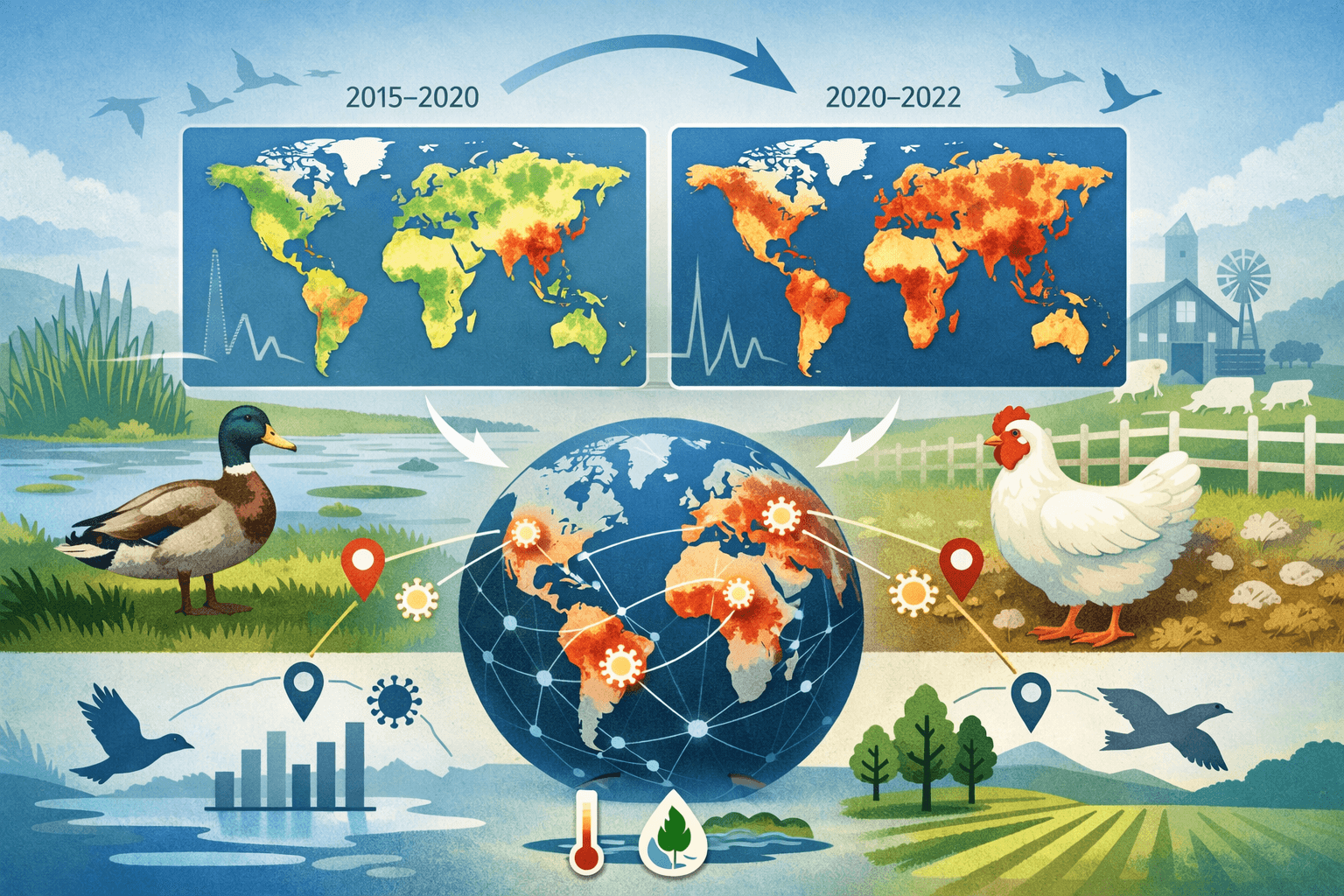
Ecological suitability for highly pathogenic avian influenza H5 circulation increased after 2020 in Europe, Asia, and the Americas. The study also found that the environmental factors linked to risk shifted after 2020.
Why the authors say this matters
The authors conclude that the findings help improve understanding of highly pathogenic avian influenza epidemiology and identify regions where surveillance and control measures should be prioritised.
What the researchers tested
The researchers used ecological niche modelling, a method that links species or disease occurrence to environmental conditions, to study HPAI cases in wild and domestic birds. They built models for two time periods, 2015–2020 and 2020–2022, and examined predictors including chicken and duck population density, human density, distance to water bodies, and land cover variables.
What worked and what didn't
Post-2020, the relative influence of intensive chicken population density and cultivated vegetation increased. Risk maps showed notable ecological suitability for HPAI H5 circulation in Europe, Asia, and the Americas, with expanded at-risk areas after 2020.
What to keep in mind
The abstract does not describe detailed limitations. The findings are based on ecological modelling of reported cases across two time periods, so the summary is limited to the relationships and patterns described there.
Key points
- Ecological suitability for HPAI H5 circulation increased after 2020 in Europe, Asia, and the Americas.
- The environmental predictors linked to risk shifted after 2020.
- Intensive chicken population density and cultivated vegetation became more influential post-2020.
- Wild bird H5 occurrences were mainly correlated with urban areas and open water regions.
- The authors say the findings can help prioritise surveillance and control measures.
Disclosure
- Research title:
- H5N1 risk expanded across regions after 2020
- Publication date:
- 2026-01-28
- OpenAlex record:
- View
Get the weekly research newsletter
Stay current with peer-reviewed research without reading academic papers — one filtered digest, every Friday.