

Overview
This project deliverable documents the compilation, harmonization, and standardization of charcoal records from the boreal biome across the northern hemisphere. The compilation serves as a comprehensive dataset for evaluating existing fire models and investigating historical fire dynamics in boreal forests. The work is part of a broader initiative examining past climate conditions to inform future climate projections. By assembling charcoal records from multiple sites, the compilation provides a foundation for understanding temporal and spatial patterns of fire activity in boreal ecosystems. The standardized format facilitates comparative analyses across different locations and time periods, enabling assessments of fire regime characteristics including frequency and severity.
Methods and approach
The research team compiled charcoal records from sites distributed across the boreal biome of the northern hemisphere. Records were harmonized to ensure consistency in data structure and stored in a standardized format to enable systematic comparison and analysis. The methodology involves examining multiple dimensions of fire activity, including frequency of fire events, severity of individual fires, and synchronicity patterns between different geographic sites. The approach integrates charcoal data with fire proxies preserved in Greenland ice cores to assess regional and hemispheric-scale fire patterns. This multi-proxy comparison allows for validation and contextualization of the charcoal record against independent indicators of historical fire activity.
Key Findings
The compiled dataset provides a comprehensive resource for assessing fire models applicable to boreal forest ecosystems. Analyses of the compilation explore temporal patterns in fire frequency and severity across the boreal biome. The investigation of synchronicity between sites reveals spatial patterns in fire occurrence, indicating whether fire events were localized or represented broader regional phenomena. Comparison with fire proxies from Greenland ice cores establishes relationships between local charcoal records and hemispheric-scale indicators of biomass burning. The standardized compilation enables systematic evaluation of existing fire models against empirical paleofire data from multiple sites across the northern boreal zone.
Implications
The standardized charcoal compilation provides a critical tool for validating and refining fire models used in climate and Earth system simulations. By enabling assessment of model performance against empirical paleofire data, the compilation supports improvement of fire parameterizations in models used for future climate projections. The analysis of synchronicity between sites and correlation with ice core proxies contributes to understanding the spatial scale and climatic drivers of historical fire regimes in boreal forests. This knowledge is essential for projecting how boreal fire regimes may respond to future climate change, given the significant role of boreal forests in global carbon cycling and climate feedbacks. The dataset's standardized format facilitates ongoing integration of additional records and continued refinement of fire history reconstructions.
Disclosure
Key points
- Research title: D13.3 Analysis of boreal forest fires
- Authors: Ramesh Glückler, Thomas Giesecke
- Publication date: 2026-02-23
- DOI: https://doi.org/10.5281/zenodo.18750274
- OpenAlex record: View
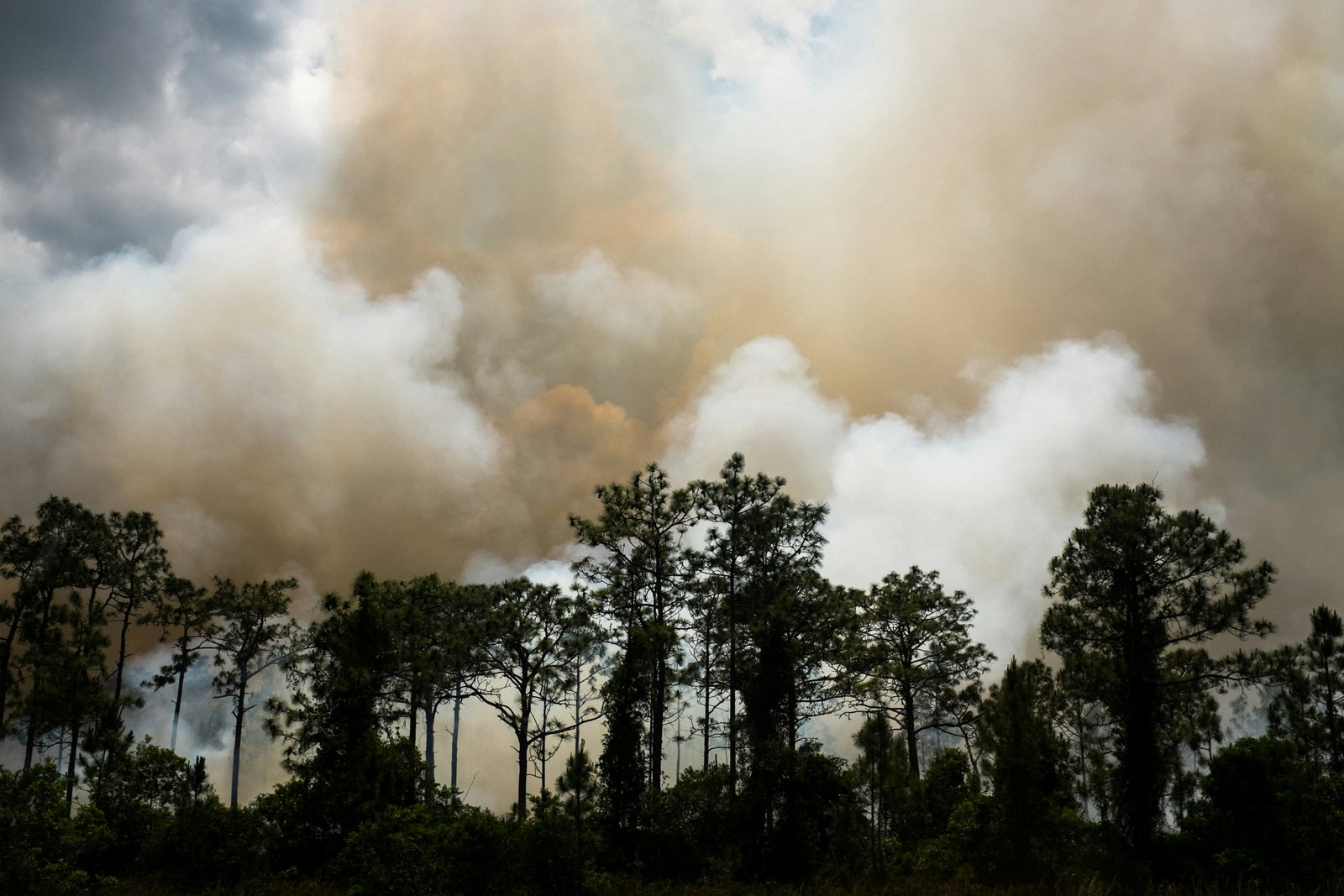
- Image credit: Photo by Ryan Arnst on Unsplash (Source • License)
- Disclosure: This post was generated by Claude (Anthropic). The original authors did not write or review this post.
Disclosure
- Research title:
- D13.3 Analysis of boreal forest fires
- Publication date:
- 2026-02-23
- OpenAlex record:
- View
- Image credit:
- Photo by Ryan Arnst on Unsplash · Unsplash License
Get the weekly research newsletter
Stay current with peer-reviewed research without reading academic papers — one filtered digest, every Friday.