

Overview
This study examines peer effects of refugee students on the academic achievement and behavioral outcomes of non-refugee students in a large urban school district. The research addresses gaps in empirical evidence concerning the integration externalities of refugee populations by investigating whether exposure to refugee peers influences test performance, attendance, and disciplinary behavior among incumbent students.
Methods and approach
The analysis exploits variation in the concentration of refugees within schools and grade levels to identify causal effects on non-refugee student outcomes. The research employs variation in refugee share as an instrumental approach, estimating effects on English Language Arts and Mathematics test scores as primary academic outcomes. Secondary outcomes include student absenteeism and disciplinary incidents. The analytical framework incorporates nonlinear in-means specifications to detect differential effects across the achievement distribution.
Key Findings
Point estimates indicate that a 1 percentage point increase in the grade-level share of refugees correlates with a 0.01 standard deviation increase in Mathematics test scores. No statistically significant average effect emerges for English Language Arts test scores. Heterogeneous effects analysis reveals distributional differences: low-achieving students experience negative spillovers in ELA performance when exposed to increased refugee peer concentration, while high-achieving students demonstrate positive spillovers. Non-academic outcomes of absenteeism and disciplinary incidents show no reported adverse effects.
Implications
The findings suggest that refugee integration does not generate detectable negative externalities on incumbent student achievement in this urban context, with mathematics performance showing modest gains. The heterogeneous effects by achievement level indicate that peer composition effects operate differentially across the student distribution, with potential negative consequences concentrated among lower-performing students in language arts. These results contribute empirical evidence to policy debates on refugee resettlement and school resource allocation decisions.
Disclosure
Key points
- Research title: Do Refugee Students Affect the Academic Achievement of their Peers? Evidence from a Large Urban School District
- Authors: Camila Morales
- Publication date: 2026-01-13
- DOI: https://doi.org/10.57709/nbjr-1y28
- OpenAlex record: View
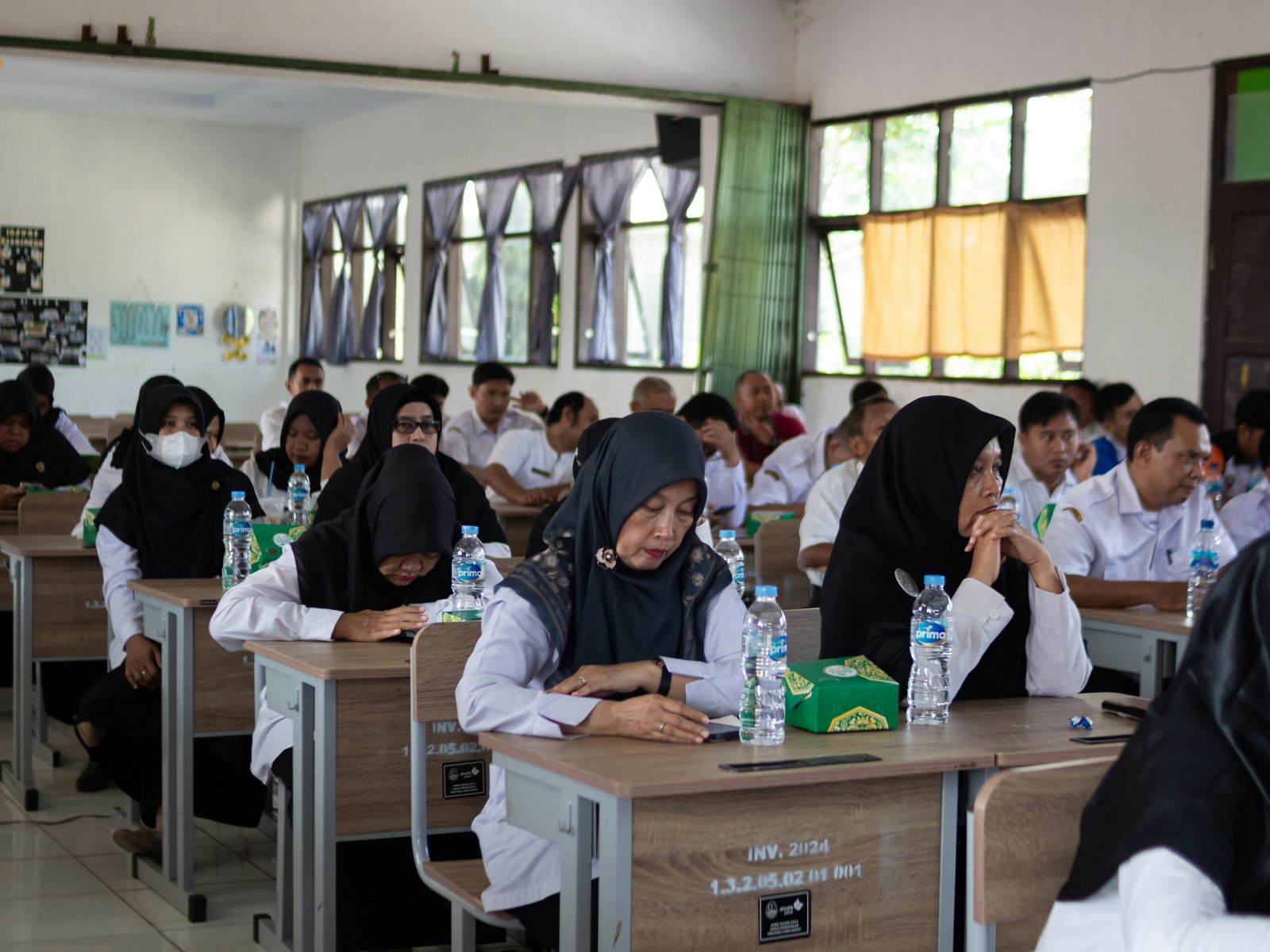
- Image credit: Photo by SMKN 1 Gantar on Unsplash (Source • License)
- Disclosure: This post was generated by Claude (Anthropic). The original authors did not write or review this post.
Disclosure
- Research title:
- Do Refugee Students Affect the Academic Achievement of their Peers? Evidence from a Large Urban School District
- Publication date:
- 2023-12-11
- OpenAlex record:
- View
- Image credit:
- Photo by SMKN 1 Gantar on Unsplash · Unsplash License
Get the weekly research newsletter
Stay current with peer-reviewed research without reading academic papers — one filtered digest, every Friday.