

Welcome to Görlitz/Görliwood: Wes Anderson’s The Grand Budapest Hotel (2014) and Stefan Zweig’s legacy

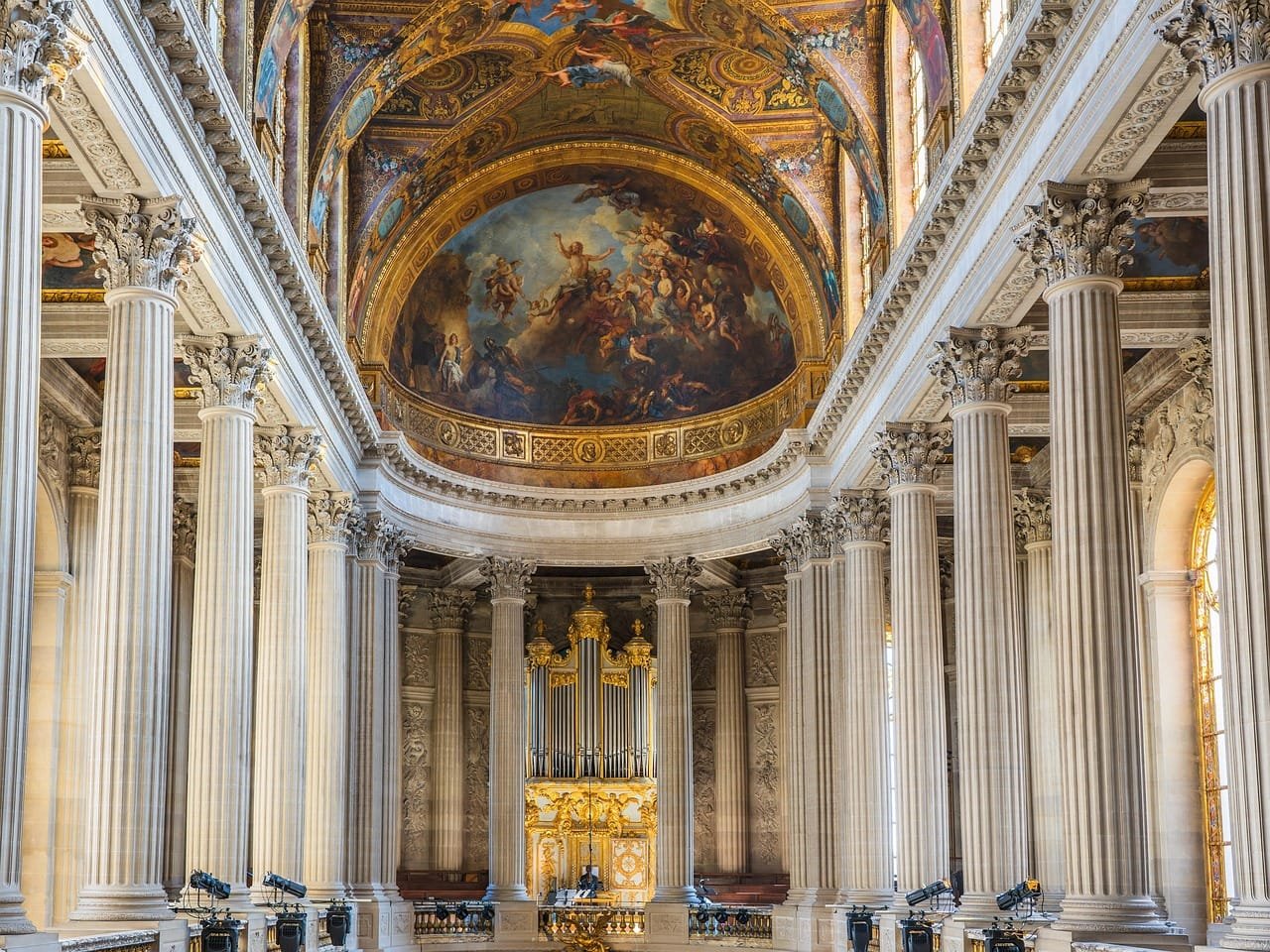
A symmetrical interior view of a grand European cathedral or palazzo featuring a coffered dome ceiling with religious frescoes, classical columns with white capitals lining both sides, ornate gold and cream architectural details, and a central altar area, photographed in landscape orientation.
Image Credit: Photo by ChiemSeherin on Pixabay (SourceLicense)

AI Summary of Peer-Reviewed Research

This page presents an AI-generated summary of a published research paper. The original authors did not write or review this article. See full disclosure ↓

Atlantic Studies·2026-02-11·Peer-reviewed·View original paper ↗·Follow this topic (RSS)
Publication Signals show what we were able to verify about where this research was published.MODERATECore publication signals for this source were verified. Publication Signals reflect the source’s verifiable credentials, not the quality of the research.
  • ✔ Peer-reviewed source
  • ✔ Published in indexed journal
  • ✔ No retraction or integrity flags

Key findings from this study

  • The study found that The Grand Budapest Hotel functions as a thematic reinterpretation of multiple Zweig works rather than adaptation of a single text.
  • The authors report that the protagonist embodies Zweig's conception of Central European culture while experiencing historical defeat alongside aesthetic and moral achievement.
  • The analysis identifies a critical tension between the film's aesthetic resolution and contemporary political developments in Görlitz, specifically the rise of far-right political movements.

Overview

The essay examines Wes Anderson's 2014 film The Grand Budapest Hotel through the lens of Stefan Zweig's literary and thematic concerns. Anderson selected Görlitz, an eastern German town frequently used as a film location, to construct the hotel's physical setting. The film functions as a thematic reinterpretation rather than direct adaptation of Zweig's works, creating a semiotic world where a universal parable unfolds. The protagonist embodies Zweig's conception of a Central European culture erased by Nazi ideology. The analysis situates the film within contemporary German political contexts, particularly the rise of far-right political movements in Görlitz.

Methods and approach

The essay employs textual and contextual analysis, examining the film as an artistic response to Zweig's literary corpus rather than as adaptation of a single work. The analysis considers the material dimensions of the chosen filming location—Görlitz and its status as a production site—as integral to the work's semiotic and thematic registers. The essay traces connections between the protagonist's narrative trajectory and Zweig's intellectual preoccupations with Central European culture and history. Contemporary political developments in Görlitz provide a framework for reassessing the film's moral and aesthetic conclusions from present perspectives.

Results

The study found that Anderson's film operates as a layered engagement with multiple Zweig texts rather than a straightforward literary adaptation. The protagonist's characterization synthesizes Zweig's historical vision of Central Europe with a narrative arc in which aesthetic and moral achievement coexist alongside historical defeat. The selection of Görlitz as the architectural and geographical foundation establishes the film's miniature world as a contained space where universal ethical tensions materialize. The analysis reveals a tension between the protagonist's narrative victory on aesthetic grounds and the present-day political reality of Görlitz, where far-right movements have gained political prominence. This juxtaposition complicates retrospective interpretation of the film's moral resolution.

Implications

The essay demonstrates that Anderson's film engages seriously with Zweig's intellectual legacy concerning Central European identity and the catastrophic historical ruptures of the twentieth century. Rather than treating the film as nostalgic escapism, the analysis positions it as a deliberate artistic confrontation with the conditions that enabled the destruction Zweig documented and experienced. The film's aesthetic accomplishments do not neutralize its historical pessimism. The essay suggests that literary adaptation in cinema functions not merely as transposition but as thematic reworking and recontextualization. Interpreting films through authorial legacies beyond direct source material reveals deeper ideological and philosophical dimensions.

Scope and limitations

This summary is based on the study abstract and available metadata. It does not include a full analysis of the complete paper, supplementary materials, or underlying datasets unless explicitly stated. Findings should be interpreted in the context of the original publication.

Disclosure

  • Research title: Welcome to Görlitz/Görliwood: Wes Anderson’s The Grand Budapest Hotel (2014) and Stefan Zweig’s legacy
  • Authors: Stefania Sbarra
  • Institutions: Ca' Foscari University of Venice
  • Publication date: 2026-02-11
  • DOI: https://doi.org/10.1080/14788810.2026.2620000
  • OpenAlex record: View
  • Image credit: Photo by ChiemSeherin on Pixabay (SourceLicense)
  • Disclosure: This post was generated by Claude (Anthropic). The original authors did not write or review this post.

Get the weekly research newsletter

Stay current with peer-reviewed research without reading academic papers — one filtered digest, every Friday.

More posts