

Overview
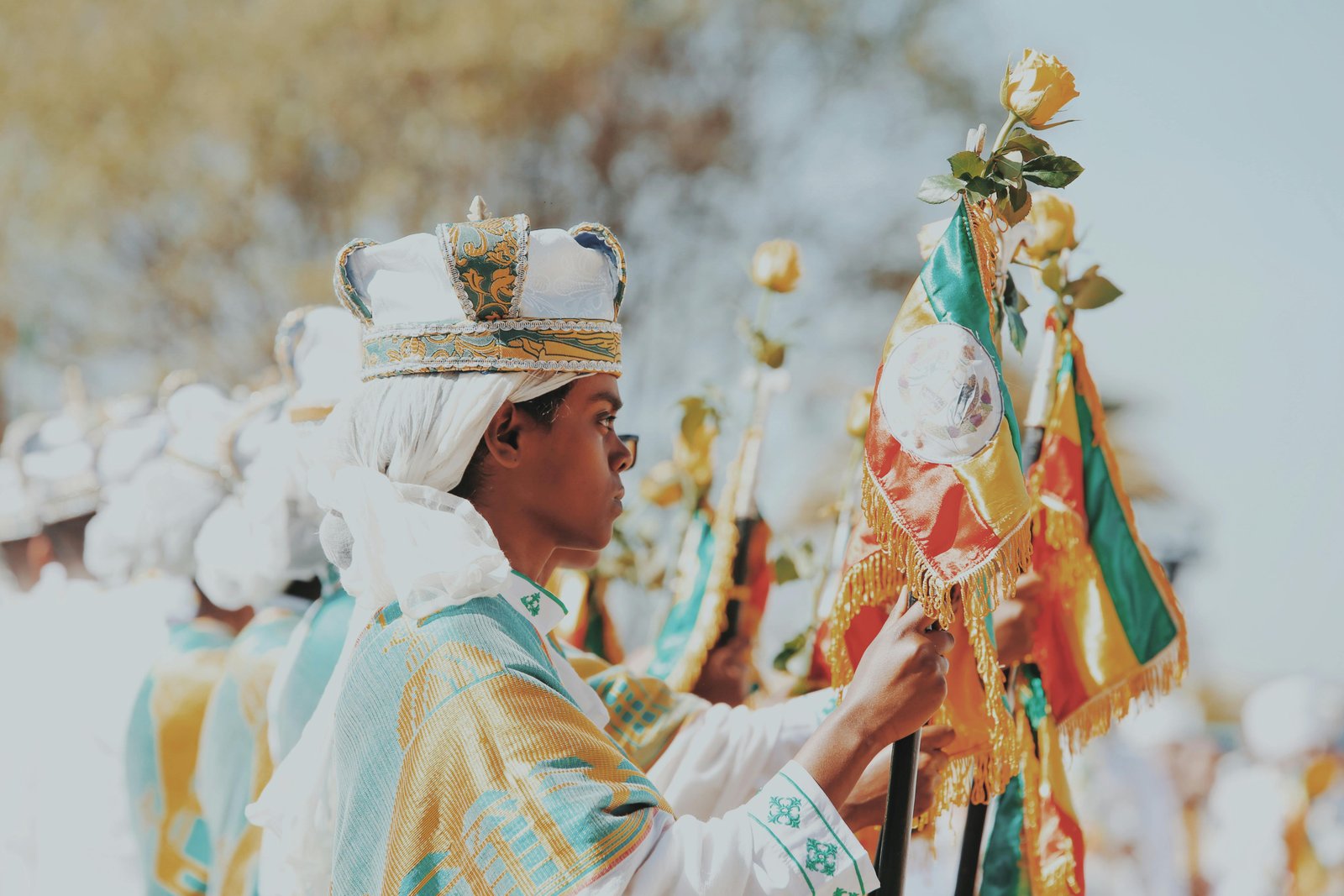
This study examines the Timkat (Epiphany) celebration in Gondar, Ethiopia, a UNESCO World Heritage site recognized for its outstanding cultural value. The research addresses a gap in scholarly literature by conducting an in-depth exploration of this religious and cultural event, situating it within the historical, cultural, and contemporary context of Gondar's significance as a major pilgrimage and tourism destination. The investigation encompasses the historical trajectories of Epiphany observance in Ethiopia, its localization within Gondar, indigenous cultural practices embedded in the celebration, and the potential for religious tourism development.
Methods and approach
The study employed an exploratory and descriptive qualitative research design utilizing three primary data collection methods: semi-structured interviews, systematic observations, and document analysis. Sampling employed non-probability techniques, specifically purposive and snowball sampling approaches, yielding seventeen key informants for interview participation. Thematic analysis was applied to systematically interpret and synthesize the qualitative data, enabling pattern identification and thematic categorization across the collected material.
Key Findings
The findings establish that Epiphany celebration in Ethiopia, particularly in Gondar, constitutes a continuous religious and cultural practice extending to ancient times. The research identifies and documents the Ketera tradition as a distinctive indigenous cultural practice integral to Gondar's Epiphany observance, with documented etymological and historical significance. The study traces the historical origins of Epiphany within Ethiopian Christianity and maps its introduction and development within Gondar's religious and social structures. Analysis reveals that the celebration incorporates ancient poetic traditions and maintains multivalent significance as both a religious observance and cultural marker within the city.
Implications
The findings substantiate Gondar's designation as a World Heritage site and underscore the Epiphany celebration as a principal cultural asset meriting continued scholarly and institutional attention. The study identifies substantial unrealized potential for leveraging the Epiphany celebration within religious tourism frameworks, suggesting pathways for economic development, cultural preservation, and enhanced visitor engagement while maintaining cultural authenticity and religious significance.
Disclosure
Key points
- Research title: Timkat (Epiphany) as Living Faith: The Intersection of Religion, Culture, and Tourism in Gondar, World Heritage Site, Ethiopia
- Authors: Balew Baye, Dagnachew Nega
- Institutions: Debre Tabor University
- Publication date: 2026-02-25
- DOI: https://doi.org/10.21427/9mva-qs63
- OpenAlex record: View
- Image credit: Photo by Abuti Engidashet on Pexels (Source • License)
- Disclosure: This post was generated by Claude (Anthropic). The original authors did not write or review this post.
Disclosure
- Research title:
- Timkat (Epiphany) as Living Faith: The Intersection of Religion, Culture, and Tourism in Gondar, World Heritage Site, Ethiopia
- Publication date:
- 2026-02-25
- OpenAlex record:
- View
- Image credit:
- Pexels • Abuti Engidashet · Pexels License
Get the weekly research newsletter
Stay current with peer-reviewed research without reading academic papers — one filtered digest, every Friday.