

The PLUTO code on GPUs: A first look at Eulerian MHD methods

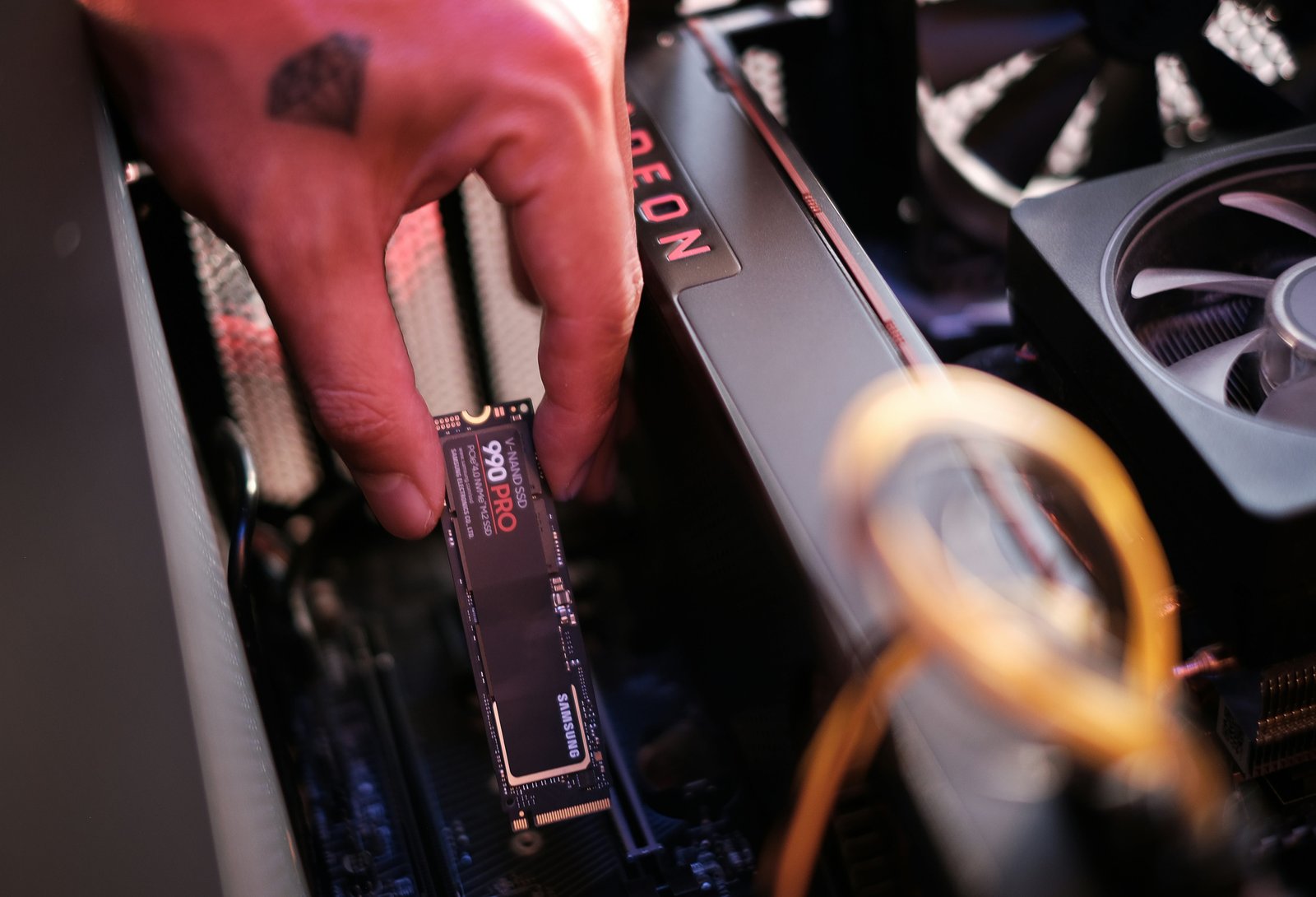
A close-up photograph of GPU graphics cards and server hardware with pink/magenta lighting and blue cooling components, showing LED status indicators and data center equipment in a server rack environment.
Image Credit: Photo by Samsung Memory on Unsplash (SourceLicense)

AI Summary of Peer-Reviewed Research

This page presents an AI-generated summary of a published research paper. The original authors did not write or review this article. See full disclosure ↓

Astronomy and Computing·2026-02-05·Peer-reviewed·View original paper ↗·Follow this topic (RSS)
Publication Signals show what we were able to verify about where this research was published.STANDARDAvailable publication signals for this source were verified. Publication Signals reflect the source’s verifiable credentials, not the quality of the research.

Fewer signals were independently confirmable for this source. That reflects the limits of what’s on record — not a judgment about the research.

  • ✔ No retraction or integrity flags

Key findings from this study

  • The study presents gPLUTO, a GPU-optimized reimplementation of the PLUTO code that applies OpenACC directives to accelerate magnetohydrodynamic simulations on NVIDIA GPUs.
  • The researchers demonstrate that the Eulerian finite-volume formulation for solving MHD equations remains viable within GPU-accelerated architectures.
  • The authors report preliminary performance results establishing the feasibility of deploying plasma astrophysics simulations on pre-exascale parallel systems.

Overview

gPLUTO is a GPU-optimized implementation of the PLUTO computational plasma astrophysics code. The implementation employs an Eulerian finite-volume formulation to solve magnetohydrodynamic equations across multiple spatial dimensions. A complete rewrite in C++ leverages the OpenACC programming model for acceleration on NVIDIA GPUs. The work presents preliminary performance results on pre-exascale parallel architectures.

Methods and approach

The authors implemented gPLUTO using C++ and OpenACC directives to enable GPU acceleration of the original PLUTO code. The approach maintains the Eulerian finite-volume numerical scheme while adapting the architecture for NVIDIA GPU hardware. The implementation retains multiple modules present in the predecessor code. Preliminary performance evaluation focuses on pre-exascale parallel systems.

Results

gPLUTO demonstrates viable performance on pre-exascale GPU architectures through its accelerated finite-volume implementation of MHD solvers. The GPU-optimized code successfully executes magnetohydrodynamic simulations across multiple spatial dimensions. Performance benchmarks indicate the potential for acceleration on contemporary parallel systems. The authors establish baseline performance characteristics for future comprehensive evaluation.

Implications

GPU acceleration of Eulerian MHD codes addresses computational bottlenecks in plasma astrophysics simulations. gPLUTO enables resource-efficient computation by leveraging NVIDIA GPU architectures, reducing time-to-solution for magnetohydrodynamic systems. The OpenACC-based approach maintains code portability while achieving hardware-specific optimization. These results suggest feasibility of deploying production-grade MHD solvers on emerging high-performance computing systems.

The preliminary performance validation establishes foundation for scaling MHD simulations to larger problem sizes and longer physical timescales. GPU acceleration permits exploration of previously computationally prohibitive parameter spaces in plasma astrophysics. The modular architecture supports integration of additional physics modules onto accelerated platforms. Future comprehensive assessment will quantify performance gains across diverse simulation configurations.

Scope and limitations

This summary is based on the study abstract and available metadata. It does not include a full analysis of the complete paper, supplementary materials, or underlying datasets unless explicitly stated. Findings should be interpreted in the context of the original publication.

Disclosure

  • Research title: The PLUTO code on GPUs: A first look at Eulerian MHD methods
  • Authors: Marco Rossazza, A. Mignone, Matteo Bugli, S. Truzzi, L. Riha, Tomáš Panoc, Ondřej Vysocký, N. Shukla, Alessandro B. Romeo, Vittoria Berta
  • Institutions: Centre National de la Recherche Scientifique, Cineca, Institut d'Astrophysique de Paris, Istituto Nazionale di Fisica Nucleare, Sezione di Torino, Sorbonne Université, University of Turin, VSB – Technical University of Ostrava
  • Publication date: 2026-02-05
  • DOI: https://doi.org/10.1016/j.ascom.2026.101076
  • OpenAlex record: View
  • Image credit: Photo by Samsung Memory on Unsplash (SourceLicense)
  • Disclosure: This post was generated by Claude (Anthropic). The original authors did not write or review this post.

Get the weekly research newsletter

Stay current with peer-reviewed research without reading academic papers — one filtered digest, every Friday.

More posts