Tag: Satellite
In-flight calibration confirms LEIA performs as designed
—
in AstronomyWhat the study found The Lobster Eye Imager for Astronomy (LEIA) showed in-orbit performance that generally matched its design and ground expectations. The study reports that its spatial resolution, source positioning, effective area, energy response, and background behavior were all characterized and were largely consistent with prior values or models. Why the authors say this…
Artificial satellite arrays improve axionlike dark matter sensitivity
What the study found A proposed Artificial Pulsar Polarization Array (APPA) — a satellite network with multiple pulsed signal transmitters and one receiver satellite — was simulated to test sensitivity to axionlike dark matter. The simulations indicated that APPA could give a tighter upper limit on the axion-photon coupling parameter, g_aγ, than conventional ground-based observations…

Sea ice reference data prepared for satellite altimetry comparison
A standardized collection of sea ice measurements from 1993–2024 enables validation of satellite altimetry thickness products across both polar regions at matching spatial and temporal scales.

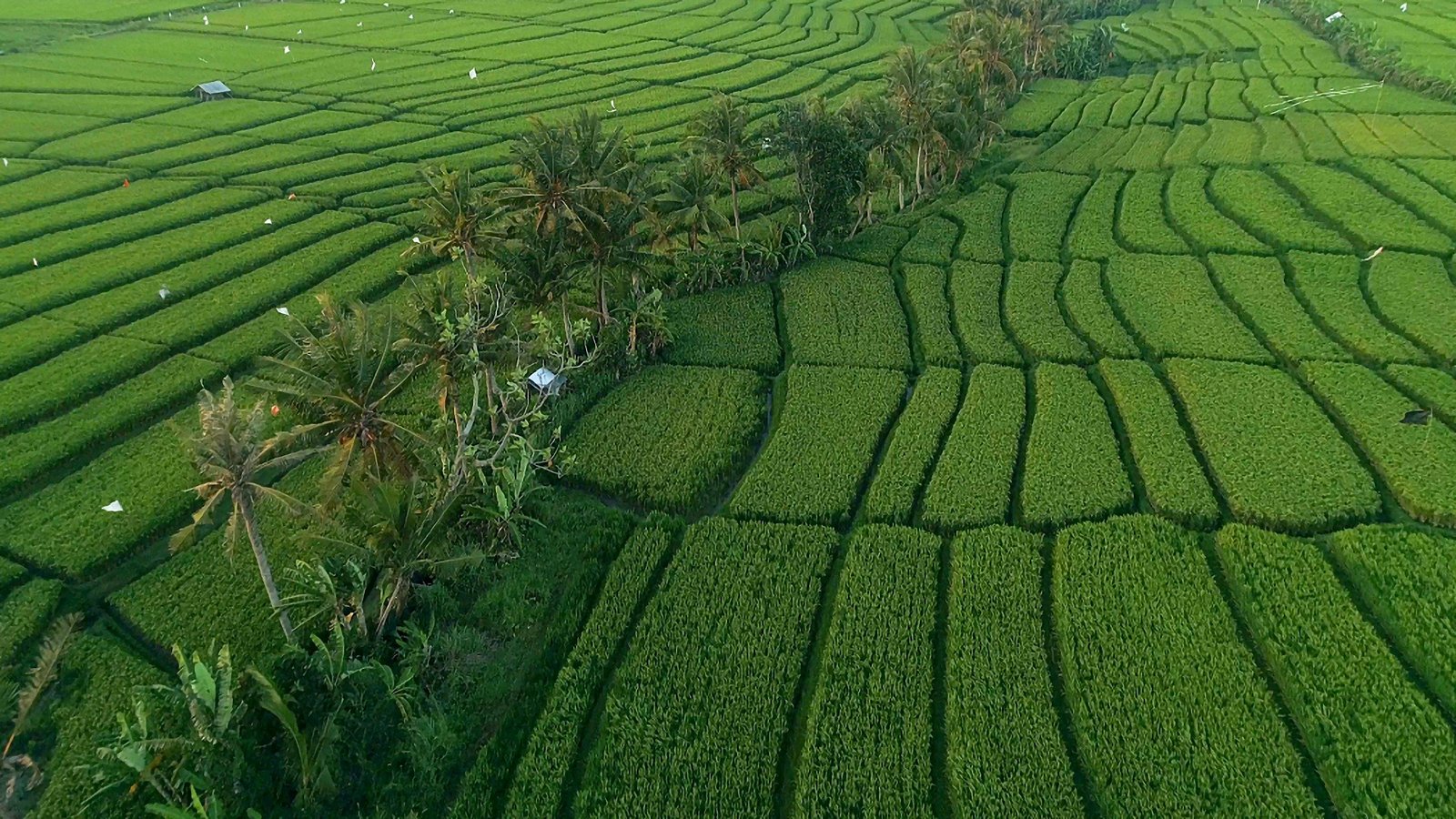
Croplands cool nights but have mixed daytime effects in tropical Africa
Cropland expansion across tropical Africa produces nighttime cooling but hydroclimatically-dependent daytime effects, driven by turbulent heat flux changes tied to vegetation differences.

Refined Sentinel-2 chlorophyll-a algorithm performed best in Thai freshwater bodies
Evaluating Sentinel-2 chlorophyll-a algorithms for Thai freshwater eutrophication monitoring. Tropical-specific models improve satellite imagery accuracy compared to temperate region approaches.

Three ultra-faint Milky Way satellite candidates identified
—
in AstronomyThree ultra-faint Milky Way satellites identified in DELVE survey data, including the faintest known satellite in the outer halo and an ambiguous compact system.

Weather regimes change short-term solar forecast error
Study reveals how North Atlantic weather regimes significantly influence satellite-based solar forecast accuracy, with seasonal variations up to 20% in error magnitude affecting renewable energy.

High-altitude ice clouds show daytime cooling and nighttime warming
—
A rapid satellite-based methodology quantifies radiative forcing from high-altitude ice clouds and contrails using geostationary observations with 15% accuracy.