Tag: Artificial Intelligence
Neural framework models Einstein field equations in dynamic gravity
What the study found GRAVI-NEURAL is a physics-informed artificial intelligence framework that uses a Covariant Neural Operator to learn, approximate, and evolve solutions to the Einstein Field Equations under dynamic and strong-field gravitational conditions. It represents spacetime as a Minkowski background plus a learned neural perturbation field. What the authors say this matters The authors…
AI agent behavior can emerge from context and interaction
What the study found AI agents can show increasingly human-like behaviors, including planning, adaptation, and social dynamics, across interactive and open-ended scenarios. The abstract says these behaviors arise not only from the underlying model architecture, but also from the contexts in which agentic systems operate. Why the authors say this matters The authors say this…
Pre-commitment runtime oversight may improve intervention success
—
in EngineeringWhat the study found The manuscript argues that runtime oversight can improve intervention success when monitoring happens before an action becomes externally consequential, and when usable signal, enough time, and retained intervention authority are still available. It proposes Action-Bound AI Safety as a pre-commitment runtime framework for physical, cyber-physical, transactional, and agentic systems. Why the…
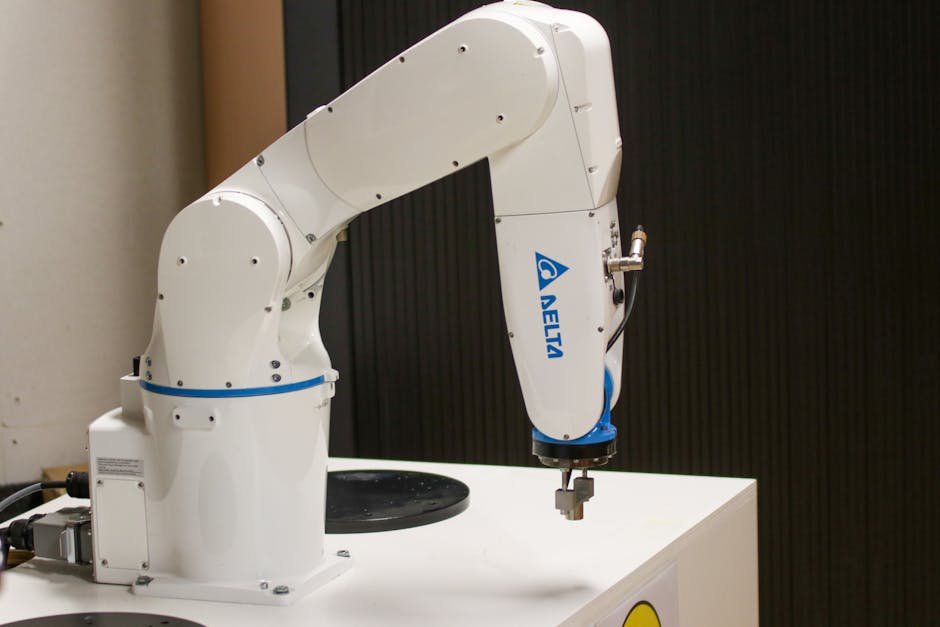
LLM-based planning improved multi-robot task assignments
What the study found Large language models (LLMs) were used to help assign multi-robot subtasks by combining room-wise object presence probabilities with task decomposition. In the reported experiments, the proposed method achieved 47/50 successful assignments. Why the authors say this matters The authors present this as a way to handle instructions that require searching for…
Framework generalizes equivariant neural layers to nonlinear homogeneous spaces
—
What the study found The paper presents a framework for nonlinear equivariant neural network layers on homogeneous spaces. The authors derive generalized steerability constraints for these layers and prove the universality of their construction. Why the authors say this matters The study suggests that its analysis of symmetry-constrained dependence on feature maps and group elements…
Survey reviews reasoning-enabled AI for wireless networks
—
What the study found This survey finds that reasoning-enabled AI, especially large language model (LLM) agents, is being developed to support wireless communication networks with structured reasoning, long-term planning, memory, tool use, and autonomous cross-layer control. The authors also describe a classification system for wireless network tasks and review reasoning across the physical, data link,…
MERA achieves lung nodule diagnosis with 1% annotated data
—
in MedicineWhat the study found MERA is a multimodal and multiscale self-explanatory model for lung nodule diagnosis that uses considerably reduced annotation. The abstract reports that it achieves diagnostic accuracy comparable to or exceeding state-of-the-art methods with only 1% of annotated samples. Why the authors say this matters The authors state that MERA addresses gaps in…
Dependency-aware synthetic tabular data better preserves feature relationships
—
What the study found The Hierarchical Feature Generation Framework (HFGF) improved preservation of functional dependencies and logical dependencies in synthetic tabular data. The abstract states that this improved structural fidelity and downstream utility across several generative models. Why the authors say this matters The authors say synthetic tabular data is often used in privacy-sensitive areas…