

AI Summary of Peer-Reviewed Research
This page presents an AI-generated summary of a published research paper. The original authors did not write or review this article. See full disclosure ↓
Publication Signals show what we were able to verify about where this research was published.MODERATECore publication signals for this source were verified. Publication Signals reflect the source’s verifiable credentials, not the quality of the research.
- ✔ Peer-reviewed source
- ✔ No retraction or integrity flags
Overview
This research examines Lotuturu Hill in Lamwo District, Northern Uganda as a material and narrative archive of political history spanning colonial and post-colonial periods. The site's physical remains and local oral traditions document its sequential appropriation as a British military installation, an alleged wartime refuge for the British Royal Family, and subsequently as a clandestine governance centre under Idi Amin's regime. The investigation positions these layered historical functions within broader frameworks of nation-building and identity formation in contemporary Uganda.
Methods and approach
The study employs historical accounts, digital archival analysis, and secondary data review to construct a multi-temporal understanding of Lotuturu Hill. This methodological triangulation enables comparison between institutionalized historical records and locally-maintained oral narratives, particularly among Acholi communities. The approach privileges the documentation of vernacular memory alongside official historiography to address gaps in dominant historical accounts.
Key Findings
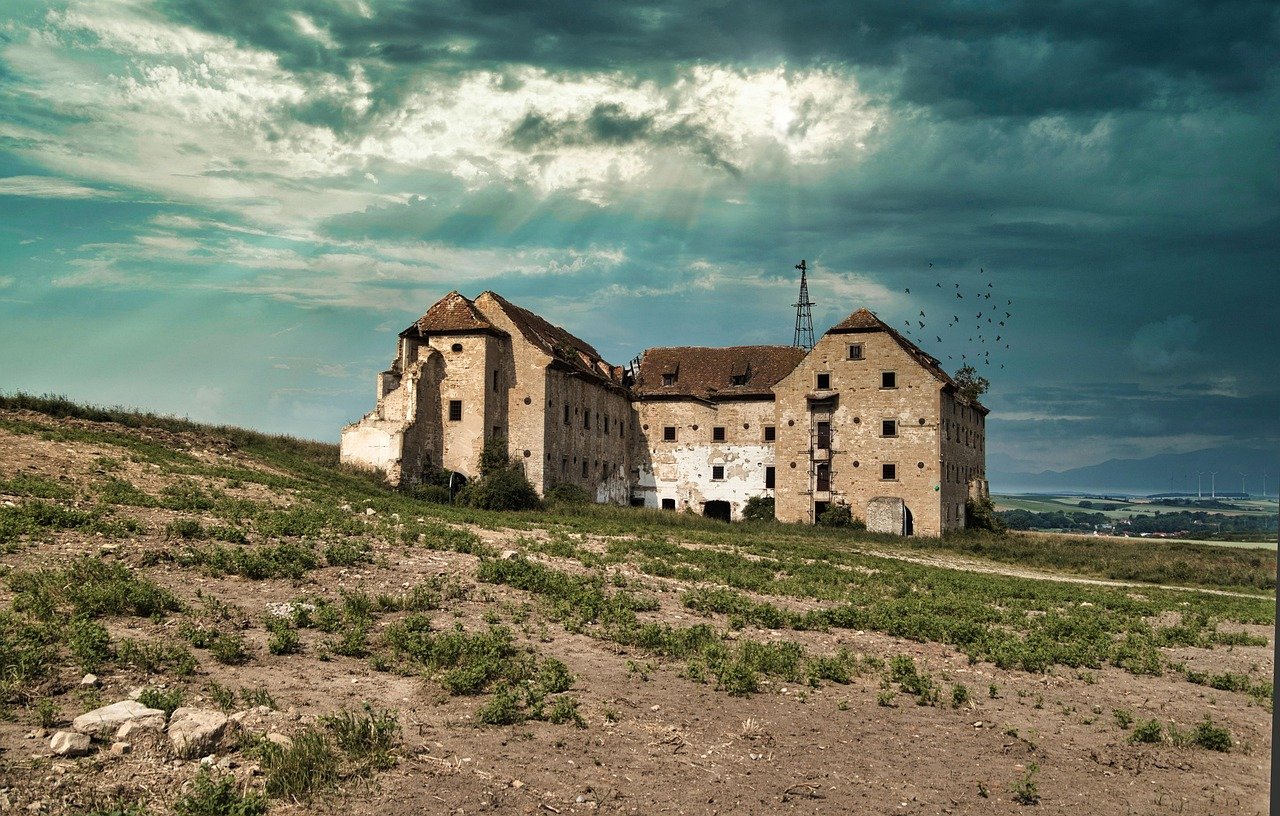
The site exhibits a dual historical legacy: wartime British utilization culminating in narratives of royal wartime sequestration, and subsequent transformation into a secretive administrative facility under Amin's governance. Physical infrastructure remains in advanced states of deterioration, characterized by skeletal structural remnants. Oral narratives maintained by local populations substantially diverge from official historical records, reflecting distinct commemorative and identity-formation processes within Acholi communities. The ruins constitute a contested landscape where competing historical interpretations and material evidence intersect.
Implications
Lotuturu Hill represents a critical but neglected archive of Uganda's twentieth-century political transformations. The site's current trajectory toward physical degradation and institutional invisibility threatens irreversible loss of both material heritage and locally-sustained historical memory. Documentation and infrastructure intervention constitute necessary prerequisites for preventing permanent erasure of these historical layers from national records. The site's rehabilitation requires systematic engagement with both archaeological preservation and community-centered historical interpretation frameworks.
Disclosure
- Research title: Ruins and Memory of Lotuturu Hill in Lamwo District: Tracing Idi Amin’s Presence in Local Narratives and Landscapes in Northern Uganda
- Authors: Agatha Alidri, Simon Okello, Angioleta Katya Laker
- Publication date: 2026-02-24
- DOI: https://doi.org/10.37284/ajhg.5.1.4566
- OpenAlex record: View
- PDF: Download
- Image credit: Photo by Lost-Places-World-com on Pixabay (Source • License)
- Disclosure: This post was generated by Claude (Anthropic). The original authors did not write or review this post.
Get the weekly research newsletter
Stay current with peer-reviewed research without reading academic papers — one filtered digest, every Friday.