

AI Summary of Peer-Reviewed Research
This page presents an AI-generated summary of a published research paper. The original authors did not write or review this article. See full disclosure ↓
⚠️ This article summarizes published research and is intended for informational purposes only. It does not constitute medical advice or clinical guidance.
Publication Signals show what we were able to verify about where this research was published.STRONGWe verified multiple publication signals for this source, including independently confirmed credentials. Publication Signals reflect the source’s verifiable credentials, not the quality of the research.
- ✔ Peer-reviewed source
- ✔ Published in indexed journal
- ✔ No retraction or integrity flags
Key findings from this study
- The authors propose that hierarchical clustering of villages based on development indicators enables differentiated sustainability strategies responsive to local conditions.
- The study demonstrates that spatial analysis reveals geographic interdependencies among village clusters, supporting proximity-based collaborative interventions.
- The researchers establish that cluster-based classification can guide targeted resource allocation according to each cluster's specific sustainability capacities and constraints.
Overview
The study proposes a hierarchical village clustering methodology for localising sustainability interventions in rural areas. The approach integrates socioeconomic and environmental assessment, computational clustering algorithms, and geographic information systems analysis. Application to Nagpur Metropolitan Region demonstrates how cluster-based classification can direct resource allocation and development strategies tailored to specific rural sustainability contexts.
Methods and approach
The framework operates in three sequential stages. Villages first undergo assessment using socioeconomic and environmental indicators. R-Studio then applies clustering algorithms to group villages sharing similar development characteristics. GIS spatial analysis subsequently examines geographic proximity and interdependencies among emergent clusters, establishing spatial coherence and identifying proximity-based dynamics.
Results
The methodology successfully classifies villages within Nagpur Metropolitan Region into differentiated clusters reflecting heterogeneous development profiles. Each cluster exhibits distinct sustainability challenges and local resource capacities. Spatial analysis reveals geographic patterns of clustering that correspond to proximity relationships and interdependencies among villages, enabling identification of clusters suitable for coordinated interventions.
Implications
Cluster-based classification enables targeted resource deployment aligned with localized sustainability needs rather than uniform regional approaches. Village groupings facilitate identification of shared challenges and complementary capacities within geographic proximities, supporting collaborative development strategies. The framework establishes a replicable methodology applicable across diverse rural contexts beyond the study region, informing policy design for inclusive rural development.
Scope and limitations
This summary is based on the study abstract and available metadata. It does not include a full analysis of the complete paper, supplementary materials, or underlying datasets unless explicitly stated. Findings should be interpreted in the context of the original publication.
Disclosure
- Research title: Optimising resources and localising sustainability through hierarchical village clustering in Nagpur Metropolitan Region, India
- Authors: Vaidehi Pathak, Sameer Deshkar
- Institutions: Visvesvaraya National Institute of Technology
- Publication date: 2026-02-11
- DOI: https://doi.org/10.1038/s41598-026-35231-z
- OpenAlex record: View
- PDF: Download
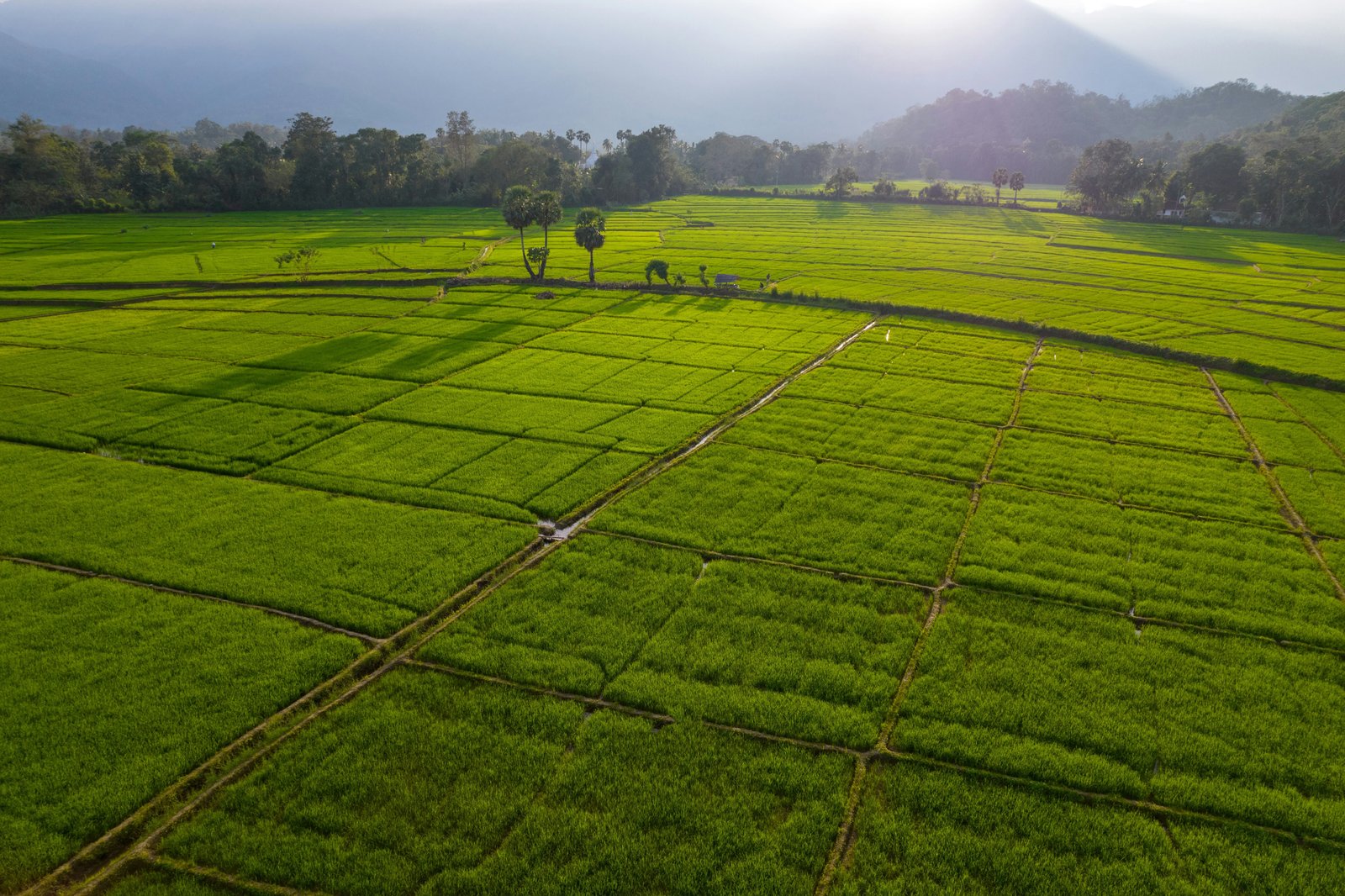
- Image credit: Photo by sathsara priyankara on Unsplash (Source • License)
- Disclosure: This post was generated by Claude (Anthropic). The original authors did not write or review this post.
Get the weekly research newsletter
Stay current with peer-reviewed research without reading academic papers — one filtered digest, every Friday.