

Once a Carib, Always a Carib: Historical Movements from Terra Firma to the Lesser Antilles

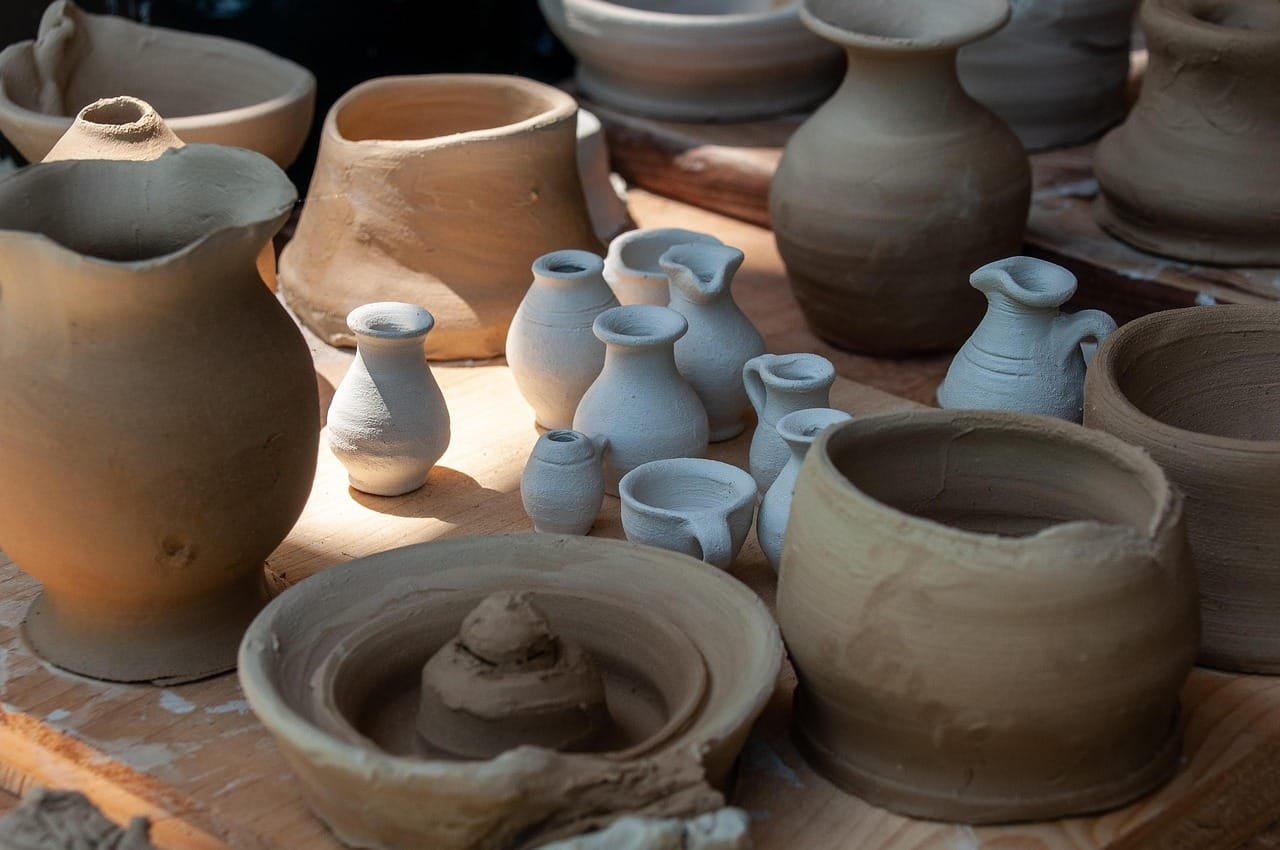
An overhead view of multiple ceramic pottery vessels and fragments of varying sizes and colors (brown, gray, cream, blue-tinted) arranged on sandy ground at an archaeological excavation site, with hands of workers visible examining and documenting the artifacts.
Image Credit: Photo by wal_172619 on Pixabay (SourceLicense)

AI Summary of Peer-Reviewed Research

This page presents an AI-generated summary of a published research paper. The original authors did not write or review this article. See full disclosure ↓

Latin American Antiquity·2026-03-31·Peer-reviewed·View original paper ↗·Follow this topic (RSS)
Publication Signals show what we were able to verify about where this research was published.STRONGWe verified multiple publication signals for this source, including independently confirmed credentials. Publication Signals reflect the source’s verifiable credentials, not the quality of the research.
  • ✔ Peer-reviewed source
  • ✔ Published in indexed journal
  • ✔ No retraction or integrity flags

Key findings from this study

  • The study found that Malmanoury ceramics from French Guiana exhibit material affinities with the Cayo complex of the Lesser Antilles, indicating shared cultural practices across the seventeenth century.
  • The researchers demonstrate that archaeological evidence supports historical accounts in Callinago mythology regarding Galibi migration and displacement of island populations.
  • The authors report that regional turmoil during the sixteenth century, including Indigenous warfare and migration, drove population movement from the Guianas toward the Antilles.

Overview

The article examines the Island Carib Problem by analyzing archaeological evidence from the Guianas and Lesser Antilles. Material assemblages from seventeenth-century sites suggest population movement and cultural transmission across the Caribbean region. The study posits that Galibi populations migrated from the continental Guianas to island territories, displacing established groups.

Methods and approach

The researchers compared ceramic complexes from the Malmanoury site in French Guiana with the Cayo complex from the Lesser Antilles. Excavation findings provided material evidence for cross-cultural comparison. Temporal and typological analysis established chronological and cultural affinities between continental and insular assemblages.

Results

Recent excavations in French Guiana revealed ceramic and material assemblages with characteristics matching Lesser Antilles deposits from the seventeenth century. The Malmanoury complex exhibits diagnostic features consistent with Cayo assemblages, indicating cultural continuity across the mainland-island divide. This archaeological evidence supports documentary accounts in Callinago mythology describing Galibi expansion into the Antilles and displacement of indigenous populations.

The timing of this movement corresponds to broader regional upheaval spanning the sixteenth century. Indigenous warfare and population movements affected the Guianas, Trinidad, and the Antilles during this period. These dynamics may represent an intensification of earlier prehistoric expansion patterns associated with the Koriabo tradition.

Implications

Archaeological evidence corroborates oral historical accounts preserved in Callinago mythology, demonstrating the value of integrating material culture analysis with indigenous narratives. This integration refines understanding of post-contact Caribbean demographics and territorial occupation patterns. The work establishes that ethnic and cultural identities documented in seventeenth-century European accounts emerged from dynamic population movements rather than static settlement patterns.

The distinction between fifteenth-century Caribs encountered by Columbus and seventeenth-century Caribbean populations suggests substantial demographic turnover within two centuries. This temporal framework requires revision of models positing unchanging indigenous populations across the contact period. Recognition of persistent migration and warfare as organizing features of pre- and post-contact Caribbean history reframes interpretation of European colonial encounters.

Scope and limitations

This summary is based on the study abstract and available metadata. It does not include a full analysis of the complete paper, supplementary materials, or underlying datasets unless explicitly stated. Findings should be interpreted in the context of the original publication.

Disclosure

  • Research title: Once a Carib, Always a Carib: Historical Movements from Terra Firma to the Lesser Antilles
  • Authors: Martijn van den Bel
  • Institutions: Institut National de Recherches Archéologiques Préventives
  • Publication date: 2026-03-31
  • DOI: https://doi.org/10.1017/laq.2025.19
  • OpenAlex record: View
  • Image credit: Photo by wal_172619 on Pixabay (SourceLicense)
  • Disclosure: This post was generated by Claude (Anthropic). The original authors did not write or review this post.

Get the weekly research newsletter

Stay current with peer-reviewed research without reading academic papers — one filtered digest, every Friday.

More posts