

AI Summary of Peer-Reviewed Research
This page presents an AI-generated summary of a published research paper. The original authors did not write or review this article. See full disclosure ↓
Publication Signals show what we were able to verify about where this research was published.STRONGWe verified multiple publication signals for this source, including independently confirmed credentials. Publication Signals reflect the source’s verifiable credentials, not the quality of the research.
- ✔ Peer-reviewed source
- ✔ Published in indexed journal
- ✔ No retraction or integrity flags
Key findings from this study
- The study found that young Nigerian and Zimbabwean migrants employ religious and spiritual practices as strategic hybrid resources rather than exhibiting linear assimilationist trajectories or experiencing religion as a barrier to integration.
- The researchers demonstrate that digital religious practices and contemporary forms of religiosity constitute integral dimensions of diasporic religious engagement alongside traditional African religious frameworks.
- The authors report that religion functions at multiple interconnected scales simultaneously, with communal religious institutions facilitating cultural preservation, national-scale religious engagement addressing racial exclusion, and transnational digital practices sustaining African heritage connections.
Overview
This study examines religious and spiritual practices among young Nigerian and Zimbabwean migrants in the UK through a multi-scalar analytical framework. The research situates religious engagement across individual, communal, national, transnational, and intergenerational dimensions, moving beyond conventional binary framings of religion as either facilitating or impeding integration. The study conceptualizes religion as a strategic resource deployed by young migrants to navigate migration contexts while managing identity, cultural heritage, and social positioning within the UK.
Methods and approach
The research employs multi-sited ethnography and biographical interviews to generate empirical data on religious and spiritual practices among young Nigerian and Zimbabwean youth in the UK. The multi-scalar analytical framework structures the analysis across five interconnected scales: the individual level, communal institutions, national context, transnational dimensions, and intergenerational processes. This approach enables examination of how religious engagement operates simultaneously across these scales rather than in isolation.
Results
At the individual scale, participants synthesize traditional African religious practices with contemporary and digital forms of religiosity. Communal religious and diaspora institutions function as sites for cultural preservation and negotiation of identity within the diaspora context. At the national scale, religion serves strategic functions in addressing experiences of racial exclusion and positioning young migrants within secular multicultural frameworks. Transnational digital religious practices sustain connections to African heritage and religious communities across geographic distance. Intergenerationally, religion constitutes a domain in which both continuity with ancestral practices and transformative change occur simultaneously among young migrants and their families.
Implications
The findings challenge assimilationist models of religious change in migration contexts that presume linear movement toward secularization or religious abandonment among diaspora populations. By demonstrating the hybrid, strategic, and multidimensional character of religious engagement, the study indicates that religion operates as a dynamic resource through which young migrants negotiate multiple, sometimes competing demands of diaspora life. The recognition of digital religiosity as constitutive of contemporary diasporic religious practice extends understanding of how transnational religious communities operate and maintain institutional coherence across geographic distance.
For migration studies scholarship, these findings suggest the necessity of abandoning static models of integration and assimilation that position religion as either barrier or facilitator in linear processes. The multi-scalar framework demonstrates that religious engagement cannot be adequately understood through single-scale analysis; rather, the simultaneous operation across individual, communal, national, transnational, and intergenerational scales produces complex patterns of religious practice. The intergenerational dimension particularly challenges assumptions that second-generation migrants will necessarily abandon parental religious frameworks, instead demonstrating processes of adaptive continuity in which tradition and innovation coexist.
Scope and limitations
This summary is based on the study abstract and available metadata. It does not include a full analysis of the complete paper, supplementary materials, or underlying datasets unless explicitly stated. Findings should be interpreted in the context of the original publication.
Disclosure
- Research title: Navigating continuity and change: a multi-scalar analysis of religion and spirituality among African youth in the UK
- Authors: Nomatter Sande, Sarah Kazira, Dominic Pasura
- Institutions: University of Glasgow
- Publication date: 2026-02-26
- DOI: https://doi.org/10.1080/01419870.2026.2624659
- OpenAlex record: View
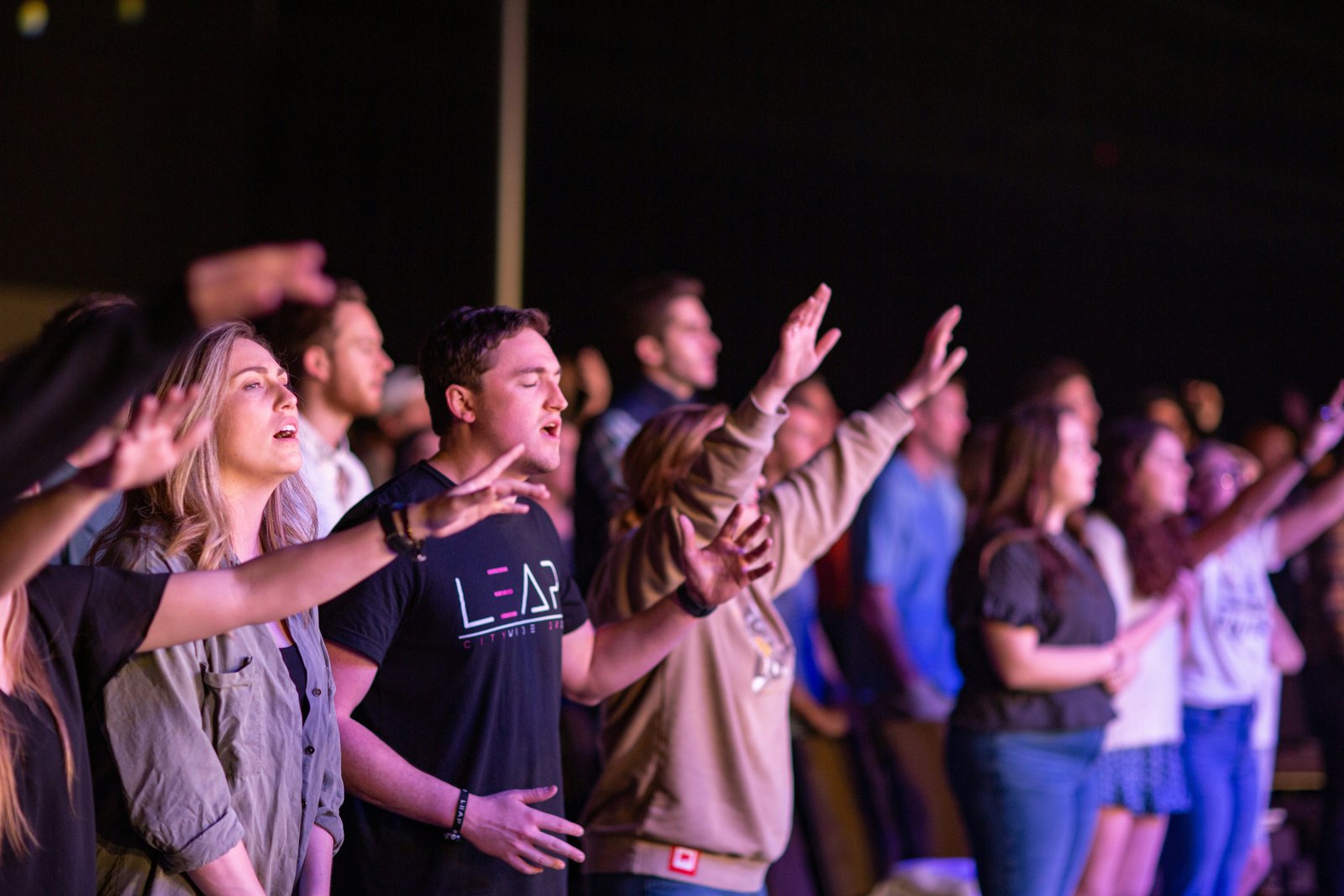
- Image credit: Photo by Jesus Loves Austin on Unsplash (Source • License)
- Disclosure: This post was generated by Claude (Anthropic). The original authors did not write or review this post.
Get the weekly research newsletter
Stay current with peer-reviewed research without reading academic papers — one filtered digest, every Friday.