

AI Summary of Peer-Reviewed Research

This page presents an AI-generated summary of a published research paper. The original authors did not write or review this article. [See full disclosure ↓]

Publishing process signals: STRONG — reflects the venue and review process. — venue and review process.

Methane increases were linked mainly to wetlands in Africa and Asia

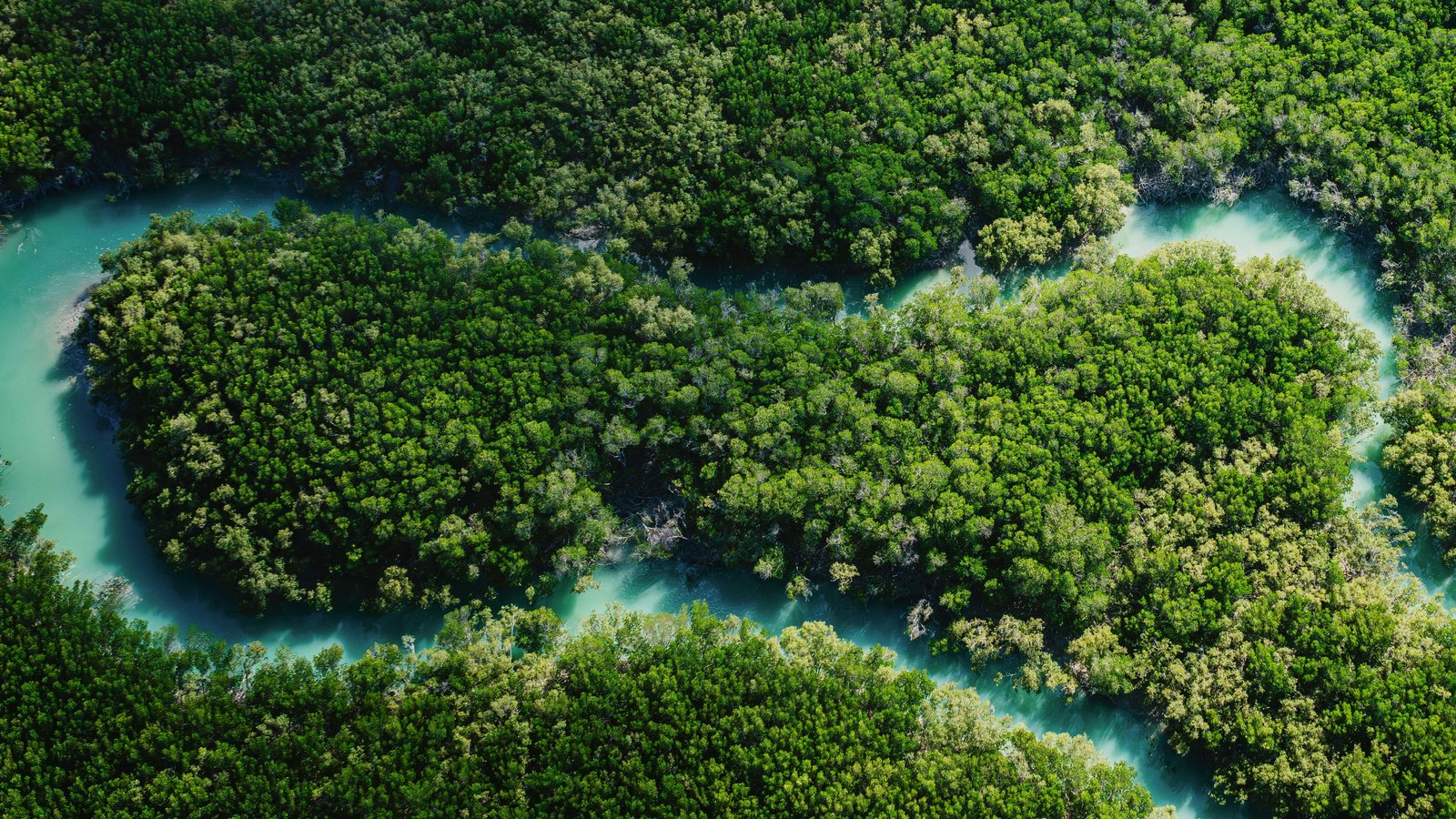
Aerial view of a winding turquoise river or waterway cutting through dense tropical forest vegetation, shot from directly above showing the serpentine curves of the water channel surrounded by lush green canopy.
Research area:Earth and Planetary SciencesGlobal and Planetary ChangeMethane

What the study found

Most emission changes from 2019 to 2023 occurred in northern tropical wetlands in Africa and Asia, while South American wetlands emissions declined and Arctic emissions increased after 2019.

Why the authors say this matters

The abstract does not provide an explicit statement of broader significance beyond identifying where the emission changes occurred.

What the researchers tested

The available text does not describe the study design, data sources, or analytical methods.

What worked and what didn't

The abstract reports that northern tropical wetlands in Africa and Asia accounted for most emission changes from 2019 to 2023. It also says South American wetlands emissions declined, while Arctic emissions increased after 2019.

What to keep in mind

The available summary is very limited and does not include the paper's full methods, definitions, or uncertainty estimates. No additional limitations are described in the text provided.

Key points

  • Most emission changes from 2019 to 2023 occurred in northern tropical wetlands in Africa and Asia.
  • South American wetlands emissions declined over the same period.
  • Arctic emissions increased after 2019.

Disclosure

Research title:
Methane increases were linked mainly to wetlands in Africa and Asia
Authors:
P. Ciais, Yu Zhu, Y. Cai, Xin Lan, S. E. Michel, B. Zheng, Y. Zhao, D. A. Hauglustaine, X. Lin, Y. Zhang, S. Sun, X. Tian, M. Zhao, Y. Wang, J. Chang, X. Dou, Z. Liu, R. Andrew, C. A. Quinn, B. Poulter, Z. Ouyang, W. Yuan, Kunxiaojia Yuan, Q. Zhu, F. Li, N. Pan, H. Tian, X. Yu, Gerard Rocher‐Ros, M. S. Johnson, M. Li, M. Li, Dongmei Feng, P. Raymond, X. Yang, J. G. Canadell, R. B. Jackson, X. Yu, Y. Li, M. Saunois, P. Bousquet, S. Peng
Institutions:
Centre National de la Recherche Scientifique, Université de Versailles Saint-Quentin-en-Yvelines, Commissariat à l'Énergie Atomique et aux Énergies Alternatives, Université Paris-Saclay, Laboratoire des Sciences du Climat et de l'Environnement, CEA Paris-Saclay, Earth Science Institute of the Slovak Academy of Sciences, National Oceanic and Atmospheric Administration, Cooperative Institute for Research in Environmental Sciences, University of Colorado Boulder, Institute of Arctic and Alpine Research, Tsinghua University, Ocean University of China, University of Copenhagen, Westlake University, Chinese Academy of Sciences, Institute of Tibetan Plateau Research, Zhejiang University, Stanford University, CICERO Center for International Climate Research, Goddard Space Flight Center, Earth System Science Interdisciplinary Center, University of Maryland, College Park, Climate Central, Auburn University, Lawrence Berkeley National Laboratory, University of Houston, Sustainability Institute, Boston College, Albany State University, University at Albany, State University of New York, Umeå University, Ames Research Center, Forest Institute, National University of Singapore, Yale University, University of Cincinnati, Southern Methodist University, Commonwealth Scientific and Industrial Research Organisation
Publication date:
2026-02-05
OpenAlex record:
View
AI provenance: This post was generated by OpenAI. The original authors did not write or review this post.