

AI Summary of Peer-Reviewed Research
This page presents an AI-generated summary of a published research paper. The original authors did not write or review this article. See full disclosure ↓
Publication Signals show what we were able to verify about where this research was published.STRONGWe verified multiple publication signals for this source, including independently confirmed credentials. Publication Signals reflect the source’s verifiable credentials, not the quality of the research.
- ✔ Peer-reviewed source
- ✔ Published in indexed journal
- ✔ No retraction or integrity flags
Key findings from this study
- The study produced the BOSS-MINESweeper catalog containing stellar parameters, metallicities, alpha abundances, and distances for stars across the Milky Way halo.
- The authors demonstrate identification of the most chemically peculiar stars in the Galaxy using the all-sky spectroscopic dataset.
- The researchers discovered and mapped distant halo substructures that were previously unknown from limited sky coverage surveys.
Overview
SDSS-V conducted the first all-sky low-resolution spectroscopic survey targeting the Milky Way stellar halo. The stellar parameter pipeline simultaneously modeled spectra, broadband photometry, and parallaxes to derive stellar parameters, metallicities, alpha abundances, and distances. The resulting BOSS-MINESweeper catalog was validated against star clusters and high-resolution spectroscopic surveys across wide ranges of stellar parameters and metallicities. Scientific applications demonstrated include identification of chemically peculiar stars, discovery and mapping of distant halo substructures, and measurement of all-sky Milky Way dynamics on the largest scales. The DR19 catalog is publicly available with updates planned for subsequent data releases.
Methods and approach
The stellar parameter pipeline combined spectroscopic, photometric, and astrometric data to extract physical properties and chemical compositions. Validation employed comparisons with star clusters providing known benchmarks and cross-referencing with high-resolution spectroscopic surveys. The approach enabled simultaneous derivation of multiple stellar parameters including distances, which is essential for mapping three-dimensional structures in the distant halo. The methodology was designed to handle metal-poor populations that dominate the outer Galactic regions.
Results
The BOSS-MINESweeper catalog successfully identified the most chemically peculiar stars in the Galaxy through comprehensive metallicity and alpha abundance measurements. Distant halo substructures were discovered and mapped across the full sky, revealing previously unknown features in the Milky Way stellar halo distribution. All-sky dynamical measurements of the Milky Way were obtained on unprecedented scales, characterizing motions throughout the most distant regions accessible to the survey.
Validation against independent datasets confirmed the reliability of derived parameters across the full range of stellar types and metallicities sampled. The pipeline demonstrated robust performance for metal-poor stars, which are particularly challenging for automated spectroscopic analysis. The catalog enables population studies of the outer halo that were not previously feasible with earlier surveys limited in sky coverage or spectroscopic capabilities.
Implications
The all-sky coverage and standardized parameter derivation enable systematic studies of Galactic structure and formation history that were previously constrained by incomplete spatial sampling. Discovery of new halo substructures provides direct evidence of past accretion events that built the Milky Way. Identifying chemically peculiar stars creates targets for detailed follow-up observations that can constrain early nucleosynthesis and the first generations of star formation.
The dynamical measurements on large scales constrain models of the Galactic potential and dark matter distribution in the outer halo. Public availability of the catalog democratizes access to this dataset for the broader astronomical community. Future data releases will expand the sample size and improve parameter precision, supporting increasingly detailed investigations of Galactic archaeology and the chemical evolution of metal-poor stellar populations.
Scope and limitations
This summary is based on the study abstract and available metadata. It does not include a full analysis of the complete paper, supplementary materials, or underlying datasets unless explicitly stated. Findings should be interpreted in the context of the original publication.
Disclosure
- Research title: Mapping the Distant and Metal-poor Milky Way with SDSS-V
- Authors: Vedant Chandra, Phillip A. Cargile, Alexander P. Ji, Charlie Conroy, Hans-Walter Rix, Emily C. Cunningham, B. Dias, Chervin F. P. Laporte, W. Cerny, Guilherme Limberg, Avrajit Bandyopadhyay, Ana Bonaca
- Institutions: Boston University, Center for Astrophysics Harvard & Smithsonian, Centre National de la Recherche Scientifique, Columbia University, Instituto de Geofísica y Astronomía, Kavli Institute for the Physics and Mathematics of the Universe, Max Planck Institute for Astronomy, Observatoire de Paris, Simons Foundation, The University of Tokyo, Universitat de Barcelona, University of Chicago
- Publication date: 2026-03-30
- DOI: https://doi.org/10.3847/1538-4357/ae448a
- OpenAlex record: View
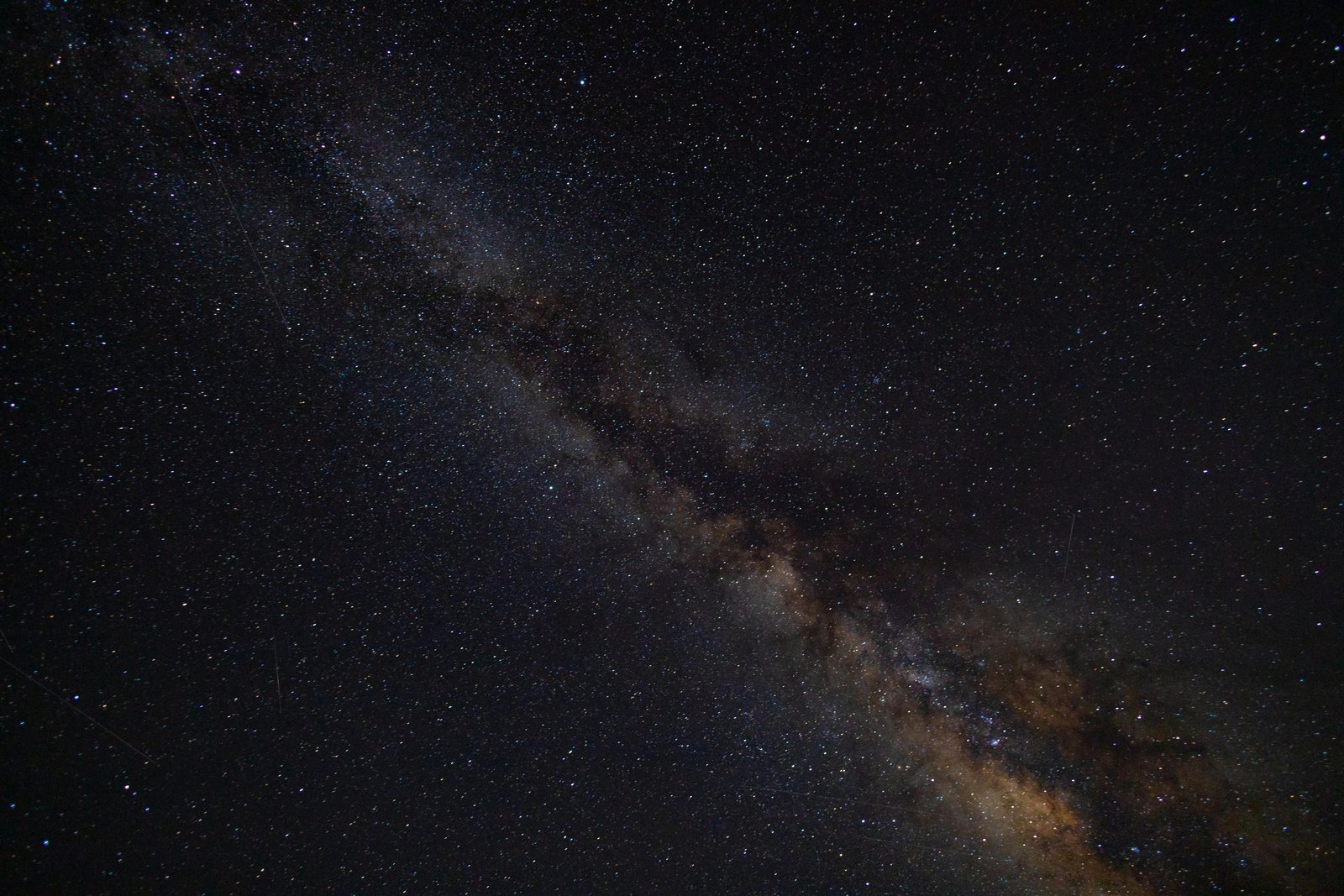
- Image credit: Photo by Laython Photos on Pexels (Source • License)
- Disclosure: This post was generated by Claude (Anthropic). The original authors did not write or review this post.
Get the weekly research newsletter
Stay current with peer-reviewed research without reading academic papers — one filtered digest, every Friday.


