

Manifestation of Women in Selected Indian Women Novelists’ Novels

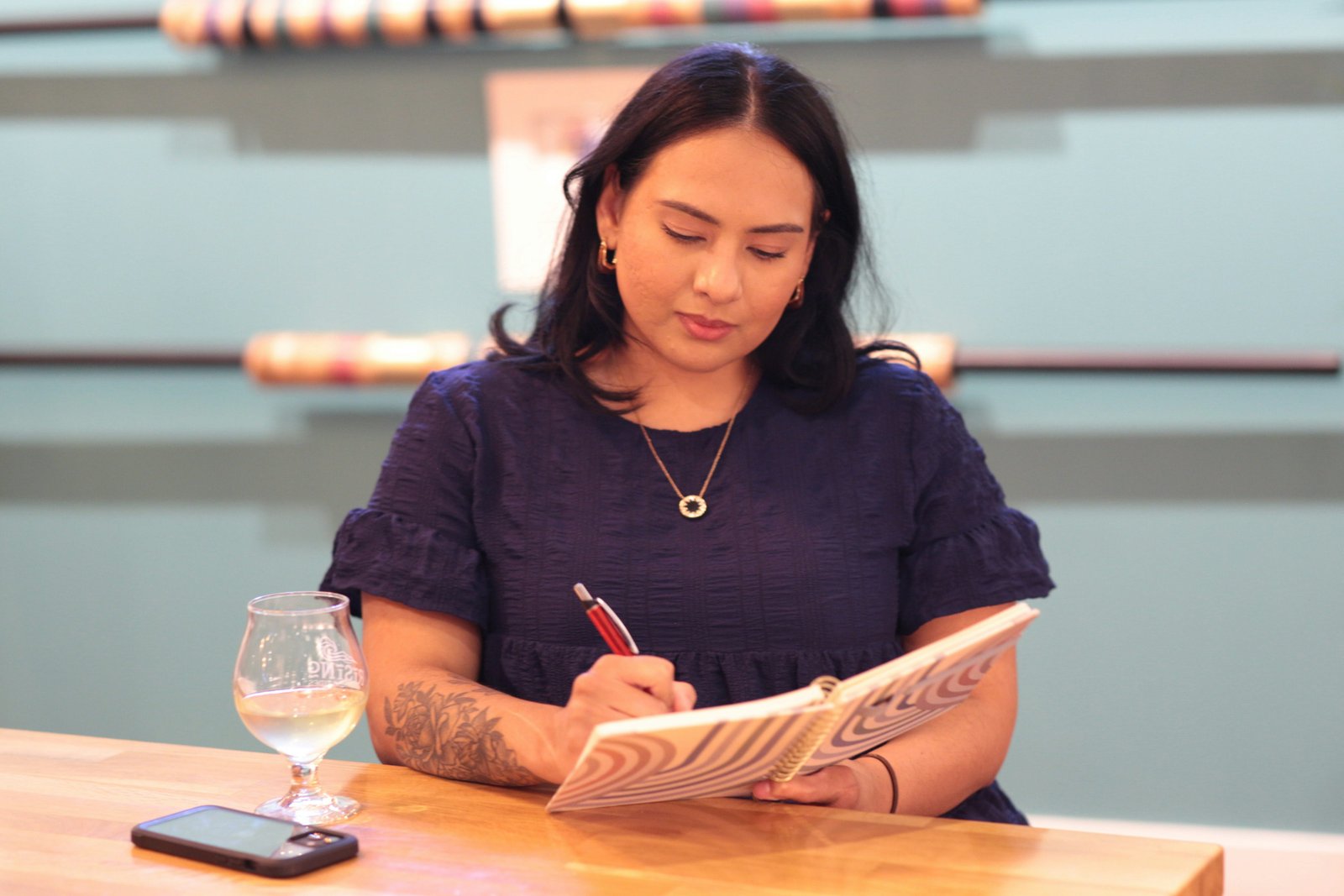
A woman with dark hair and a tattoo on her arm sits at a wooden table in an indoor setting, writing in a notebook while holding a book, with a glass of water and smartphone nearby.
Image Credit: Photo by Shivani G on Unsplash (SourceLicense)

AI Summary of Peer-Reviewed Research

This page presents an AI-generated summary of a published research paper. The original authors did not write or review this article. See full disclosure ↓

Journal of Foreign Languages Cultures and Civilizations·2026-03-17·Peer-reviewed·View original paper ↗·Follow this topic (RSS)
Publication Signals show what we were able to verify about where this research was published.MODERATECore publication signals for this source were verified. Publication Signals reflect the source’s verifiable credentials, not the quality of the research.
  • ✔ Peer-reviewed source
  • ✔ No retraction or integrity flags

Overview

This study examines the literary representation and manifestation of women in novels authored by second and third-generation Indian women writers working in English, specifically focusing on Shashi Deshpande, Manju Kapur, and Anita Nair. The research investigates how these novelists address women's emancipation, identity formation, and the systemic constraints imposed by patriarchal structures and traditional social hierarchies. The analysis encompasses thematic exploration of women's subordination across institutional domains including family structures, political participation, economic engagement, and commercial spheres, alongside examination of women's agency in negotiating identity crises and pursuing liberation.

Methods and approach

The study employs textual analysis of selected novels from the designated Indian women novelists to trace patterns of women's representation and thematic preoccupations. The methodological framework centers on identifying how patriarchal traditions function as mechanisms of subjugation and examining narrative constructions of women's identity struggles. The research systematically extracts and analyzes representations of women's social positioning relative to men across multiple societal domains, with particular attention to the articulation of emancipatory aspirations and resistance to prescribed gender roles within the literary texts under examination.

Key Findings

The novelists under examination demonstrate consistent thematic engagement with women's equality as fundamental to household and societal wellbeing. The textual analysis reveals multifaceted depictions of how patriarchal systems and conventional gender hierarchies construct women's secondary citizenship status. The literary works document the psychological and social dimensions of identity crises resulting from systemic discrimination. The novels articulate women's active search for self-determination and autonomy, positioning emancipation as an essential counterforce to traditional patriarchal constraints.

Implications

The literary corpus examined establishes that second and third-generation Indian women novelists writing in English have elevated women's rights advocacy and identity exploration to central thematic positions within Indian literature. The findings underscore the necessity of recognizing women's equality across institutional and domestic spheres as prerequisite for both individual psychological development and collective social progress. The research indicates that literary representation serves as a significant vehicle for articulating marginalized experiences and theorizing systemic gender inequities.

Scope and limitations

This summary is based on the study abstract and available metadata. It does not include a full analysis of the complete paper, supplementary materials, or underlying datasets unless explicitly stated. Findings should be interpreted in the context of the original publication.

Disclosure

  • Research title: Manifestation of Women in Selected Indian Women Novelists’ Novels
  • Authors: B. Poonkodi, Dr. Mohan. K
  • Publication date: 2026-03-17
  • DOI: https://doi.org/10.15640/jflcc.v13p23
  • OpenAlex record: View
  • Image credit: Photo by Shivani G on Unsplash (SourceLicense)
  • Disclosure: This post was generated by Claude (Anthropic). The original authors did not write or review this post.

Get the weekly research newsletter

Stay current with peer-reviewed research without reading academic papers — one filtered digest, every Friday.

More posts