

What the study found
After failed primary arthroscopic Bankart repair, competitive athletes who had a Latarjet procedure or distal tibia allograft had higher postoperative functional scores than those who had soft tissue stabilization procedures. The study also found that high glenoid bone loss was common at revision.
Why the authors say this matters
The authors conclude that revision choice after failed arthroscopic Bankart repair is associated with different functional outcomes in competitive athletes. They also note that many patients presented with glenoid bone loss that often exceeded 15% at revision.
What the researchers tested
The researchers retrospectively reviewed patients who had revision surgery after a failed arthroscopic Bankart repair between 2000 and 2014. They compared revision arthroscopic Bankart repair, open Bankart repair, Latarjet procedure, and distal tibia allograft, and measured outcomes with the American Shoulder and Elbow Surgeons score, Western Ontario Shoulder Instability Index, and Single Assessment Numerical Evaluation score at at least 2 years follow-up.
What worked and what didn't
The revision arthroscopic Bankart and open Bankart groups had lower postoperative American Shoulder and Elbow Surgeons, Single Assessment Numerical Evaluation, and Western Ontario Shoulder Instability Index scores than the Latarjet and distal tibia allograft groups. There was a significant difference in American Shoulder and Elbow Surgeons score between patients with glenoid bone loss below 25% and above 25%, but there was no significant difference in outcomes by Hill-Sachs lesion size or by labral and capsule pathology.
What to keep in mind
This was a retrospective cohort study with Level III evidence. The abstract does not describe all possible limitations beyond the follow-up length, sample size, and the fact that the findings come from a competitive athlete population.
Key points
- Latarjet and distal tibia allograft revisions had higher functional outcomes than soft tissue stabilization procedures.
- Revision arthroscopic Bankart repair and open Bankart repair had lower postoperative scores than Latarjet and distal tibia allograft.
- High glenoid bone loss was common at revision and often exceeded 15%.
- A significant difference in American Shoulder and Elbow Surgeons score was seen between glenoid bone loss below 25% and above 25%.
- Hill-Sachs lesion size and labral or capsule pathology were not associated with significant differences in post-revision outcomes.
Disclosure
- Research title:
- Latarjet and distal tibia allograft had higher outcomes after failed Bankart repair
- Authors:
- Phob Ganokroj, Toufic R. Jildeh, Annalise M. Peebles, Matthew L. Vopat, Peter Chang, Ryan J. Whalen, Nate J. Dickinson, Stephanie K. Eble, Peter J. Millett, Dan Solomon, CAPT Matthew T. Provencher
- Institutions:
- Mahidol University, Marin Community Foundation, Michigan State University, Siriraj Hospital, Steadman Clinic, Steadman Clinic, Steadman Philippon Research Institute, Steadman Philippon Research Institute, Steadman Philippon Research Institute, Steadman Philippon Research Institute, Steadman Philippon Research Institute, Steadman Philippon Research Institute, Steadman Philippon Research Institute, Steadman Philippon Research Institute, Steadman Philippon Research Institute, Steadman Philippon Research Institute
- Publication date:
- 2026-04-28
- OpenAlex record:
- View
- Image credit:
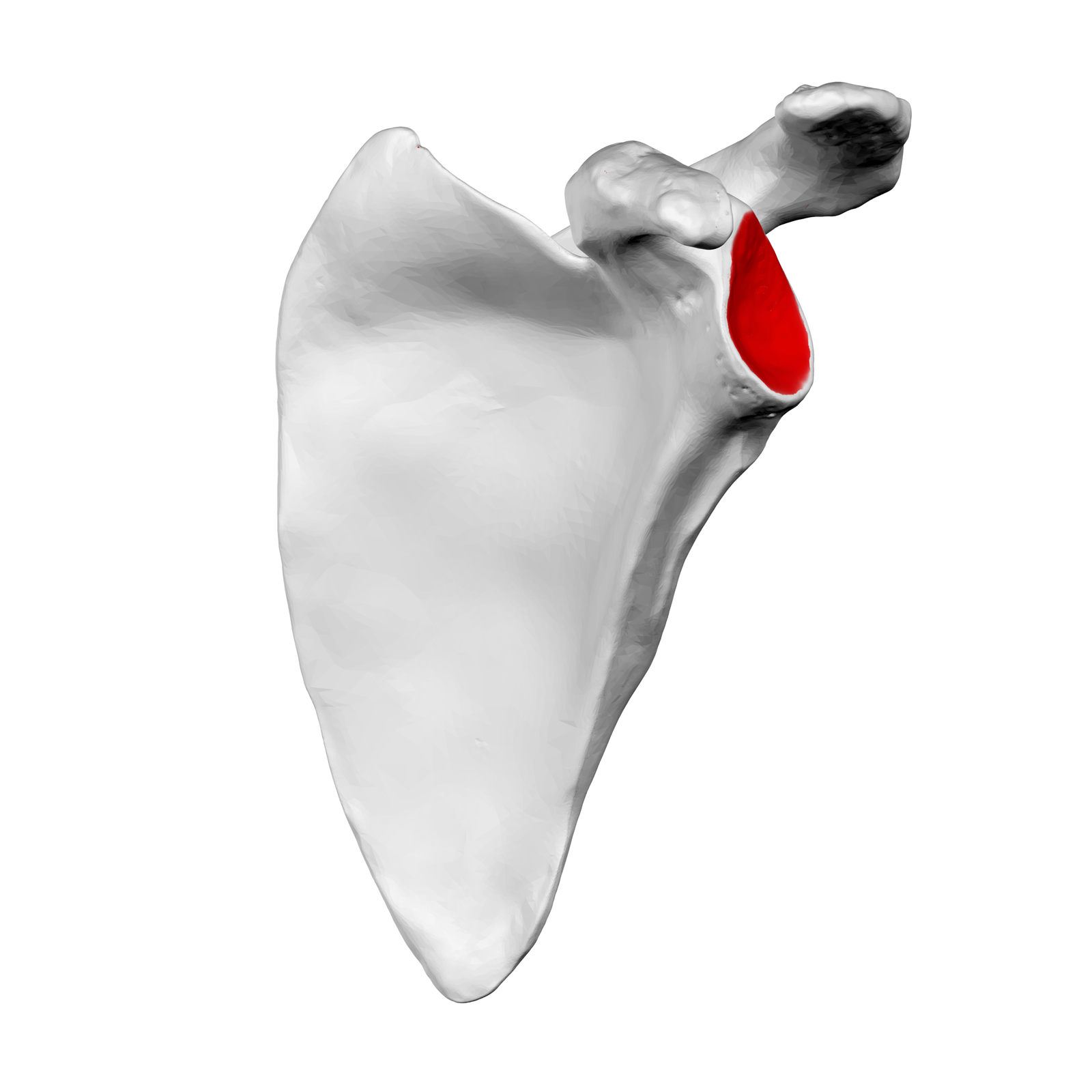
- Polygon data is from BodyParts3D, Wikimedia Commons, CC BY-SA 2.1 jp
Get the weekly research newsletter
Stay current with peer-reviewed research without reading academic papers — one filtered digest, every Friday.