

About This Article
This is an AI-generated summary of a research paper. The original authors did not write or review this article. See full disclosure ↓
Overview
This study establishes an interpretable machine learning framework for predicting high-strain-rate mechanical responses of laser powder bed fusion-fabricated A286 steel lattice structures under split Hopkinson pressure bar testing. The research integrates multi-output regression with explainable artificial intelligence tools to quantify the influence of impact pressure and lattice topology on dynamic response metrics including peak stress, maximum strain, strain rate and energy absorption. The approach aims to develop physics-aligned predictive models that support data-driven design strategies for impact-resistant structures in aerospace and defence applications.
Methods and approach
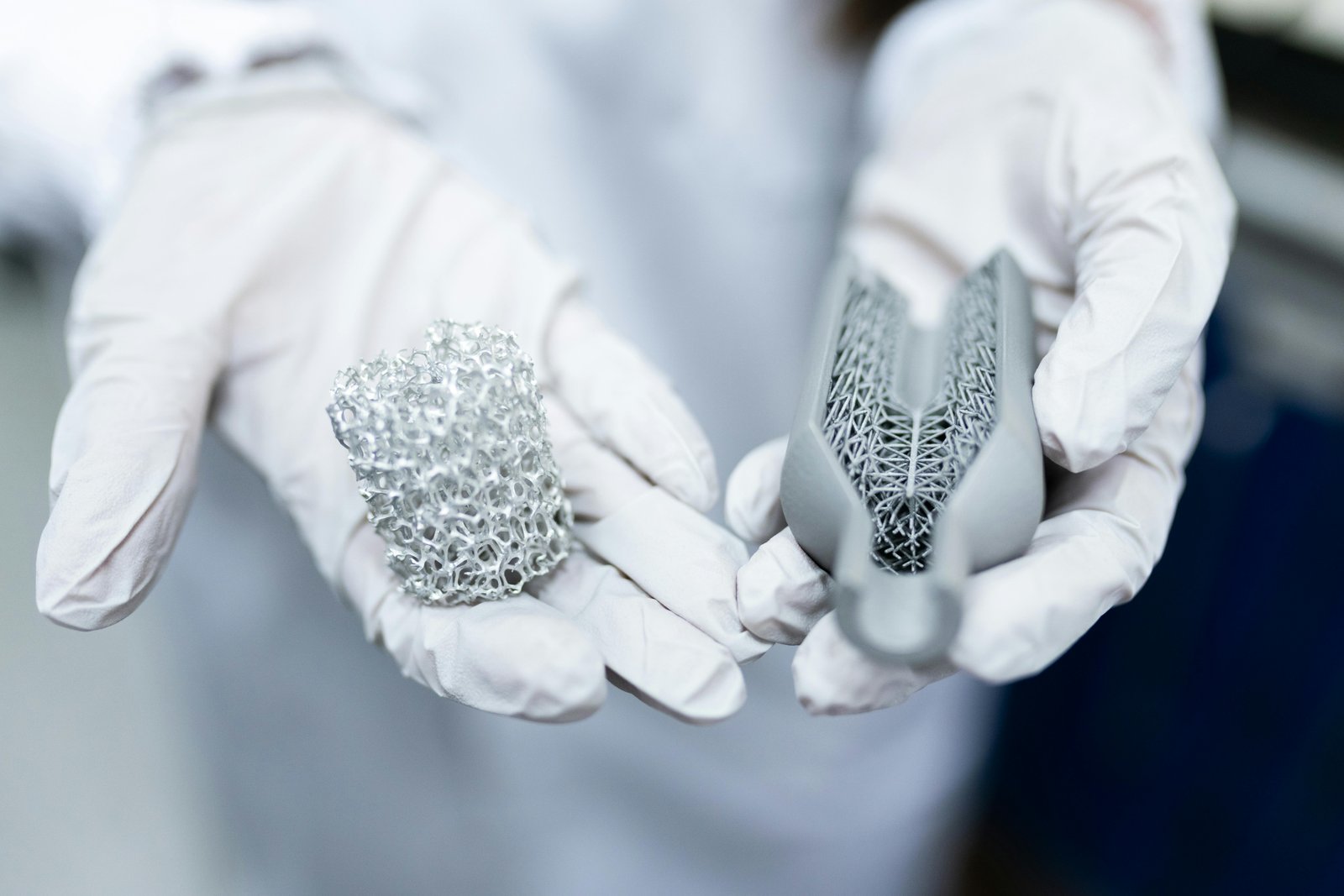
Three lattice topologies—body-centred cubic, honeycomb and gyroid—were additively manufactured and subjected to dynamic pressure bar testing across impact pressures ranging from 2 to 7 bar. Key response variables were extracted from experimental observations. Multi-output regression was conducted using five machine learning algorithms: CatBoost, XGBoost, Random Forest, Gradient Boosting and Extra Trees, with impact pressure and lattice type as input features. Model interpretability was enhanced through Shapley additive explanations analysis, surrogate tree extraction and local interpretable model-agnostic explanations to identify transparent design rules and feature interactions.
Results
Algorithm performance varied by prediction target: CatBoost achieved the highest accuracy for peak stress prediction with R² = 0.9848, XGBoost for maximum strain with R² = 0.9877, Gradient Boosting for strain rate with R² = 0.9659 and Random Forest for energy absorption with R² = 0.9839. Explainability analysis revealed nonlinear interactions between impact pressure and lattice type, particularly beyond 6 bar pressure thresholds. Surrogate analysis identified interpretable design rules, including the finding that body-centred cubic lattices at pressures greater than or equal to 6 bar yield optimal energy absorption. The integrated framework demonstrated strong alignment with observed physical deformation mechanisms during dynamic testing.
Implications
The interpretable machine learning framework provides engineers with predictive tools and transparent feature attributions for optimizing lattice geometries under high-strain-rate loading. Extracted pressure-geometry performance thresholds and design rules directly inform the development of energy-absorbing components in aerospace, automotive and defence systems. By reducing reliance on exhaustive physical prototyping, the approach enables accelerated design iteration and risk mitigation while maintaining clear accountability through model interpretability.
Improvement of impact resilience in structural components through data-driven lattice design enhances the safety of transportation, aerospace and defence systems. Minimal-weight energy-absorbing structures improve fuel efficiency and reduce environmental impact. Integration of explainable artificial intelligence into materials engineering promotes trustworthy adoption of machine learning in critical industries by ensuring decisions are grounded in physical behaviour and transparent to domain experts.
The framework demonstrates modularity and adaptability to new materials and applications with minimal customization. Primary limitations include the relatively small experimental dataset due to constraints inherent to split Hopkinson pressure bar testing and laser powder bed fusion fabrication cycles. Generalizability to other alloys, lattice topologies or loading regimes requires validation. Current scope excludes temperature effects, anisotropy and microstructural evolution during impact, areas identified for future investigation.
Disclosure
- Research title: Explainable machine learning for high-strain-rate prediction of LPBF-fabricated A286 lattice structures under SHPB testing
- Authors: Veera Siva Reddy Bobbili, Chandrasekara Sastry C, Hafeezur Rahman A.
- Publication date: 2026-01-21
- DOI: https://doi.org/10.1108/rpj-08-2025-0362
- OpenAlex record: View
- Image credit: Photo by ThisIsEngineering on Pexels (Source • License)
- Disclosure: This post was generated by artificial intelligence. The original authors did not write or review this post.