

Key findings from this study
Key points
- The study found that eleven G20 countries achieved full aviation-sector efficiency while nine fell measurably below efficiency thresholds in 2023.
- The authors report that South Korea and the USA serve as primary reference units for operational benchmarking across the G20.
- The researchers demonstrate that inefficiency reflects suboptimal input deployment rather than inadequate resource availability.
Overview
This study analyzes the aviation sector efficiency of G20 nations in 2023 using comparative performance assessment. The research evaluates how effectively each country transforms available resources into sectoral outputs. The analysis incorporates three input variables (commercial airports, aviation investment, employee count) and three output variables (annual passenger traffic, cargo volume, aviation-sector economic contribution).
Methods and approach
The researchers employed Data Envelopment Analysis (DEA) or similar efficiency frontier methodology to measure technical efficiency across G20 countries. The approach compares actual outputs against maximum possible outputs given each nation's resource inputs. Countries achieving optimal resource allocation score at full efficiency; those below demonstrate suboptimal conversion of inputs to outputs.
Results
Eleven G20 countries—Turkey, USA, Germany, UK, China, France, South Korea, Indonesia, Argentina, Italy, and South Africa—operated at full technical efficiency in 2023. Nine countries—Australia, Brazil, India, Japan, Canada, Mexico, and Saudi Arabia—fell below the efficiency threshold. South Korea and the USA emerged as primary reference units, demonstrating efficiency benchmarks toward which underperforming nations could orient operational improvements.
Implications
The identification of efficiency leaders establishes measurable benchmarks for sectoral performance assessment. Countries operating below the efficiency threshold can examine operational practices of fully efficient nations to identify resource allocation improvements. These findings suggest that inefficiency stems not from resource scarcity but from suboptimal deployment patterns within existing constraints.
Policymakers in underperforming countries may prioritize operational restructuring focused on input optimization rather than investment expansion alone. The analysis indicates that different nations possess varying capacity for output maximization relative to their resource bases. Strategic resource reallocation—rather than blanket capacity growth—could enable underperforming countries to reach efficiency frontiers established by reference units.
Scope and limitations
This summary is based on the study abstract and available metadata. It does not include a full analysis of the complete paper, supplementary materials, or underlying datasets unless explicitly stated. Findings should be interpreted in the context of the original publication.
Disclosure
- Research title: EXAMINATION OF THE AVIATION PERFORMANCE OF G20 COUNTRIES
- Authors: Cem Kudu, Tunahan Avcı
- Publication date: 2026-01-30
- DOI: https://doi.org/10.55830/tje.1740475
- OpenAlex record: View
- PDF: Download
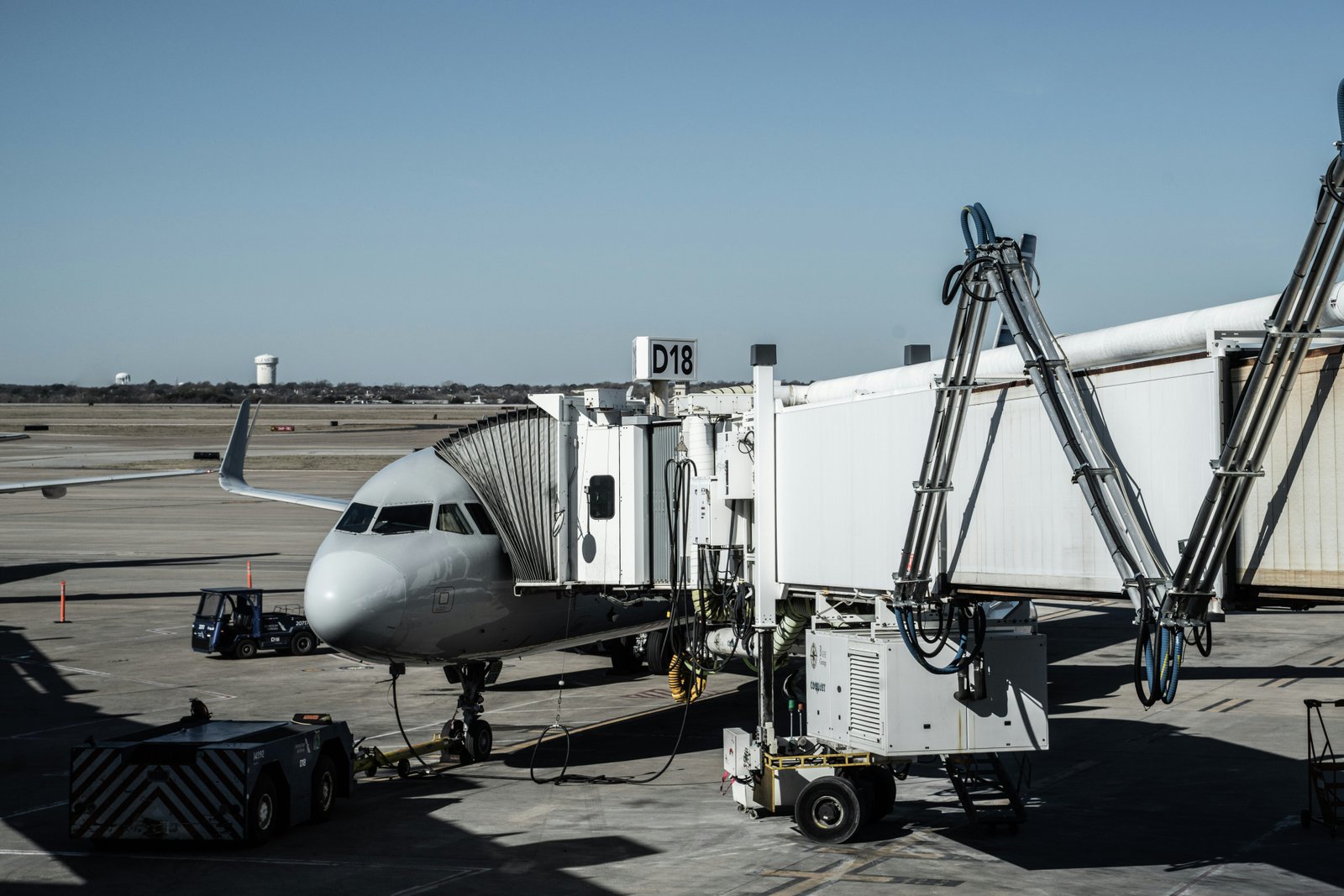
- Image credit: Photo by Zack Yeo on Unsplash (Source • License)
- Disclosure: This post was generated by Claude (Anthropic). The original authors did not write or review this post.
Disclosure
- Research title:
- EXAMINATION OF THE AVIATION PERFORMANCE OF G20 COUNTRIES
- Publication date:
- 2026-01-30
- OpenAlex record:
- View
- Image credit:
- Photo by Zack Yeo on Unsplash · Unsplash License
Get the weekly research newsletter
Stay current with peer-reviewed research without reading academic papers — one filtered digest, every Friday.