

What the study found
The study reports that intelligence contribution varies across a sterile manufacturing region, and that learning desire affects the intelligence pattern. The authors also describe this as a way to visualize cognitive break up, meaning the spread or scattering of intelligence-related factors across people, work settings, and processes.
Why the authors say this matters
The authors conclude that the work offers a new platform for dealing with cognitive break up concerns in healthcare organizations, where work is interdisciplinary. They also suggest that knowledge-driven GMP training can invoke the intelligence of working personnel and support organizational effectiveness.
What the researchers tested
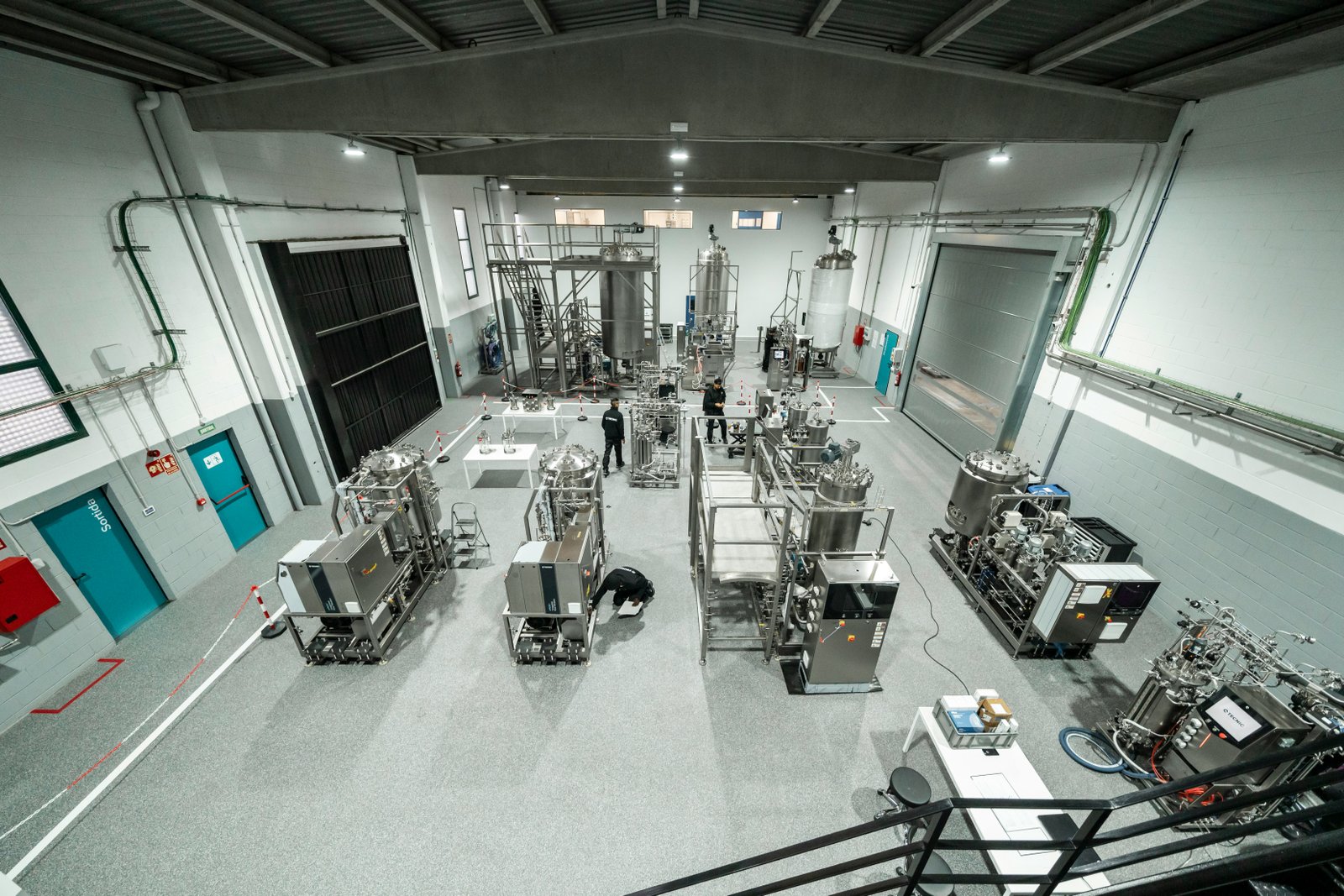
The researchers examined good manufacturing practice (GMP) learning rate-driven performance visualization in healthcare organizations. They modeled a three-dimensional lattice using input knowledge, standard operating procedures, and GMP training, and used Galerkin equations and Newton forward difference equations with numerical methods and a computer program. They applied the estimation to a person working in a sterile manufacturing area and tested the model with a GMP-compliant contraceptive pilot plant and two industrial laboratories.
What worked and what didn't
The findings indicate that intelligence contributions were not uniform across the sterile manufacturing region. The model suggested that learning desire influenced the intelligence pattern, and the experimental tests were said to confirm the analytical result.
What to keep in mind
The abstract does not describe detailed study limitations. It also does not provide quantitative results, so the summary available here is limited to the stated model, its tested settings, and the reported directional findings.
Key points
- The study reports that intelligence contribution varies across a sterile manufacturing region.
- Learning desire is said to affect the intelligence pattern.
- The researchers modeled GMP training, standard operating procedures, and knowledge in a three-dimensional lattice.
- Galerkin equations and Newton forward difference equations were used with numerical methods and a computer program.
- Tests in a GMP-compliant contraceptive pilot plant and two industrial laboratories were said to confirm the analytical result.
Disclosure
- Research title:
- GMP training linked to changing intelligence patterns
- Authors:
- Pradeep K. Jha, Suvadip Ghorai, Rakhi K. Jha, Surya Prakash Singh
- Institutions:
- Incept (United States), Indian Institute of Technology Delhi, Shree Guru Gobind Singh Tricentenary University, Technology Innovation Institute, Technology Innovation Institute
- Publication date:
- 2026-02-23
- OpenAlex record:
- View
- Image credit:
- Photo by TECNIC Bioprocess Solutions on Unsplash · Unsplash License
Get the weekly research newsletter
Stay current with peer-reviewed research without reading academic papers — one filtered digest, every Friday.